A B2B ecommerce platform is software that runs online wholesale selling, with login-gated catalogs, customer-specific pricing, and bulk ordering built in. The strongest options in 2026 are Shopify paired with a B2B app like B2Bridge for hybrid brands, BigCommerce B2B Edition for mid-market wholesalers, and OroCommerce for enterprise distributors with complex account structures.
The right pick comes down to three things: how fast you need to launch, how deeply it syncs with your ERP, and whether you replatform or build on the store you’ve already got. This guide compares eight platforms, what each does well, and how to choose without a costly rebuild.
What Is a B2B Ecommerce Platform
A B2B ecommerce platform is software that lets businesses sell to other businesses online, with account-based access, negotiated pricing, and bulk order handling built into the storefront. Retail stores show one price to everyone. A B2B platform shows each buyer their own catalog and prices after they log in.
That’s what shapes everything else. Approved buyers see contract pricing, place large orders, and pay on terms, while the public sees a standard site or nothing at all. If you want the fundamentals first, start with what B2B ecommerce is and how it differs from retail selling.
How to Choose a B2B Ecommerce Platform
How do you pick among platforms that all claim to do wholesale? Judge each one against four questions that decide cost, launch time, and daily workload. The answers matter more than any feature list.
Replatform or Build on Your Current Store
Your first decision is whether to switch platforms or add B2B to the store you already run. A full replatform means migrating catalogs, customers, and integrations, which takes months. Adding a B2B layer to an existing Shopify or BigCommerce store keeps your data in place and cuts launch time to days.
ERP and Accounting Integration
ERP integration decides whether pricing and orders sync automatically or get keyed in twice. Platforms built for B2B connect to NetSuite, SAP, or Microsoft Dynamics natively. Others rely on apps or custom development, so ask exactly which systems connect and how orders flow back. Manual re-entry is where errors and delays start.
Time and Cost to Launch
Launch time ranges from a single day to a full year. SaaS apps that sit on your current store go live in hours. Enterprise platforms like OroCommerce or SAP take six to twelve months and need a specialist partner. Match that timeline to how soon you need wholesale orders coming in.
B2B Feature Depth
Wholesale runs on features retail stores never need. Check for net terms, request for quote workflows, minimum order quantities, volume pricing, and sales rep ordering. A platform that’s missing these forces workarounds that slow your team down every day.
Best B2B Ecommerce Platforms Compared
Here’s how the eight platforms compare on price, native B2B features, ERP integration, and setup time. Verify each figure against the vendor before you commit, since pricing changes often.
| Platform | Best for | Starting price | Native B2B features | ERP integration | Setup time |
|---|---|---|---|---|---|
| Shopify + B2Bridge | Hybrid retail and wholesale on Shopify | $99/mo (14-day trial) | Unlimited price lists, orders, groups, net terms, RFQ, sales rep portal | Public API to NetSuite, Zoho, Odoo | Days |
| Shopify Plus | Enterprise DTC and wholesale, one admin | ~$2,300/mo | Company accounts, catalogs, net terms, PO numbers | Via apps, no native ERP | 3 to 6 months |
| BigCommerce B2B Edition | Mid-market wholesalers | $29/mo, B2B Edition custom | Account pricing, quotes, approvals, reordering | Via app marketplace | 3 to 6 months |
| OroCommerce | Complex enterprise distribution | Custom | CRM, CPQ, RFQ, account hierarchies, punchout | Native SAP, NetSuite, Dynamics | 6 to 12 months |
| Adobe Commerce | Large custom catalogs | Custom | Company accounts, shared catalogs, quotes | Via extensions | 4 to 9 months |
| SAP Commerce Cloud | Global enterprises | Custom | Multi-channel B2B, contract pricing | Native SAP | 6 to 12 months |
| SparkLayer | Adding B2B to an existing store | Free, paid from $49/mo | Self-serve portal, rep ordering, quoting | Native to several ERPs | Hours to days |
| WooCommerce | WordPress wholesale on a budget | Free, plugins extra | None native, plugins required | Via plugins | Weeks |
The Best B2B Ecommerce Platforms
These eight platforms cover every route to selling wholesale online, from a Shopify app to a purpose-built enterprise system. Each entry lists who it fits, what stands out, one honest limitation, and current pricing.
Shopify With B2Bridge for Hybrid Wholesale Brands
Shopify handles your storefront and B2Bridge adds the full B2B layer on top, so retail and wholesale run from one admin. It fits brands that sell both and don’t want a separate system for each.
- Best for: hybrid brands running retail and wholesale on one Shopify store.
- Standout features: unlimited price lists, orders, and customer groups on any plan; net terms of 15, 30, 60, and 90 days; RFQ and quote-to-order; an unlimited Sales Rep Portal for order-on-behalf and commission tracking; ERP and CRM sync through the Public API.
- Considerations: it runs as a Shopify app, so you’ll need a Shopify store to use it.
- Pricing: Professional at $99 a month after a 14-day free trial, Growth at $199 (adds Sales Rep Portal, RFQ, credit limits, and company accounts), Advanced at $299 (adds Public API), and Enterprise custom.
The advantage that compounds is scale. Most platforms cap catalogs or orders and push you up a tier as you grow. B2Bridge doesn’t, and pricing stays flat as your wholesale volume climbs.

Shopify Plus for Enterprise DTC and Wholesale
Shopify Plus is Shopify’s enterprise tier for high-volume brands that run direct-to-consumer and wholesale from one backend. Native B2B now covers company accounts, customer-specific catalogs, net terms, and PO numbers.
- Best for: large brands already on Shopify that want native B2B without switching platforms.
- Standout features: company accounts, B2B checkout, unlimited catalogs on Plus, expansion stores.
- Considerations: it starts around $2,300 a month on a multi-year term, and you’ll still need apps for rep ordering or quoting. See the full Shopify B2B versus Shopify Plus breakdown for where the native features stop.
- Pricing: roughly $2,300 a month, billed on a three-year term.

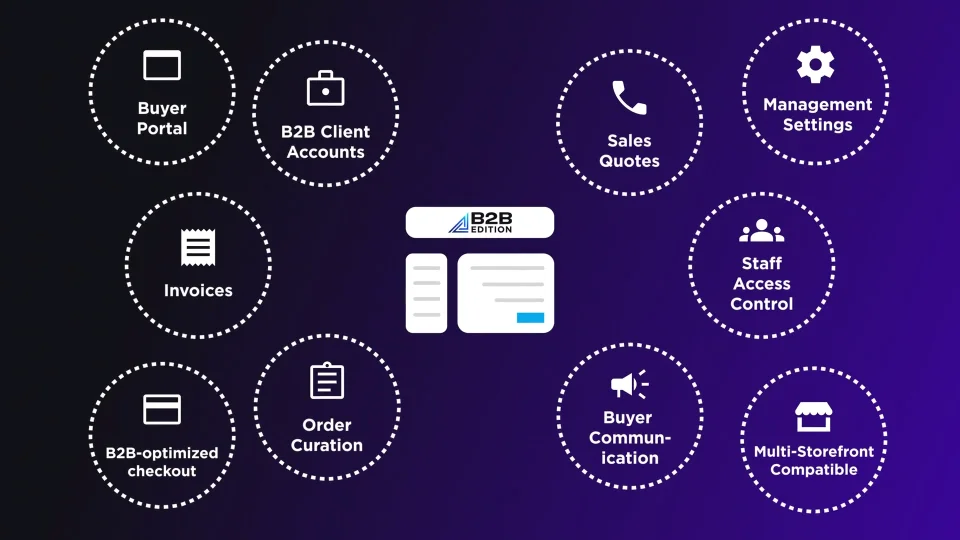
BigCommerce B2B Edition for Mid-Market Wholesalers
BigCommerce B2B Edition adds buyer-facing wholesale tools on top of a mature commerce engine. It suits mid-market wholesalers who want B2B depth without full enterprise overhead.
- Best for: mid-market wholesalers wanting native B2B without stacking apps.
- Standout features: account-specific pricing, quote workflows, approval chains, self-service reordering, zero transaction fees.
- Considerations: a smaller app ecosystem than Shopify, and revenue-based tiers can push you up before you need the extra capacity.
- Pricing: standard plans from $29 a month, B2B Edition priced custom.
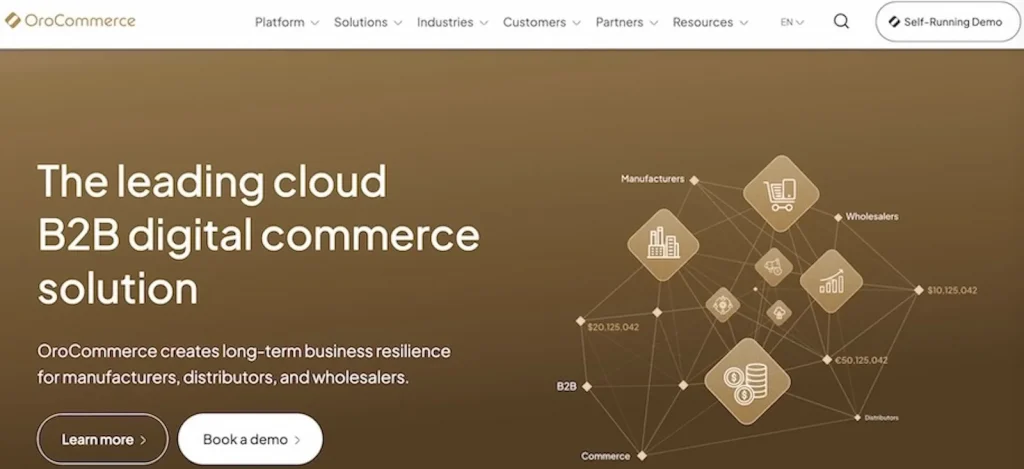
OroCommerce for Complex Enterprise Distribution
OroCommerce is purpose-built for B2B and nothing else, shipping with CRM, CPQ, and ERP connectors under one license. It targets manufacturers and distributors with genuinely complex operations.
- Best for: enterprise distributors with multi-tier accounts and deep ERP needs.
- Standout features: built-in CRM and CPQ, RFQ workflows, account hierarchies, punchout, native SAP and NetSuite connectors.
- Considerations: implementation runs six to twelve months and needs a specialist partner.
- Pricing: custom enterprise pricing, no per-site fees.
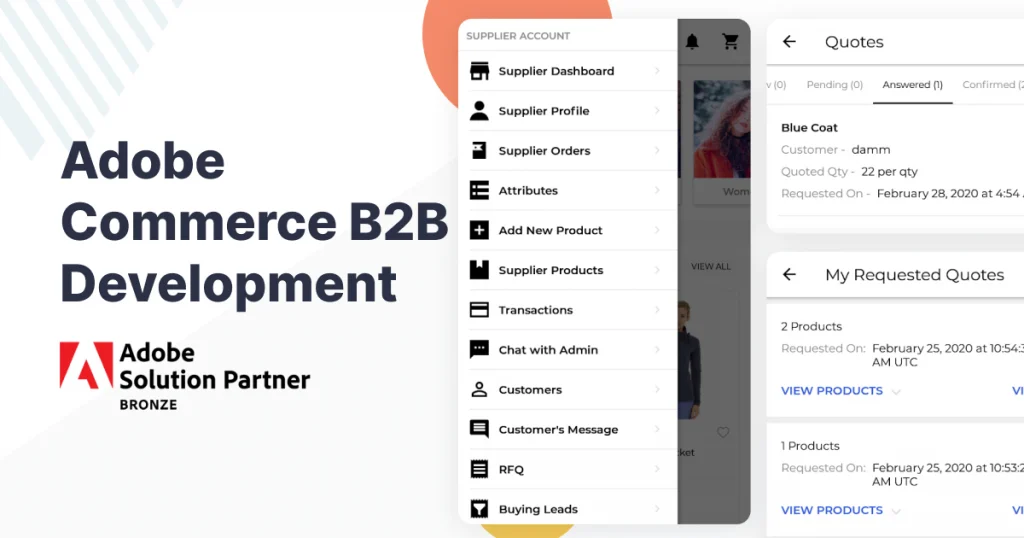
Adobe Commerce for Large Custom Catalogs
Adobe Commerce, formerly Magento, handles large catalogs and heavy customization for enterprises with in-house or agency developers. It rewards teams that want control over every part of the buying experience.
- Best for: enterprises with large catalogs and developer resources.
- Standout features: company accounts, shared catalogs, quotes, deep customization, headless options.
- Considerations: high build and maintenance cost, and it depends on developer time to run well.
- Pricing: custom, licensed by average order value and revenue.
SAP Commerce Cloud for Global Enterprises
SAP Commerce Cloud, once SAP Hybris, is a multi-channel platform for global enterprises that already run SAP. It handles the long, negotiated buying cycles large B2B sellers deal with.
- Best for: global enterprises standardized on SAP.
- Standout features: multi-channel B2B, contract pricing, enterprise data depth, native SAP integration.
- Considerations: enterprise cost and a heavy, months-long implementation.
- Pricing: custom enterprise pricing.
SparkLayer for Adding B2B to an Existing Store
SparkLayer layers a wholesale experience on top of Shopify, BigCommerce, Wix, or WooCommerce. Buyers log in and see their own pricing while your retail site stays untouched.
- Best for: brands adding B2B to a store they already run.
- Standout features: self-serve ordering, sales agent ordering, a quoting engine, native ERP connectors.
- Considerations: lower tiers cap price lists and monthly orders, and it needs an existing store. Our B2Bridge versus SparkLayer comparison covers where those caps bite.
- Pricing: a free plan, paid plans from $49 a month with a 14-day trial.

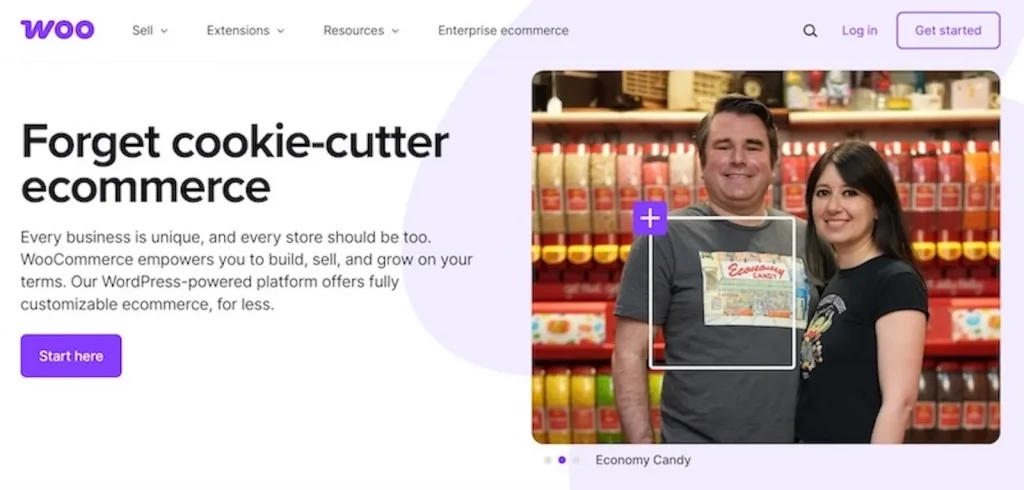
WooCommerce With Plugins for WordPress Wholesale
WooCommerce is the ecommerce layer for WordPress, free to install with the largest plugin ecosystem in the category. For brands already on WordPress, it’s a way to skip a migration.
- Best for: WordPress-based sellers on a tight budget.
- Standout features: free core, huge plugin library, no platform license, full code control.
- Considerations: no native B2B, so pricing, net terms, and order forms all need plugins that can conflict at scale.
- Pricing: free to install, with plugin and hosting costs on top.
B2B Ecommerce Platform Pricing and Cost
B2B ecommerce platform cost falls into three models: flat SaaS subscriptions, custom enterprise licenses, and free open-source software with paid build work. Which one fits depends on your size and how much you’re customizing.
SaaS apps charge a predictable monthly fee. B2Bridge runs $99 to $299, and SparkLayer starts at $49, with no separate license. Enterprise platforms like OroCommerce, Adobe Commerce, and SAP quote custom pricing that often reaches six figures a year once you add implementation. Open-source WooCommerce is free to license but shifts cost into plugins, hosting, and developer time.
Look past the sticker price to total cost of ownership. Setup, integrations, and wholesale pricing rules all take work, and volume discount logic adds more. The cheapest license isn’t usually the cheapest platform to run.
Running Your B2B Ecommerce Platform on Shopify With B2Bridge
If you sell retail and wholesale together, Shopify with B2Bridge gives you a full B2B platform without a replatform. You keep one admin, one catalog, and one checkout. Your buyers get wholesale pricing, terms, and self-service ordering after they log in.
B2Bridge is built for the case where a growing brand outgrows native tools but doesn’t want enterprise cost or complexity:
- Unlimited price lists, orders, and customer groups on any Shopify plan
- Net terms, RFQ, MOQ, and volume pricing in one app instead of several
- A Sales Rep Portal for order-on-behalf selling and commission tracking
- ERP and CRM sync with NetSuite, Zoho, and Odoo through the Public API
Brands running both channels report fewer manual orders and less time spent reconciling wholesale against retail. You’ll run wholesale and retail from one store, and you can see it on your own catalog first. Book a Demo to walk through your setup, or compare plans on the pricing page.
FAQs About B2B Ecommerce Platforms
What is the best B2B ecommerce platform for small businesses?
For small businesses, Shopify with a B2B app like B2Bridge is usually the best fit. It adds wholesale pricing, net terms, and ordering to a store you can launch in days, without enterprise cost.
Do I need to replatform to sell B2B online?
No. If you already run Shopify, BigCommerce, or WooCommerce, a B2B app adds wholesale features to your existing store. You’ll keep your catalog and customers and avoid a months-long migration.
Can I run B2B and B2C on the same platform?
Yes. Platforms like Shopify with B2Bridge run both from one admin, showing retail prices to the public and wholesale pricing to approved buyers after login. See hybrid B2B and B2C on Shopify for the setup.
How much does a B2B ecommerce platform cost?
Costs range from about $49 to $299 a month for SaaS apps to six figures a year for enterprise platforms. Open-source options are free to license but carry plugin, hosting, and development costs.
Which B2B ecommerce platform integrates with my ERP?
OroCommerce and SAP offer native ERP connectors, while Shopify with B2Bridge syncs through its Public API to systems like NetSuite, Zoho, and Odoo. Confirm your specific ERP with B2B ecommerce integration options before choosing.

Hi, I’m Hanh – a product marketing professional passionate about driving growth, simplifying complex solutions, and creating impactful strategies for Shopify that connect products with customers.