Net payment terms are the conditions on a B2B invoice that specify how many days a buyer has to pay after receiving goods or services—typically expressed as Net 30, Net 60, or Net 90. They function as short-term, interest-free credit agreements that help wholesale buyers manage cash flow while giving sellers a predictable payment timeline.
Get the terms wrong, and you either strain your own cash flow or lose deals to competitors offering more flexibility. This guide covers how net terms work, which options fit different buyer relationships, and how to implement them in your Shopify B2B store without the operational headaches.
What are net payment terms
Net payment terms are conditions on an invoice that define when full payment is due, typically giving buyers 30, 60, or 90 days from the invoice date to pay. The word “net” refers to the total amount owed after any discounts or credits, while the number represents the payment window in calendar days. In B2B transactions, net terms function as a short-term, interest-free credit agreement between seller and buyer.
Think of net terms as the bridge between shipping products and collecting payment. Your wholesale buyer receives goods now and pays later, helping them manage cash flow while you maintain a predictable revenue timeline.
- Net: The final invoice amount after discounts or credits
- Number (30, 60, 90): Calendar days the buyer has to pay
- Starting point: Typically begins on the invoice date, not when the buyer receives it
How do net payment terms work
The payment clock starts when you issue the invoice, not when the buyer receives it or when goods arrive. Weekends and holidays count toward the total, so a Net 30 invoice dated January 1st is due by January 31st regardless of what falls in between.
When payment arrives on time, the transaction closes with no interest charged. Late payments, on the other hand, can trigger consequences depending on your agreement: late fees, suspended credit privileges, or collection actions for repeat offenders.
- Invoice issued: Payment window begins immediately
- On-time payment: Transaction complete, no interest
- Late payment: Seller may apply fees or restrict future credit

Common types of net payment terms
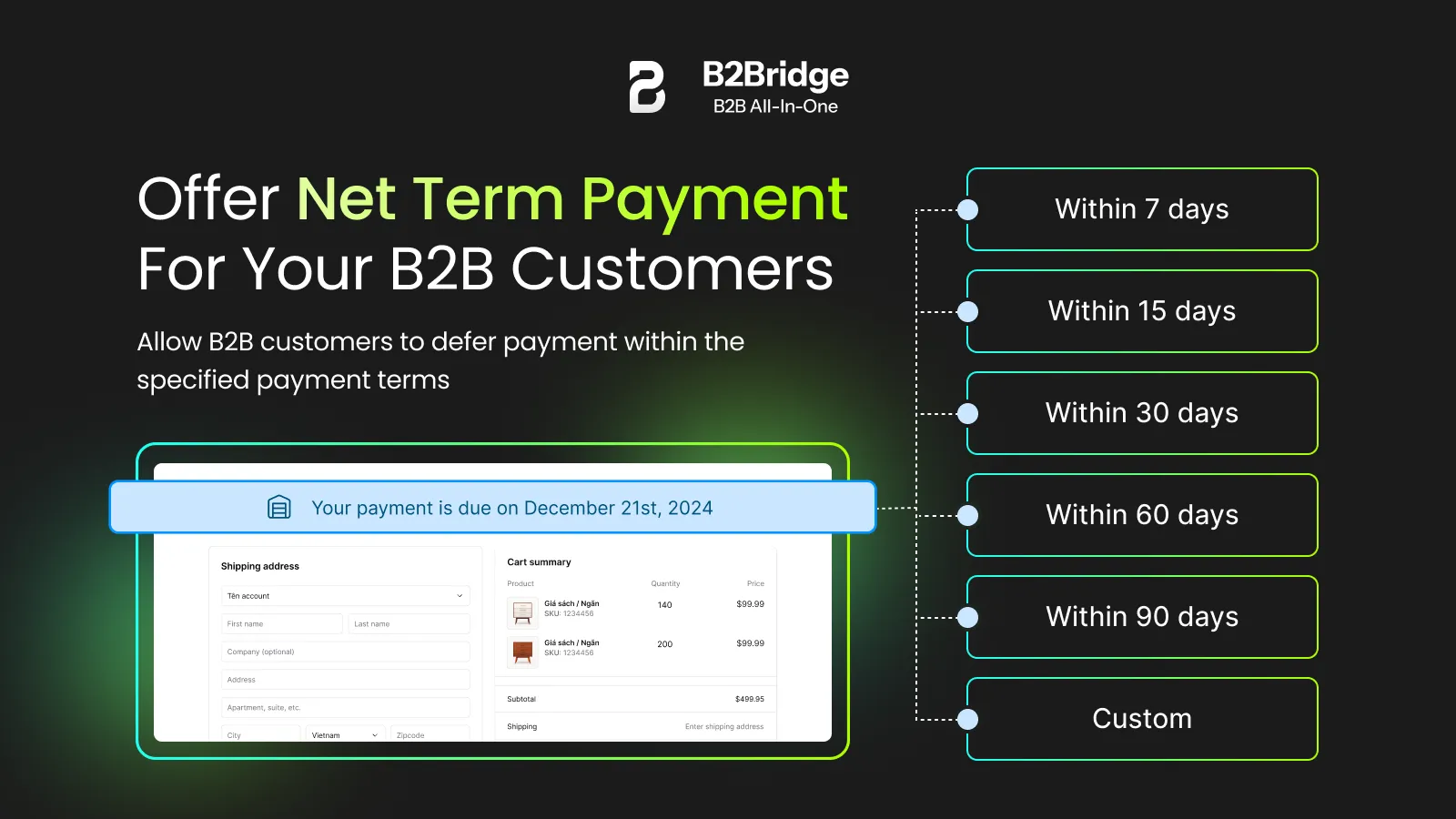
Net terms range from short windows like Net 7 to extended periods like Net 90 or longer. The right choice depends on industry norms, the buyer relationship, and how much cash flow flexibility you can afford to extend.
Net 15 payment terms
Net 15 gives buyers 15 days to pay. You’ll often see this with smaller orders, service-based work, or established buyers who pay reliably. It keeps cash moving faster while still offering some flexibility.
Net 30 payment terms
Net 30 is the industry standard in B2B transactions. It strikes a balance: buyers get enough time to process invoices through their accounts payable systems, and sellers receive payment within a reasonable window.
Net 60 payment terms
Net 60 extends the window to two months and is typically reserved for larger accounts, distributors, or buyers with longer internal procurement cycles. Offering Net 60 signals trust, though it also means waiting longer for payment.
Net 90 payment terms
Net 90 is common with enterprise corporations, government agencies, or accounts requiring extended approval workflows. Sellers offering Net 90 generally have strong cash reserves or access to financing to bridge the gap.
End of month and custom net terms
EOM (End of Month) terms mean payment is due at month-end regardless of when the invoice was issued. Custom terms like Net 45 or Net 120 are negotiated for specific relationships where standard options don’t fit.
What does 2/10 Net 30 mean
Early payment discounts incentivize buyers to pay faster. The notation “2/10 Net 30” means the buyer receives a 2% discount if they pay within 10 days; otherwise, the full amount is due in 30 days.
- 2: Percentage discount for early payment
- 10: Days within which the buyer pays to claim the discount
- Net 30: Standard deadline if the discount isn’t taken
Other common variations include 1/10 Net 30 and 2/10 Net 60. When buyers take advantage of early payment discounts, sellers improve their cash conversion cycle while buyers reduce their total cost.
Why B2B businesses offer net payment terms
Net terms are a competitive tool in wholesale selling. Buyers often prefer suppliers who offer payment flexibility over those requiring prepayment or cash on delivery.
Larger average order value
Buyers tend to purchase more when they don’t face an immediate cash outlay. Net terms remove payment friction at checkout, which often translates to bigger orders.
Stronger wholesale buyer loyalty
Extending credit builds trust and strengthens customer loyalty. When you offer terms that help buyers manage their own cash flow, they’re more likely to return for repeat orders and view you as a long-term partner.
Competitive advantage against other suppliers
If your competitor requires prepayment and you offer Net 30, you’ve made the buyer’s decision easier. Payment flexibility can be the tiebreaker in competitive markets.
Smoother procurement for enterprise buyers
Large organizations have internal approval and payment cycles that don’t move quickly. Net terms align with their existing accounts payable workflows, making it easier for them to do business with you.
Drawbacks and risks of offering net terms
Net terms carry financial risks that sellers need to actively manage. The flexibility you extend to buyers comes with trade-offs on your end.
Delayed cash inflow
The gap between fulfilling orders and receiving payment can strain operating cash, especially for smaller sellers. You’re essentially financing your buyer’s inventory until they pay.
Exposure to late payments and bad debt
Buyers don’t always pay on time, or at all. Late payments compound across multiple accounts, and defaults can significantly impact your bottom line.
Added accounts receivable overhead
Tracking outstanding invoices, sending reminders, and managing collections takes time and resources. The more accounts you extend terms to, the more AR overhead you carry.

Net payment terms vs other B2B payment options
Net terms aren’t the only way to handle B2B payments. The right method depends on the buyer relationship, order size, and your risk tolerance.
| Payment Method | When Payment Occurs | Best For |
|---|---|---|
| Net terms (Net 30/60/90) | After delivery, within specified days | Established B2B relationships, large orders |
| Credit card | At checkout | Smaller orders, new buyers |
| Prepayment / Proforma | Before shipment | New accounts, high-risk buyers |
| Cash on delivery (COD) | At delivery | Local deliveries, unverified buyers |
| Request for quote (RFQ) | Negotiated per order | Custom pricing, large enterprise deals |
New buyers might start with prepayment or credit card, then graduate to net terms once they’ve established a payment track record.
How to choose the right net payment terms
Selecting the right terms involves balancing buyer expectations with your own financial realities.
Step 1: Review your industry norms
Research what competitors and peers offer. Some industries default to Net 30, while others like construction or government contracting commonly use Net 60 or longer.
Step 2: Evaluate buyer creditworthiness
Vet new buyers before extending credit. Credit applications, trade references, and payment history checks help you assess risk before committing to terms.
Step 3: Stress test your cash flow
Model scenarios where all buyers take the full payment window. Can your operating cash cover payroll, inventory, and overhead during that period? If not, shorter terms or financing may be necessary.
Step 4: Match terms to order size and customer tier
A tiered approach works well: shorter terms for smaller or new accounts, longer terms for high-volume, trusted buyers. This protects you while rewarding loyalty.
How net payment terms affect cash flow and working capital
Outstanding receivables directly impact your available working capital. Money owed to you isn’t cash in hand—it’s tied up until the buyer pays.
- Accounts receivable: Money owed that hasn’t been collected yet
- Working capital: Cash available for day-to-day operations
- Cash conversion cycle: Time between paying your suppliers and receiving payment from buyers
Extending longer terms means more capital tied up in receivables. Sellers balance buyer flexibility with their own liquidity needs, often using early payment discounts or financing to bridge gaps.
Best practices for managing net payment terms
Offering net terms without proper controls creates unnecessary risk. A few key practices help you extend credit confidently.
Gate net terms to approved B2B buyers
Require buyer verification and approval before granting net terms. Anonymous or unverified accounts pay upfront; verified wholesale buyers earn credit privileges.
Set credit limits per customer
Cap the total outstanding balance each buyer can carry. Start conservative and increase limits as the relationship matures and payment history proves reliable.
Automate invoicing and payment reminders
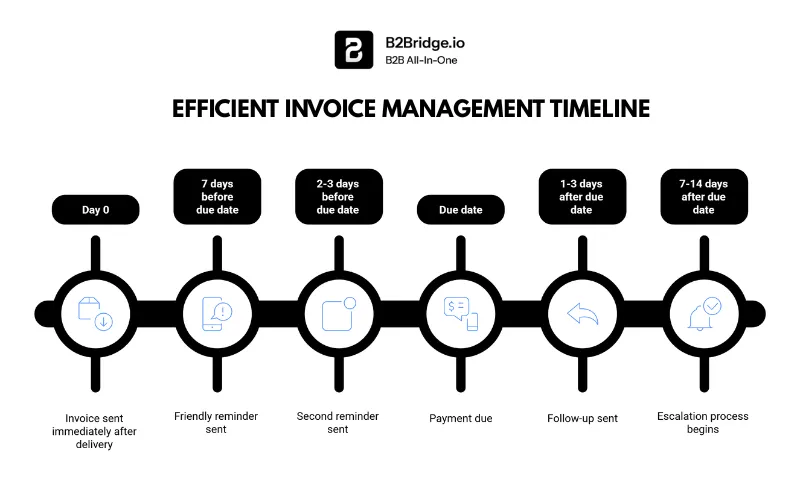
Digital invoicing ensures invoices reach buyers immediately. Automated reminders before and after due dates reduce late payments without manual follow-up.
Sync net terms with your ERP and CRM
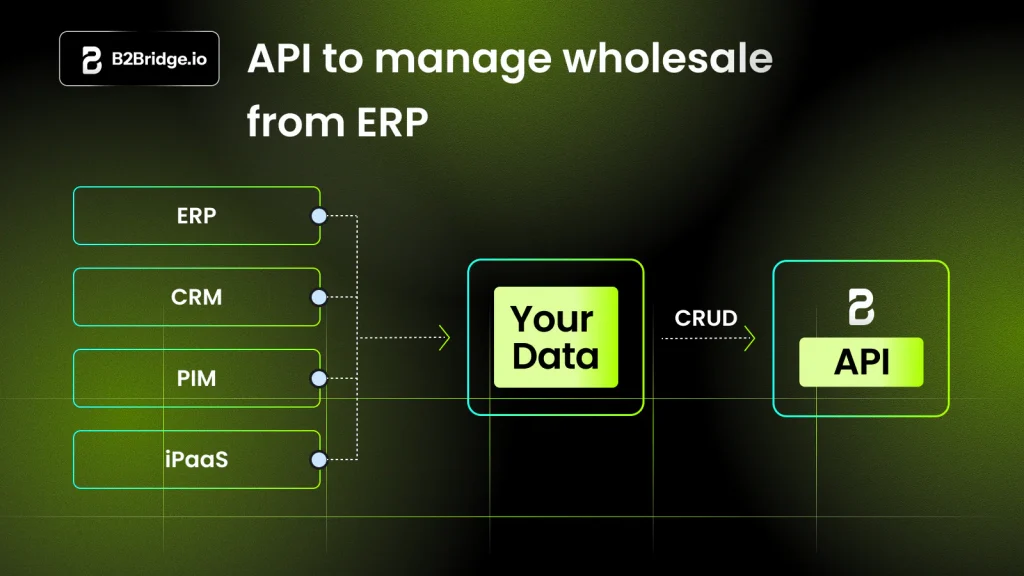
Keeping payment terms, customer data, and order history aligned across systems prevents mismatches and manual errors. B2Bridge enables this sync for Shopify merchants connecting to NetSuite, Zoho, Odoo, or custom ERPs.
Offer early payment discounts
Discounts like 2/10 Net 30 incentivize faster payment and improve cash flow while still offering flexibility to buyers who need the full window.
How to offer net payment terms on Shopify
Shopify merchants can enable net terms for wholesale buyers with the right setup and tools.
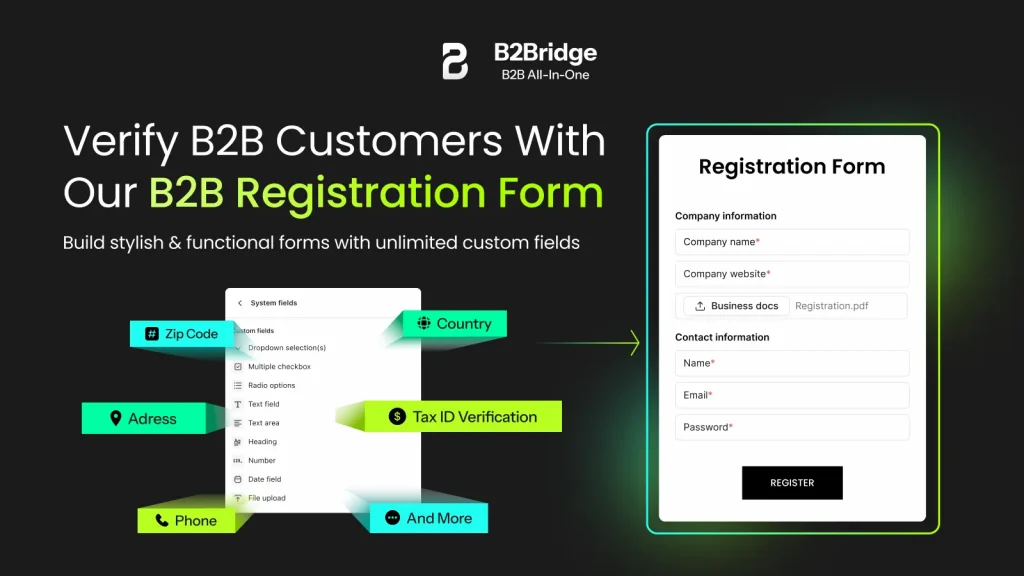
Step 1: Verify and approve wholesale buyers
Use a B2B registration form to collect business details, tax IDs, and references. Approve buyers before granting access to net terms—this protects you from extending credit to unverified accounts.
Step 2: Assign net terms by customer group
Segment buyers into customer groups and assign appropriate terms—Net 15, Net 30, or Net 60—based on tier, order volume, or relationship history.

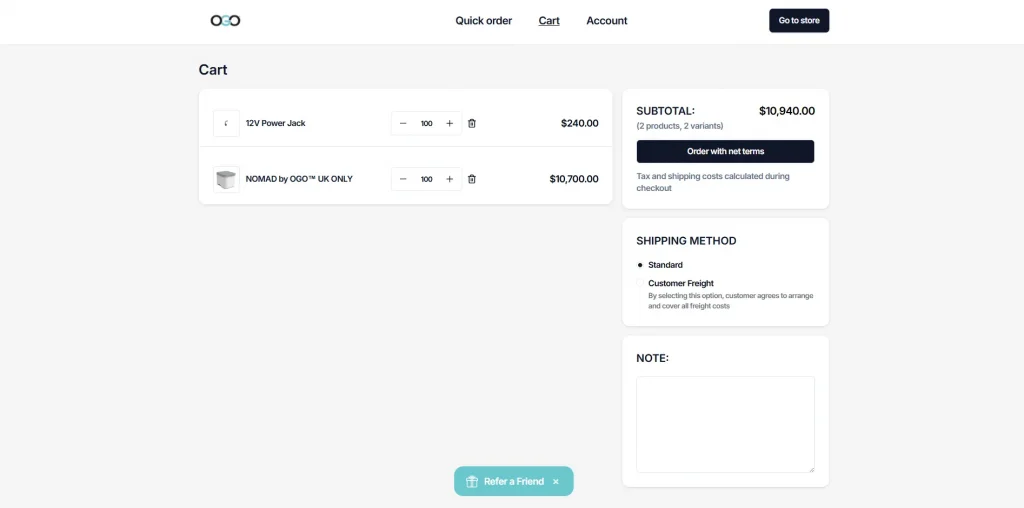
Step 3: Enable net terms in the B2B cart
Configure your checkout or cart experience to display net terms as a payment option for approved buyers. B2Bridge provides a dedicated B2B cart with net payment terms built in, so qualified buyers see their options at checkout.
Step 4: Sync orders and invoices to your ERP
Orders placed on net terms flow into your ERP or accounting systemOrders placed on net terms flow into your ERP or accounting system for proper invoicing and AR tracking. This keeps your financial records accurate without manual data entry.
Run net payment terms inside your Shopify B2B store with B2Bridge
B2Bridge brings enterprise net terms to Shopify without requiring Shopify Plus or a separate wholesale storefront.
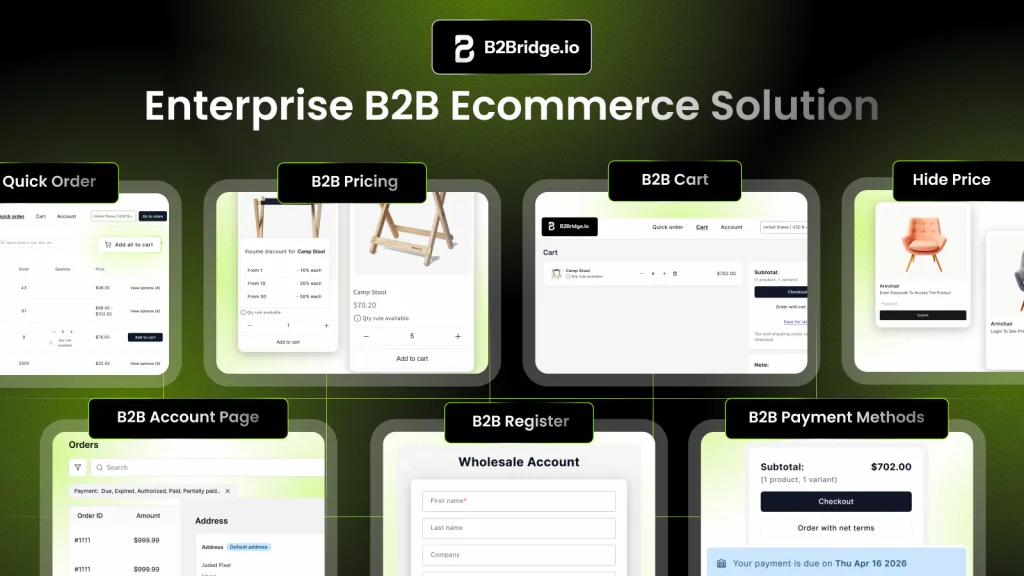
- Dedicated B2B cart with net payment terms: Approved buyers see net terms at checkout
- Customer group pricing and tiered terms: Assign different terms to different buyer segments
- ERP and CRM integration: Sync invoices, customers, and orders with NetSuite, Zoho, Odoo, or custom systems
- Credit limits and approval workflows: Control exposure and verify buyers before extending credit
- Quick setup: Launch net terms in days, not months
Contact us to get expert guidance and practical solutions for your wholesale store.
Frequently asked questions about net payment terms
What does net 15 payment terms mean?
Net 15 means the buyer has 15 calendar days from the invoice date to pay the full amount owed. It’s a shorter window than Net 30 and is common for smaller orders or well-established buyer relationships.
What does $6000 net 30 mean?
This means the buyer owes $6,000 and has 30 days from the invoice date to submit payment in full. The dollar amount is the net (total) due; the 30 is the payment window.
Is net 30 counted from invoice date or delivery date?
Net 30 typically starts from the invoice date, not the delivery date. Sellers benefit from stating this clearly on invoices and contracts to avoid confusion with buyers who assume otherwise.
Can small B2B sellers offer net terms safely?
Yes, though small sellers benefit from vetting buyers carefully, setting conservative credit limits, and ensuring their cash flow can absorb delayed payments. Starting with shorter terms like Net 15 reduces risk while you build buyer relationships.
Does Shopify support net payment terms out of the box?
Shopify Plus offers limited B2B features, including draft orders that can accommodate net terms. However, most merchants use an app like B2Bridge to enable full net terms functionality with customer groups, credit limits, and ERP sync on any Shopify plan, a wholesale app like B2Bridge to enable full net terms functionality with customer groups, credit limits, and ERP sync on any Shopify plan.

Hi, I’m Ha My Phan – an ever-curious digital marketer crafting growth strategies for Shopify apps since 2018. I blend language, logic, and user insight to make things convert. Strategy is my second nature. Learning is my habit. And building things that actually work for people? That’s my favorite kind of win.