B2B ecommerce is the online sale of goods or services between businesses. It covers manufacturers selling to distributors, wholesalers supplying retailers, and brands fulfilling bulk orders for corporate accounts. B2B online sales are expected to surpass $3 trillion by 2028, according to Statista’s B2B ecommerce market data.
The shift from phone orders and email quotes to digital self-service is moving faster than most businesses expected. This guide covers how wholesale digital commerce works, what separates it from B2C, and the features that let a B2B operation scale without doubling your workload.
What Is B2B Ecommerce
B2B ecommerce is the online sale of goods or services between businesses instead of to individual consumers. Your buyers are other companies: retailers stocking your products, contractors buying supplies, or manufacturers sourcing components.
What defines modern wholesale is self-service. Your customers log in, see their negotiated pricing, and place orders whenever it suits them. No waiting for a sales rep to return a call.
A B2B storefront differs from a standard online store in a few core ways:
- Digital product catalogs: listings with specs, images, and real-time availability
- Customer-specific pricing: negotiated or tiered prices visible only to approved buyers
- Self-service portals: buyers order, track shipments, and reorder without contacting your team
- Automated workflows: orders flow straight into fulfillment and ERP systems
The result is a procurement channel that grows without adding headcount. Your store keeps selling while your reps focus on relationships instead of order entry.
B2B vs B2C Ecommerce Explained
B2B and B2C share the mechanics of online selling, but buyer expectations, pricing, and sales cycles pull apart fast. If you’ve run a direct-to-consumer store, some of this will feel familiar and some will not.
| Factor | B2B Ecommerce | B2C Ecommerce |
|---|---|---|
| Buyer | Businesses, procurement teams | Individual consumers |
| Order size | Bulk quantities, high AOV | Single items, lower AOV |
| Pricing | Negotiated, tiered, contract-based | Fixed public pricing |
| Payment | Net terms (Net 30/60), invoicing | Immediate payment at checkout |
| Sales cycle | Longer, multiple decision-makers | Short, often impulse-driven |
| Relationships | Long-term, account-based | Transactional |
Pricing complexity alone sets B2B apart. A B2C store shows one price to everyone. A B2B store might show a distributor, a retailer, and a VIP account three different prices for the same product.
Payment terms add another layer. Business buyers often expect to pay 30 or 60 days after receiving goods. If your platform can’t handle net terms, you push those buyers back to phone orders. For a fuller breakdown, see B2B vs B2C ecommerce.
Types of B2B Ecommerce
B2B ecommerce isn’t one model, and the type you run shapes your platform and pricing needs. These are the five you’ll see most, covered in depth in our guide to B2B ecommerce types.
Wholesale Ecommerce
Wholesale ecommerce sells products in bulk to retailers or resellers at discounted prices. Sellers use digital portals to manage price lists, minimum order quantities, and repeat orders.
Manufacturer and Distributor Ecommerce
Manufacturers sell directly to retailers, contractors, or other manufacturers who build with their components. Distributors sit in between, running large catalogs that connect makers to end buyers.
B2B2C Ecommerce
B2B2C describes a business selling through another business that reaches the consumer. A brand selling through a retailer’s online store is the common case.
B2B Marketplaces
B2B marketplaces gather many sellers and buyers on one platform. Alibaba.com is the familiar example, letting buyers compare and purchase from multiple vendors in one place.
Hybrid B2B and B2C
Many businesses sell to wholesale buyers and consumers from the same store. A hybrid model needs flexible pricing and access controls so each buyer type sees the right experience.
How B2B Ecommerce Works
The B2B buying journey follows a predictable flow, though the specifics vary by industry. A typical transaction moves through seven stages from discovery to reorder.
- Buyer registration and approval: the business submits credentials, and the seller verifies and grants access.
- Catalog and pricing access: approved buyers see personalized catalogs with contract pricing.
- Order placement: buyers add items using quick-order forms for bulk SKUs.
- Payment or terms selection: buyers pay now or order on net terms based on account status.
- Order processing: orders sync to the seller’s ERP or inventory system.
- Fulfillment and tracking: buyers get shipping updates through the portal.
- Reordering: buyers pull up order history for fast repeat purchases.
Every step that runs automatically is a step your team doesn’t touch. That’s where the efficiency gains come from.

Benefits of B2B Ecommerce
Why invest in a B2B platform when phone orders have worked for years? The short answer is scale. The longer answer shows up across conversion, operations, and customer experience.
Higher Conversion and Order Value
Self-service ordering removes friction, so buyers browse and purchase without waiting for callbacks. Volume pricing shown on-page encourages larger orders without a negotiation.
Faster Processing and Fewer Errors
Automated pricing rules replace manual quote math. Orders flow into fulfillment without rekeying, which means fewer mistakes and faster turnaround.
Unified B2B and B2C Operations
Running both channels from one platform cuts overhead. You avoid maintaining separate storefronts, inventory systems, and product catalogs.
Aligned ERP and CRM Data
Integration keeps pricing, inventory, and customer records in sync across systems. Your team works from one source of truth instead of reconciling spreadsheets.
Key Features of a B2B Ecommerce Platform
Not every ecommerce platform handles wholesale well. These are the features that separate a real B2B platform from a retail store with a discount code.
Customer Group and Contract Pricing
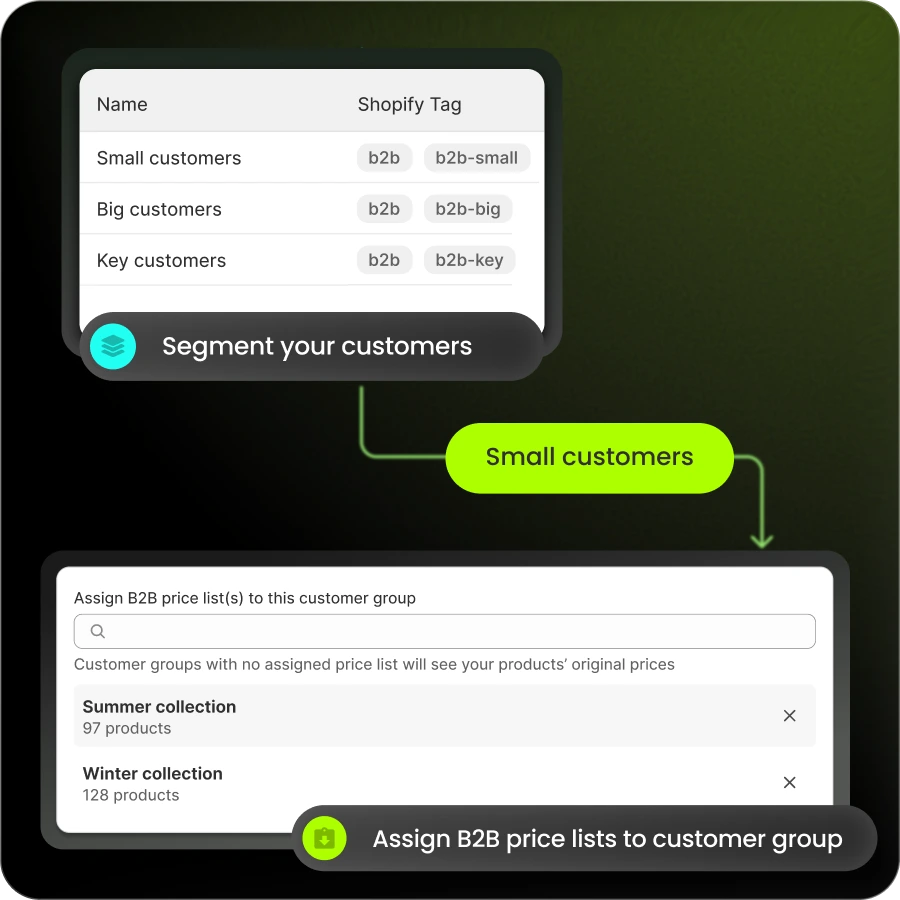
Assigning different price lists to different buyer segments is the foundation. Distributors, retailers, and VIP accounts each carry their own pricing agreement.
Volume Discounts and Quantity Rules
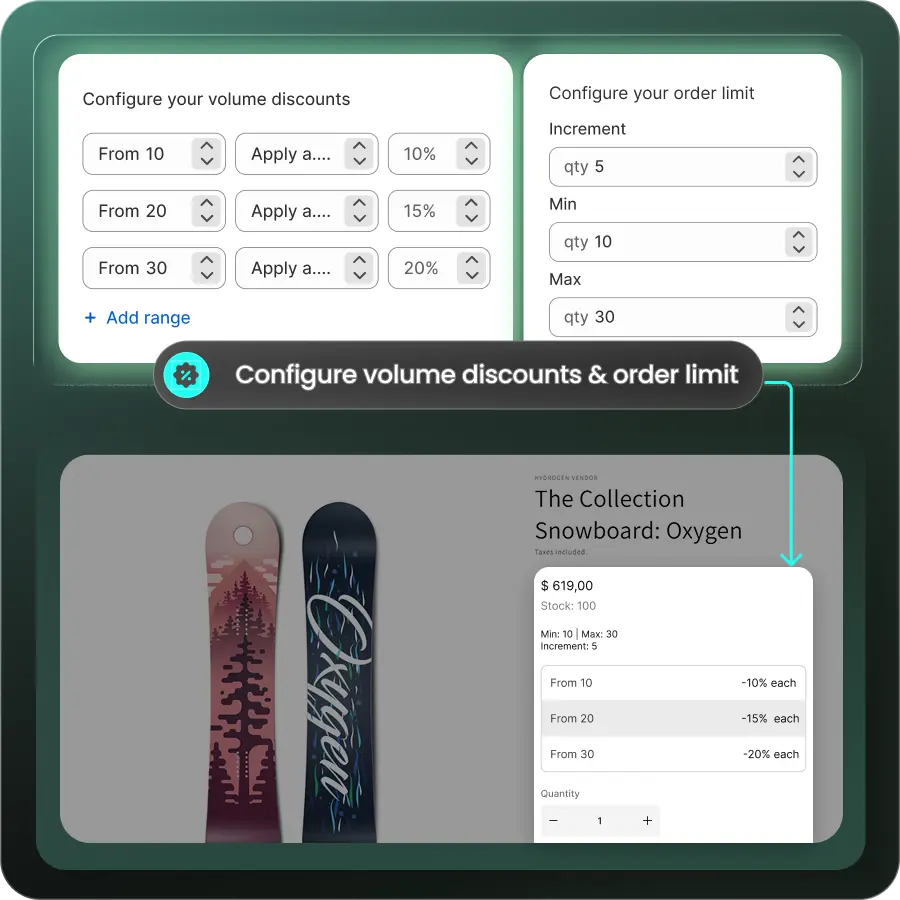
Tiered pricing that drops unit cost as quantity rises drives larger orders. Minimum order quantities and increments, like ordering in cases of 12, protect your margins.
Net Terms and Request for Quote
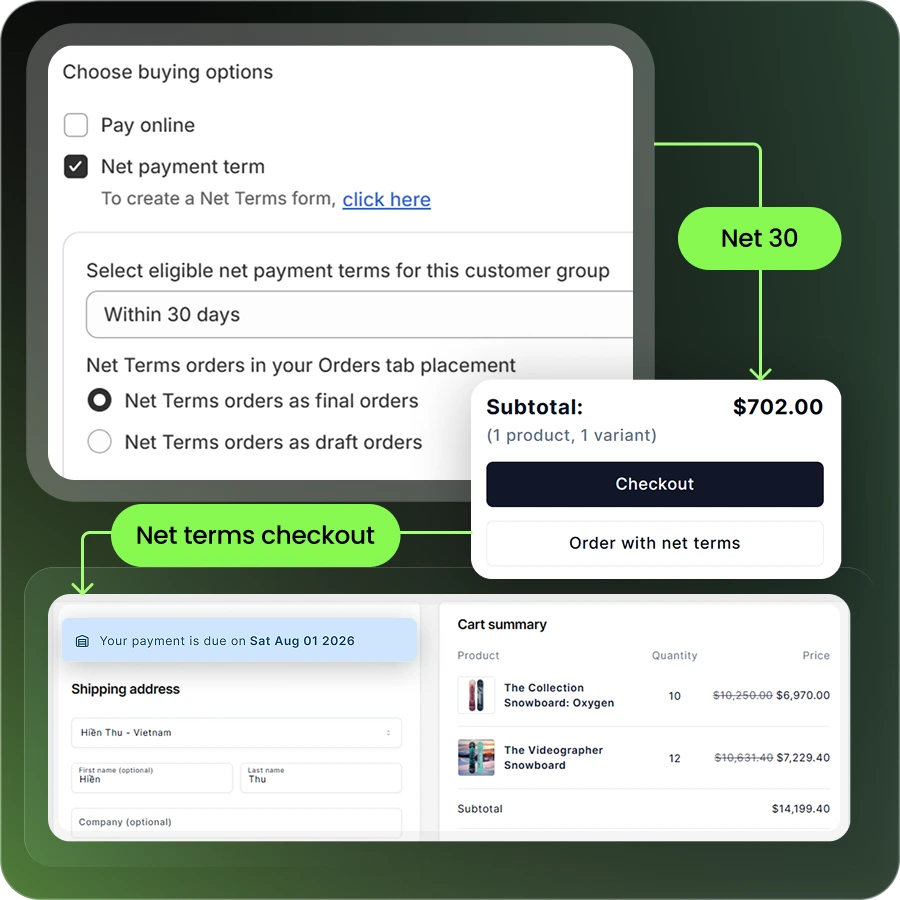
Offering net terms of 15, 30, or 60 days removes a major checkout barrier for business buyers. Request for quote workflows handle large or custom orders that need negotiation.
Wholesale Gating and Hidden Pricing
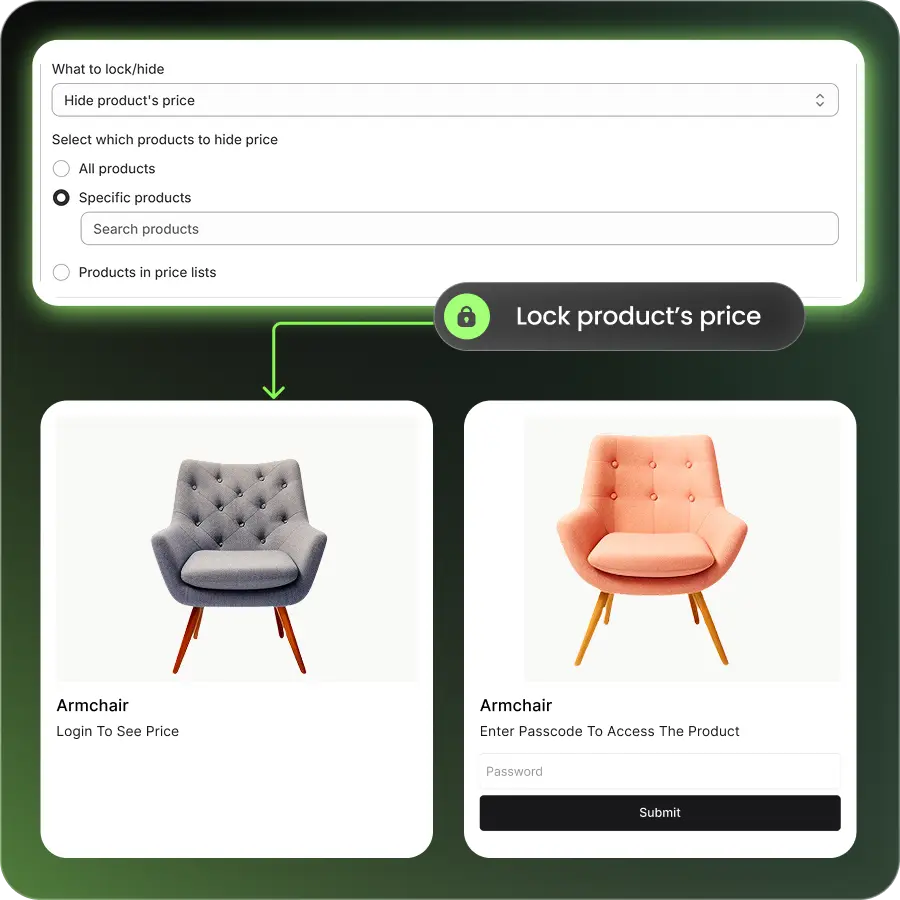
Gating wholesale prices keeps discounts visible only to approved buyers. Retail visitors see standard pricing or a login prompt instead.
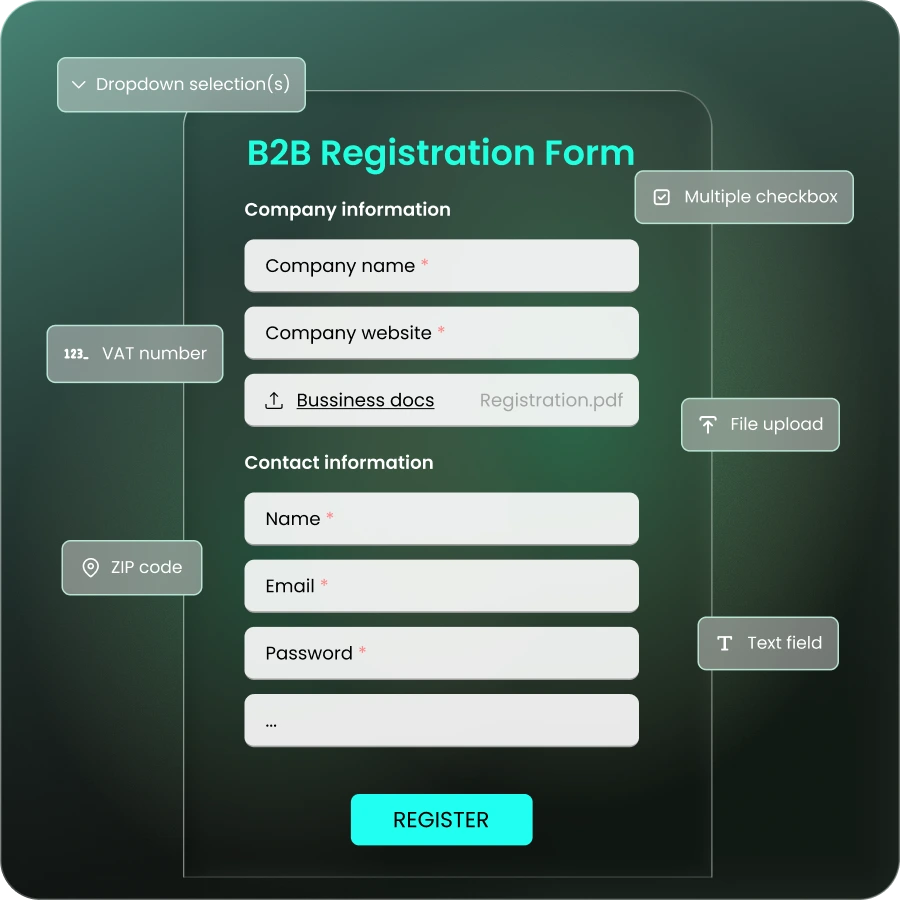
B2B Registration and Approval
Custom registration forms capture tax ID, resale certificate, and business license. An approval step lets you vet applicants before granting wholesale access.
ERP and CRM Integration
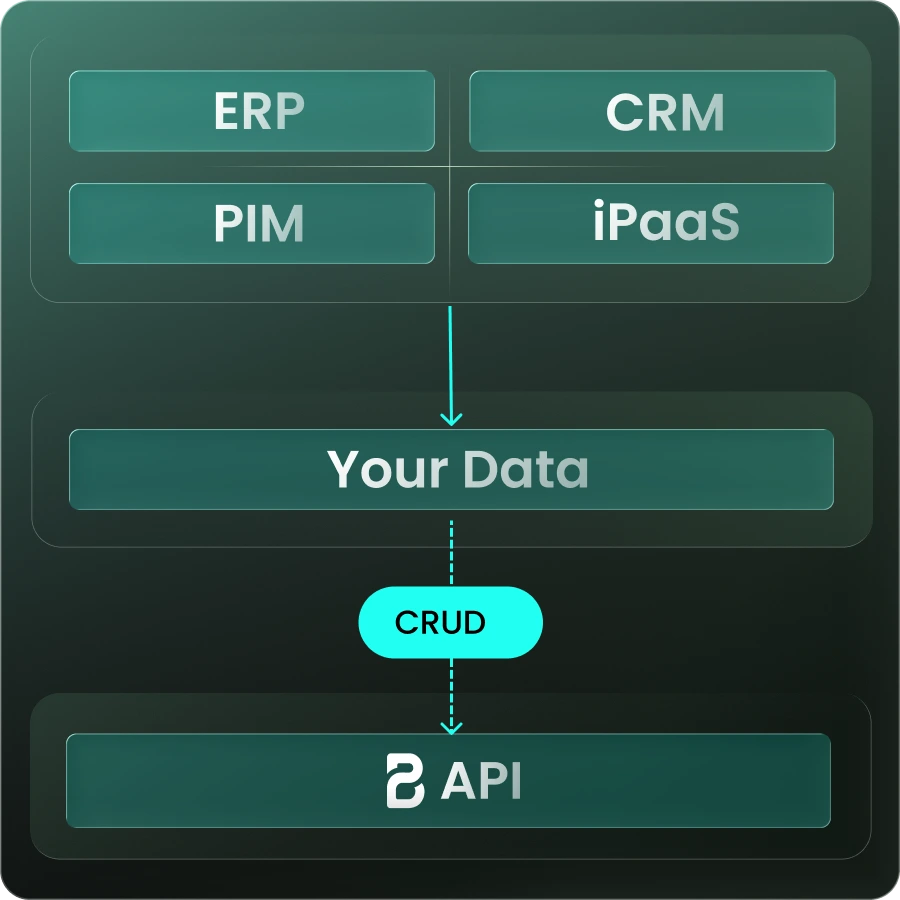
Native connectors or an API sync pricing, customers, orders, and inventory with systems like NetSuite, Zoho, or Odoo. Real-time sync keeps every channel current.
Common Misconceptions About B2B Ecommerce
A few myths keep businesses from moving forward. Here’s the reality behind the four most common ones.
- “B2B buyers don’t want to buy online”: modern buyers expect consumer-grade convenience, and most prefer self-service for reorders.
- “Relationships don’t matter online”: digital tools free reps from order entry so they can focus on strategic support.
- “Ecommerce requires public pricing”: B2B platforms support hidden pricing, login-gated catalogs, and customer-specific price lists.
- “Digital channels can’t handle complex orders”: modern platforms manage RFQ, net terms, volume rules, and multi-line orders without issue.
B2B Ecommerce Trends to Watch
The landscape keeps shifting. Five trends are shaping B2B ecommerce heading into 2026.
- AI-powered personalization: product recommendations and dynamic pricing based on buyer behavior
- Mobile-first buying: more buyers research and order from phones
- Headless and composable commerce: decoupled front and back ends for flexible buyer experiences
- Self-service expansion: quotes, returns, and account management moving into portals
- Unified commerce: single platforms handling B2B, B2C, and marketplace channels together
How to Build a B2B Ecommerce Strategy
Moving from traditional sales to digital wholesale takes more than installing an app. Our B2B ecommerce strategy guide goes deeper, but here’s the practical roadmap in five steps.
- Define buyer segments and pricing tiers: identify distributors, retailers, contractors, and VIPs, then map pricing, terms, and access for each.
- Audit your ERP, CRM, and order workflows: document where pricing, customer data, and orders live, and find the manual steps causing delays.
- Decide on a hybrid setup: check whether both channels can run from one platform instead of duplicating work across two.
- Configure pricing, payments, and access rules: set up price lists, volume discounts, net terms, and gated access by segment.
- Measure wholesale KPIs and iterate: track conversion rate, average order value, reorder frequency, and processing time, then refine.
Choosing a B2B Ecommerce Platform
The right B2B ecommerce platform supports hybrid selling, flexible pricing, deep ERP integration, and growth without another migration. Weigh those four factors against how you actually sell before you commit to any tool.
We compare the leading options in depth, from Shopify apps to enterprise systems, in the guide to the best B2B ecommerce platforms. Start there once you know which type of B2B ecommerce you’re running.
Launching Your B2B Ecommerce Store on Shopify With B2Bridge
If you sell wholesale and retail together, B2Bridge turns Shopify into a full B2B platform that never penalizes you for growing. You get unlimited price lists, orders, and customer groups on any Shopify plan, so scaling your wholesale volume doesn’t force an upgrade.
B2Bridge runs the whole wholesale workflow in one app instead of several:
- Unlimited B2B and B2C in one store: serve both buyer types from one Shopify admin
- B2B pricing engine: customer-group pricing, contract price lists, volume discounts, and quantity rules
- Net terms and RFQ: offer Net 15, 30, and 60 plus quote-to-order for large buyers
- Sales Rep Portal: let reps order on behalf of accounts and track commission
- Wholesale gating: hide prices and lock products for approved buyers only
- ERP and CRM integration: connect NetSuite, Zoho, Odoo, or custom systems through the Public API
B2Bridge also works as a technical partner, supporting setup and customization as your wholesale operation grows. Book a Demo to see it run on your own store, or compare plans on the pricing page.

FAQs About B2B Ecommerce
What is B2B and what are some examples?
B2B, or business-to-business, refers to transactions between businesses rather than with individual consumers. Examples include a manufacturer selling components to an assembler, a wholesaler supplying retail stores, or a software company licensing tools to other businesses.
Is Amazon a B2C or B2B company?
Amazon runs both. Amazon.com serves consumers, while Amazon Business is a dedicated B2B marketplace with bulk pricing, business accounts, and procurement features for organizations.
What are the four types of ecommerce?
The four main types are B2B (business-to-business), B2C (business-to-consumer), C2C (consumer-to-consumer, like marketplace reselling), and C2B (consumer-to-business, like freelance services).
What is an example of a B2B ecommerce website?
Alibaba.com is a well-known B2B marketplace connecting manufacturers and wholesalers with business buyers worldwide. Distributor portals like Grainger and McMaster-Carr are other common examples.
Do you need Shopify Plus to run B2B ecommerce on Shopify?
No. Apps like B2Bridge add wholesale features to standard Shopify plans, including customer-specific pricing, net terms, wholesale gating, and ERP integration, without a Plus upgrade.
How long does it take to launch a B2B ecommerce store?
Timelines vary with complexity. With the right platform and partner support, many merchants launch a working wholesale store in weeks rather than months, especially when using pre-built tools instead of custom development.

Hi, I’m Hanh – a product marketing professional passionate about driving growth, simplifying complex solutions, and creating impactful strategies for Shopify that connect products with customers.