Manufacturers who still run wholesale through email threads and phone orders are watching margins shrink while competitors capture accounts with self-service portals. The shift isn’t coming—it’s already here, and buyers expect to check inventory, view their pricing, and reorder without waiting for a callback.
This guide breaks down what B2B ecommerce looks like for manufacturers, the features that actually matter, and 10 strategies you can apply to drive wholesale revenue on Shopify.

What Is B2B Ecommerce for Manufacturers
B2B ecommerce for manufacturers means selling products directly to businesses—distributors, wholesalers, or end users—through a secure online portal that integrates with backend ERP and CRM systems. Instead of phone calls, fax orders, or email threads, buyers log into a portal where they see personalized pricing, check real-time inventory, and place orders without waiting for a sales rep.
The core components look like this:
- Secure buyer portal: Verified accounts log in to view their negotiated pricing and place orders
- ERP/CRM integration: Orders flow directly into production workflows, inventory management, and billing
- Self-service model: Buyers track shipments, view order history, and reorder without rep involvement
For manufacturers still running wholesale through spreadsheets and inbox threads, this shift fundamentally changes how you serve accounts.
How Manufacturer B2B Ecommerce Differs From B2C and Generic B2B
You might assume any ecommerce platform handles wholesale. In practice, manufacturer B2B operations involve complexity that standard retail tools weren’t designed for.
| Feature | B2C Ecommerce | Generic B2B | Manufacturer B2B Ecommerce |
|---|---|---|---|
| Pricing | Fixed for all buyers | Basic tiered discounts | Contract-specific, role-based, volume-based |
| Order Size | Single units | Moderate bulk | Case packs, MOQs, pallet quantities |
| Payment | Instant checkout | Some invoicing | Net terms, RFQ, credit approval |
| Buyer Relationship | Anonymous | Account-based | Multi-level approval, long-term contracts |
The difference comes down to relationship depth. Your distributors expect negotiated pricing that reflects volume commitments. Your retailers want net payment terms matching their cash flow cycles. Generic B2B tools often can’t accommodate manufacturer realities without heavy customization.
Why Manufacturers Are Investing in B2B Ecommerce
Wholesale buyers now expect the same convenience they experience as consumers. They want to check inventory, view pricing, and reorder without waiting for a callback.
Meanwhile, manufacturers relying on manual order entry face operational drag. Phone orders get transcribed into ERPs. Pricing gets confirmed via email chains. Inventory gets checked across disconnected systems. Each step introduces delay and error potential.
The competitive pressure is real too. Manufacturers without digital channels risk losing accounts to competitors who offer self-service portals.
Benefits of B2B Ecommerce for Manufacturers
Direct Access to Wholesale and End Customers
Ecommerce lets you sell to distributors, retailers, and even end-users without intermediaries controlling the relationship. You maintain brand consistency and capture customer data that would otherwise live in a distributor’s system.
Higher Average Order Value and Wholesale Conversion
Transparent pricing and visible volume incentives encourage larger orders. When buyers see exactly what they’ll save at higher quantities, they tend to buy more.
Lower Operational Cost per Order
Automating order entry, billing, and inventory updates reduces manual labor that eats into margins. Order processing time drops significantly when buyers enter orders directly.
Scalable Growth Across Regions and Currencies
Multi-currency support and localized tax handling let you serve global buyers without adding regional sales teams. Your portal works around the clock.
Real-Time Customer and Sales Insights
Access to buyer behavior data, order history, and purchasing patterns gives you forecasting power that phone orders never provided.
Reduced Sales Rep Workload on Reorders
Self-serve reordering frees reps to focus on new accounts and complex deals rather than processing routine purchases.
Core Features of a Manufacturer B2B Ecommerce Platform
Account-Specific and Contract Pricing
Assigning unique price lists per customer, customer group, or company account ensures each buyer sees only their negotiated pricing. No confusion, no manual lookups.
Volume Discounts, MOQs, and Case Packs
Rules for minimum order quantities (MOQs), quantity increments, and tiered pricing protect margins while enforcing packaging constraints automatically.
Net Payment Terms and RFQ Workflows
Net payment terms—like Net 15, Net 30, or Net 60—let approved buyers pay by invoice rather than at checkout. Request-for-quote (RFQ) workflows let buyers submit pricing requests for large or custom orders. Without both options, you’ll see cart abandonment from wholesale accounts.
Gated Access and Hidden Wholesale Pricing
Restricting wholesale pricing visibility to logged-in, approved buyers protects trade pricing from retail shoppers and competitors.
ERP and CRM Integration
Real-time sync between your ecommerce platform and backend systems like NetSuite, Zoho, or Odoo eliminates double entry and keeps inventory, pricing, and orders aligned.
Quick Order and Self-Serve Reordering
Bulk order forms, saved carts, and fast SKU entry speed up purchasing for high-volume accounts who know exactly what they want.
Hybrid B2B and B2C on One Storefront
Running both wholesale and retail operations from a single store reduces operational overhead compared to maintaining separate sites.
10 B2B Ecommerce Strategies for Manufacturers That Drive Revenue
1. Personalize Pricing by Customer Group and Contract
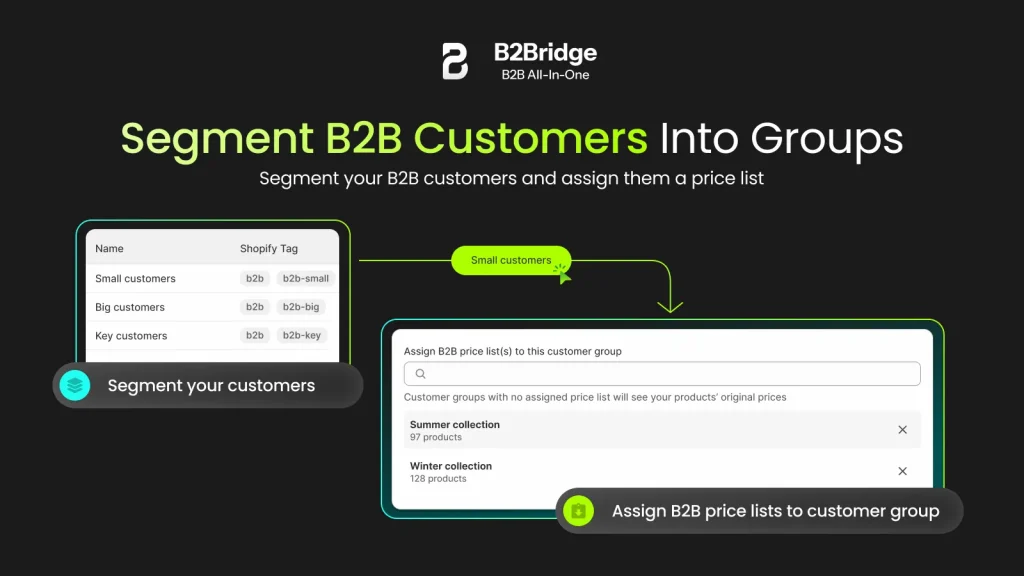
Segment buyers into tiers—Gold, Silver, Bronze, or by type like distributor pricing versus retailer pricing—and assign tailored price lists to each group. When buyers see relevant pricing instantly, friction drops and abandoned carts decrease.
Solutions like B2Bridge let you manage unlimited price lists by customer or tag directly within Shopify.
2. Automate Volume Discounts and Order Minimums
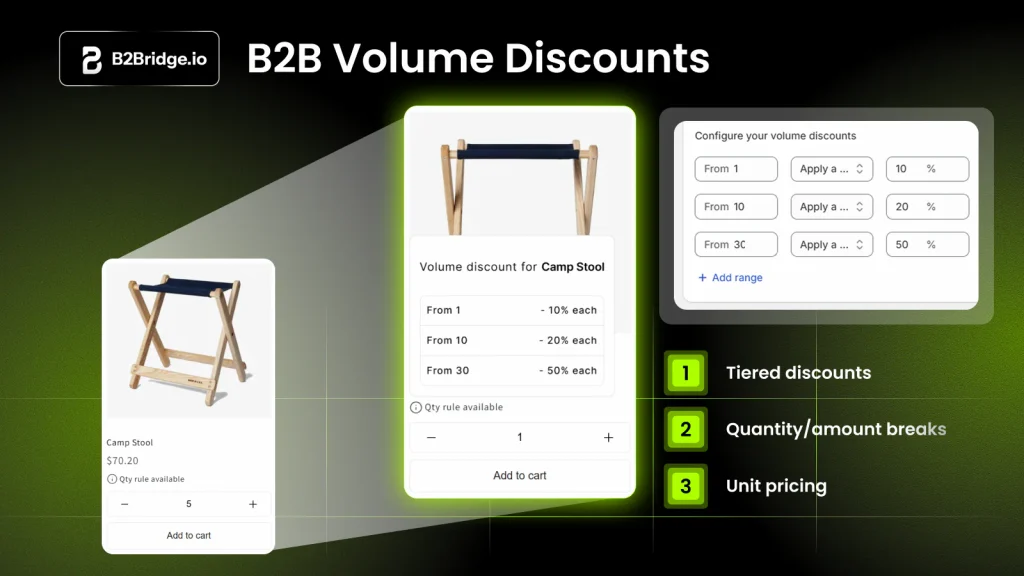
Set up tiered pricing tables and MOQ rules that apply automatically at checkout. Buyers see quantity breaks displayed on product pages, which incentivizes larger orders while protecting margins without manual intervention.
3. Offer Net Terms and RFQ Inside Checkout
Enable Net 30 or Net 60 for approved accounts and RFQ for large or custom orders. Removing payment friction addresses one of the primary causes of B2B cart abandonment.

4. Gate Wholesale Pricing Behind B2B Registration
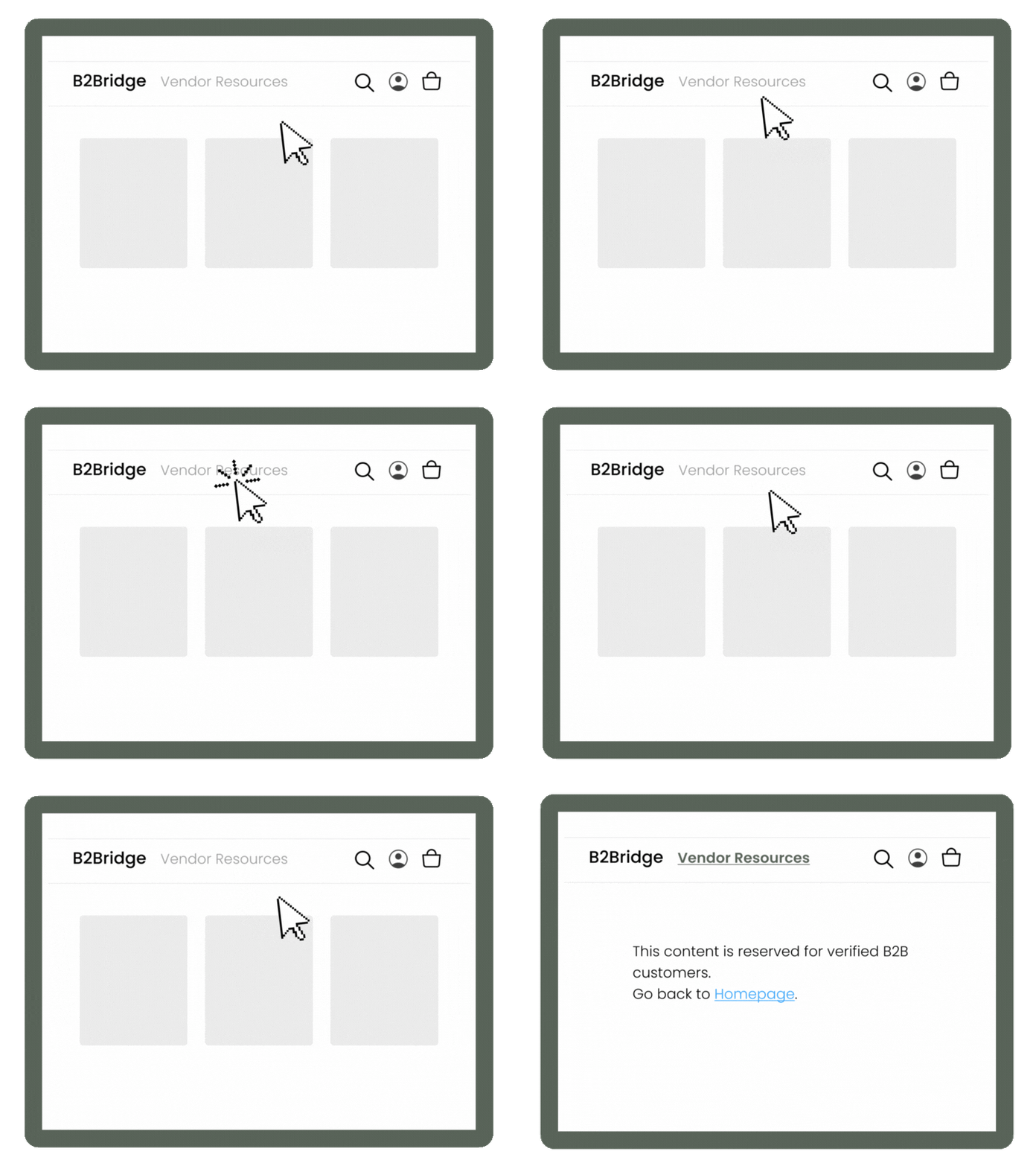
Use login-only access and B2B registration forms to verify buyers before granting wholesale pricing. Gating protects trade pricing and drives lead capture simultaneously.
5. Sync Pricing, Inventory, and Orders With Your ERP
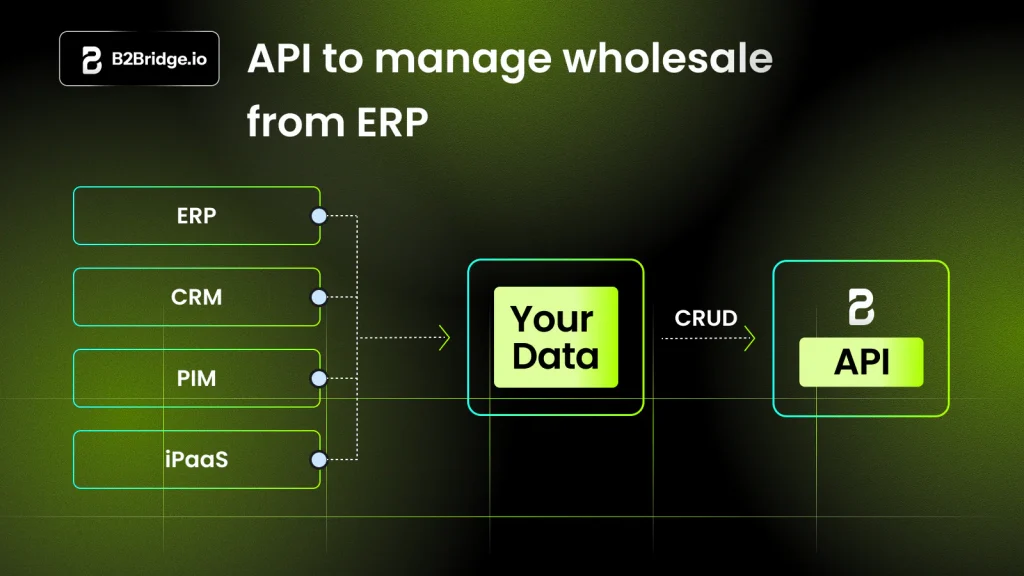
Connect your ecommerce platform to NetSuite, Zoho, Odoo, or custom ERPs via API. Real-time sync eliminates errors, speeds fulfillment, and ensures buyers see accurate stock levels.
6. Launch a Quick Order Portal for Repeat Buyers
Offer bulk order forms, CSV uploads, and saved carts for high-frequency accounts. Faster reordering increases purchase frequency and retention.

7. Run B2B and B2C on a Unified Storefront
Operate wholesale and retail from one store, with B2B pricing and features activated only for logged-in wholesale buyers. Running a unified storefront cuts operational cost and eliminates duplicated work.

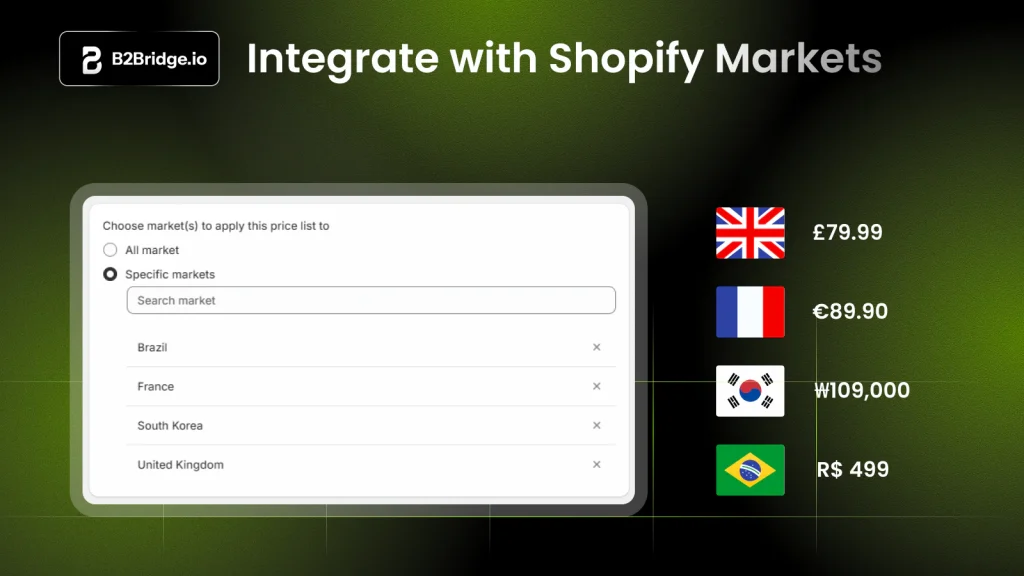
8. Enable Multi-Currency and Tax-Exempt Wholesale Pricing
Support global buyers with local currencies and tax-exempt logic for resellers. Removing currency and tax barriers opens international wholesale accounts.
9. Replace Email Quoting With Quote-to-Order Workflows
Move RFQ from manual email threads to a digital workflow where quotes convert directly to orders. Digital quoting shortens sales cycles and reduces lost quotes.

10. Reposition Sales Reps as Account Managers
Self-serve ordering frees reps from transactional tasks so they can focus on relationship-building and upselling. The result is increased deal size and account expansion.

B2B eCommerce for Manufacturers Case Studies
Beardbrand – Elevating D2C with Headless Flexibility
Industry: Personal grooming products (beard oil, grooming tools)

Challenge: Fragmented sales channels and limited personalization; needed more control over UX.
Solution with Shopify Plus:
- Adopted headless commerce to build a faster, more customized front-end.
- Used automation tools for smart product recommendations and repeat purchase prompts.
- Built internal apps for better fulfillment and logistics control.
Results:
- +30% increase in conversion rate
- Consistent year-over-year growth
- Greater brand ownership and D2C margin optimization
Bombas – Scaling a Mission-Driven Manufacturing Brand
Industry: Apparel (socks and underwear manufacturer).

Challenge: Reliance on third-party retail limited brand visibility and control.
Solution with Shopify Plus:
- Transitioned to D2C Ecommerce model on Shopify Plus.
- Deployed advanced customer analytics and A/B testing for performance marketing.
- Leveraged platform flexibility to promote their “One Purchased = One Donated” mission.
Results:
- Hundreds of millions in revenue
- Over 50% customer retention rate
- Recognized as one of the fastest-growing sock brands in the U.S.
Ruroc – From Niche Helmet Maker to Global Brand
Industry: Motorcycle and snow sports helmets

Challenge: Needed a global Ecommerce infrastructure to handle flash sales, high traffic, and international demand.
Shopify Plus Solution:
- Migrated from Magento to Shopify Plus for faster performance.
- Built a headless commerce system to scale globally.
- Integrated Shopify Flow to automate order handling.
Results:
- Grew to 7-figure monthly revenue.
- Orders from 80+ countries.
- Zero downtime during product launches.
How to Integrate B2B Ecommerce With Your ERP and CRM
Step 1. Map Pricing and Customer Data Across Systems
Audit your ERP’s price lists, customer groups, and tags. Then map each element to your ecommerce platform’s structure so pricing logic translates correctly.
Step 2. Sync Orders, Inventory, and Fulfillment in Real Time
Set up two-way sync so orders flow to your ERP and inventory updates reflect on the storefront instantly. Two-way sync prevents overselling and keeps fulfillment on track.
Step 3. Use APIs to Manage Price Lists Inside Your ERP
Enterprise-grade platforms like B2Bridge offer APIs so your team can update B2B pricing directly from your ERP without logging into multiple systems.
How to Choose a B2B Ecommerce Platform for Manufacturing
Pricing Engine Flexibility
Assess whether the platform supports your complexity: role-based pricing, contract price lists, volume tiers, multi-currency, and tax-exempt logic.
Integration Depth With Your Tech Stack
Evaluate native connectors and API capabilities for your ERP (NetSuite, Zoho, Odoo, custom) and CRM. Shallow integrations create data silos.
Time to Launch and Total Cost of Ownership
Compare B2B ecommerce platforms on implementation speed, ongoing fees, and whether you require Shopify Plus or custom development.
Buyer Experience and Self-Serve Capabilities
Check for quick order forms, saved carts, B2B registration, and mobile-friendly UX that matches modern buyer expectations.
Common Challenges Manufacturers Face With B2B Ecommerce
Channel Conflict With Distributors
Direct sales may concern existing partners. Segmented pricing and exclusive product lines can mitigate tension with distribution partners.
Disconnected ERP and Storefront Data
Lack of integration causes inventory errors and pricing mismatches. Prioritizing deep ERP sync from the start prevents data disconnects.
Complex Pricing That Outgrows Native Tools
Shopify’s native B2B or basic apps often can’t handle contract pricing and volume rules at scale. Enterprise-grade solutions like B2Bridge provide the flexibility manufacturers require.
Slow Wholesale Buyer Adoption
Some buyers resist change. Onboarding support, training, and incentives help drive portal adoption among existing accounts.
The Future of B2B Ecommerce for Manufacturers
AI-powered personalization is delivering measurable conversion lifts for manufacturers who implement it well. Mobile-first reordering is accelerating as procurement managers increasingly work from phones.
Composable and headless architecture enables faster customization without full platform rebuilds. And hybrid B2B/DTC models—selling wholesale and direct from one platform—are growing rapidly, particularly on Shopify.
Build a Revenue-Driving B2B Ecommerce Operation With B2Bridge
B2Bridge brings enterprise B2B capabilities to Shopify without requiring Shopify Plus or a separate platform. The advanced pricing engine supports role-based and contract pricing, volume tiers, and multi-currency logic. Deep ERP and CRM integrations with NetSuite, Zoho, Odoo, and custom systems keep pricing, customers, and orders aligned.
The B2B-optimized buyer experience includes quick order pages, dedicated B2B cart with net terms, RFQ workflows, and B2B registration—all running on a unified B2B + B2C storefront.
B2Bridge works with your team from day one to understand your requirements, launch the setup, and support it after go-live.

Frequently Asked Questions About B2B Ecommerce for Manufacturers
How much does it cost to implement B2B ecommerce for manufacturers?
B2B ecommerce costs vary based on platform, integrations, and customization scope—ranging from monthly SaaS fees for app-based solutions to significant upfront investment for custom builds.
How long does it take to launch a manufacturer B2B ecommerce store?
Timeline depends on complexity. Simple setups can launch in days with app-based solutions like B2Bridge, while enterprise builds with deep ERP integration may take several months.
Do manufacturers need Shopify Plus to run B2B ecommerce on Shopify?
No—apps like B2Bridge bring enterprise B2B capabilities (custom pricing, net terms, gated access) to standard Shopify plans without Plus.
Will launching a B2B ecommerce channel cannibalize existing distributor sales?
Not if you design the strategy carefully. Many manufacturers use exclusive pricing, product segmentation, or partner portals to complement rather than compete with distributors.
Can manufacturers run both B2B and B2C sales from the same online store?
Yes—platforms like B2Bridge enable a unified storefront where wholesale pricing and features activate only for logged-in B2B buyers, while retail shoppers see standard B2C pricing.

Hi, I’m Ha My Phan – an ever-curious digital marketer crafting growth strategies for Shopify apps since 2018. I blend language, logic, and user insight to make things convert. Strategy is my second nature. Learning is my habit. And building things that actually work for people? That’s my favorite kind of win.