Shopify Plus wins on speed to market, total cost of ownership, and operational simplicity. Salesforce Commerce Cloud wins on deep customization, native B2B capabilities, and tight CRM integration for enterprises already invested in the Salesforce ecosystem.
The right choice depends on your team’s technical resources, your B2B complexity, and how much you’re willing to spend on implementation and ongoing development. This guide breaks down both platforms across pricing, features, B2B workflows, and migration considerations so you can make the call with confidence.
What Is Shopify Plus
Shopify Plus is the enterprise tier of Shopify, now powering over 47,000 live websites, designed for high-growth brands that have outgrown standard plans. It runs as a fully managed SaaS platform, meaning Shopify handles hosting, security patches, and infrastructure updates on your behalf.
The platform gives you access to Shopify Flow for workflow automation, Shopify Functions for custom checkout logic, and a wholesale B2B channel for segmented buyer experiences. You also get Liquid templating for storefront customization and access to thousands of apps through the Shopify App Store.
Shopify Plus typically serves mid-market to enterprise DTC brands and hybrid B2B/B2C operations looking for speed and simplicity over deep customization.

What Is Salesforce Commerce Cloud
Salesforce Commerce Cloud (SFCC) is an enterprise-grade digital commerce platform that sits within the broader Salesforce ecosystem. It comes in two primary versions: B2C Commerce (formerly Demandware) for retail operations and B2B Commerce for wholesale.
SFCC targets large enterprises with complex requirements, particularly organizations already using Salesforce CRM, Marketing Cloud, or Service Cloud. Customization happens through SFRA (Storefront Reference Architecture) and headless APIs, while Einstein AI powers product recommendations and personalized search.
The platform works well for multi-brand retailers, global operations, and companies that want unified customer data across sales, service, and commerce.
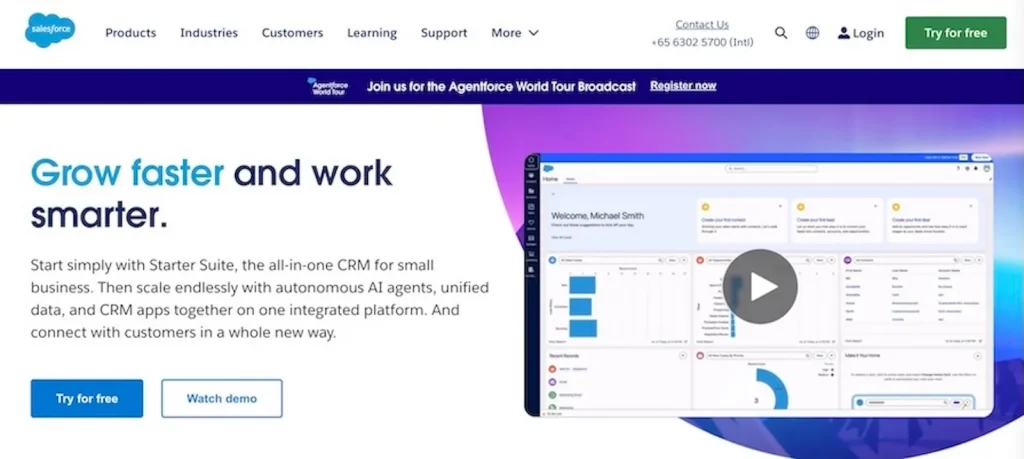
Shopify Plus vs Salesforce Commerce Cloud at a Glance
Here’s a side-by-side comparison of the core differences:
| Criteria | Shopify Plus | Salesforce Commerce Cloud |
|---|---|---|
| Best for | Fast-growing DTC and hybrid B2B/B2C brands | Large enterprises with complex global operations |
| Pricing model | Monthly subscription with transaction fees | GMV-based licensing plus implementation costs |
| Time to launch | Weeks to a few months | Several months to over a year |
| Technical ownership | Lean internal teams with app-driven extensibility | Dedicated dev teams or system integrators |
| Native B2B | Basic wholesale channel, enhanced via apps | Robust native B2B Commerce module |
| Ecosystem integration | Thousands of apps in Shopify App Store | Tight integration with Salesforce CRM, Marketing Cloud, Service Cloud |
Strengths of Shopify Plus
Faster Time to Market
Shopify Plus offers pre-built themes, streamlined onboarding, and managed infrastructure. Brands can launch or replatform in weeks rather than months, which matters if you don’t have a large dev team or want to move quickly.
Lower Total Cost of Ownership
The subscription model keeps costs predictable. Hosting, security, and platform updates are included, so you’re not paying separately for infrastructure or version upgrades.
Built-In Omnichannel and Checkout
Shopify’s native POS, social commerce integrations, and Shop Pay checkout—which converts up to 36% better than competitors—work together out of the box. You can sell across channels from one backend without stitching together multiple systems.
App Ecosystem and Extensibility
The Shopify App Store is a major differentiator. Thousands of vetted apps cover B2B pricing, subscriptions, loyalty programs, and ERP connectors. Shopify Functions and APIs let you add custom logic without modifying core platform code.
Continuous Platform Updates
Shopify releases regular “Editions” updates that apply automatically to all merchants. You get new features without manual upgrades or version fragmentation.
Weaknesses of Shopify Plus
Liquid and Developer Constraints
Shopify uses Liquid, a proprietary templating language with a smaller developer talent pool than mainstream languages like JavaScript or Python. Deep backend customization can hit limitations.
Backend Customization Limits
Some merchants require highly custom data models, workflows, or integrations that exceed Shopify’s opinionated architecture. Workarounds often involve middleware or external systems.
Native B2B Depth Gaps
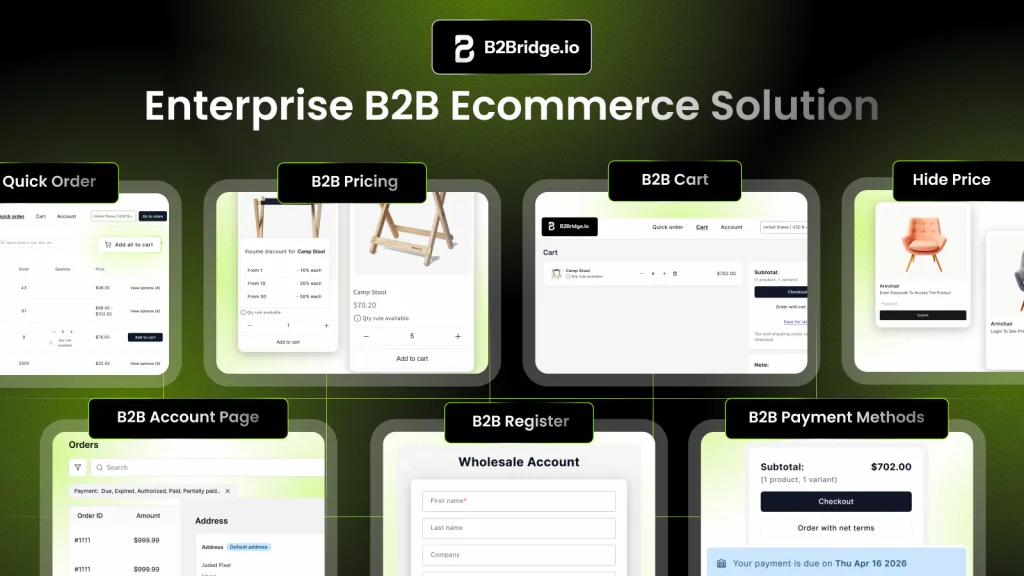
While Shopify Plus offers a wholesale channel, out-of-the-box B2B features like complex pricing tiers, net terms, and RFQ workflows are less mature than dedicated B2B platforms. Third-party apps like B2Bridge fill these gaps for Shopify merchants who want enterprise-grade B2B without switching platforms.
Strengths of Salesforce Commerce Cloud
Deep Enterprise Customization
SFCC allows extensive customization of business logic, data models, and storefront architecture. If your operational requirements can’t fit a templated approach, this flexibility becomes valuable.
Native B2B Commerce Module
Salesforce B2B Commerce is purpose-built for complex wholesale scenarios. Account hierarchies, contract pricing, requisition lists, and approval workflows come out of the box.
AI and Personalization with Einstein
Einstein is Salesforce’s AI layer. It delivers product recommendations, predictive sort, and personalized search natively embedded in the commerce experience.
Multi-Site and Brand Portfolio Management
SFCC supports managing multiple storefronts, brands, and locales from a single instance. This works well for conglomerates or franchise models with distinct regional requirements.
Salesforce Customer 360 Integration
Unified customer data across Sales Cloud, Service Cloud, Marketing Cloud, and Commerce Cloud is most valuable for organizations already invested in the Salesforce ecosystem.
Weaknesses of Salesforce Commerce Cloud
High License and Revenue Share Costs
SFCC uses GMV-based (Gross Merchandise Value) licensing, meaning costs can escalate as sales volume grows. Add-on modules and Salesforce ecosystem products increase the total.
Long Implementation Cycles
Typical project timelines stretch from several months to over a year. Custom development, data migration, and integration complexity drive the extended timelines.
Steep Technical Learning Curve
SFCC requires specialized developer skills in SFRA, OCAPI, and SCAPI. Teams unfamiliar with the Salesforce stack often face a learning curve that limits agility.
Heavy Reliance on System Integrators
Most SFCC implementations require certified partners or system integrators. This adds cost and creates dependency for ongoing changes and support.
Pricing and Total Cost of Ownership Comparison
Shopify Plus Pricing Model
Shopify Plus uses a subscription-based model with a monthly platform fee plus transaction fees. Hosting, security, and updates are included, so there are no surprise infrastructure invoices.
Salesforce Commerce Cloud Pricing Model
SFCC uses GMV-based licensing, with implementation costs alone ranging from $200,000 to $500,000+, and customization and SI fees contribute further to total cost. Pricing is negotiated and varies by contract.
Implementation and Ongoing Development Costs
Shopify Plus is often managed by smaller internal teams or agencies. SFCC typically requires larger budgets for system integrators and dedicated developers.
- Platform fees: Subscription vs. GMV-based
- Implementation: Weeks with low-touch setup vs. months with high-touch setup
- Ongoing support: App-based enhancements vs. custom dev retainers
- Hidden costs: Upgrades, hosting, and compliance are included in Shopify but variable in SFCC
Customization, Extensibility, and Developer Experience
Shopify Plus uses Liquid, Shopify Functions, and a rich app ecosystem for extending functionality without modifying core code. SFCC offers deeper access to business logic via SFRA and APIs but requires more specialized skills.
When does each approach fit? If your team is lean and you want to move fast, Shopify’s app-first model works well. If you have dedicated developers and want low-level control, SFCC’s architecture gives you more room at the cost of complexity.
B2B Capabilities Compared
Customer-Specific and Contract Pricing
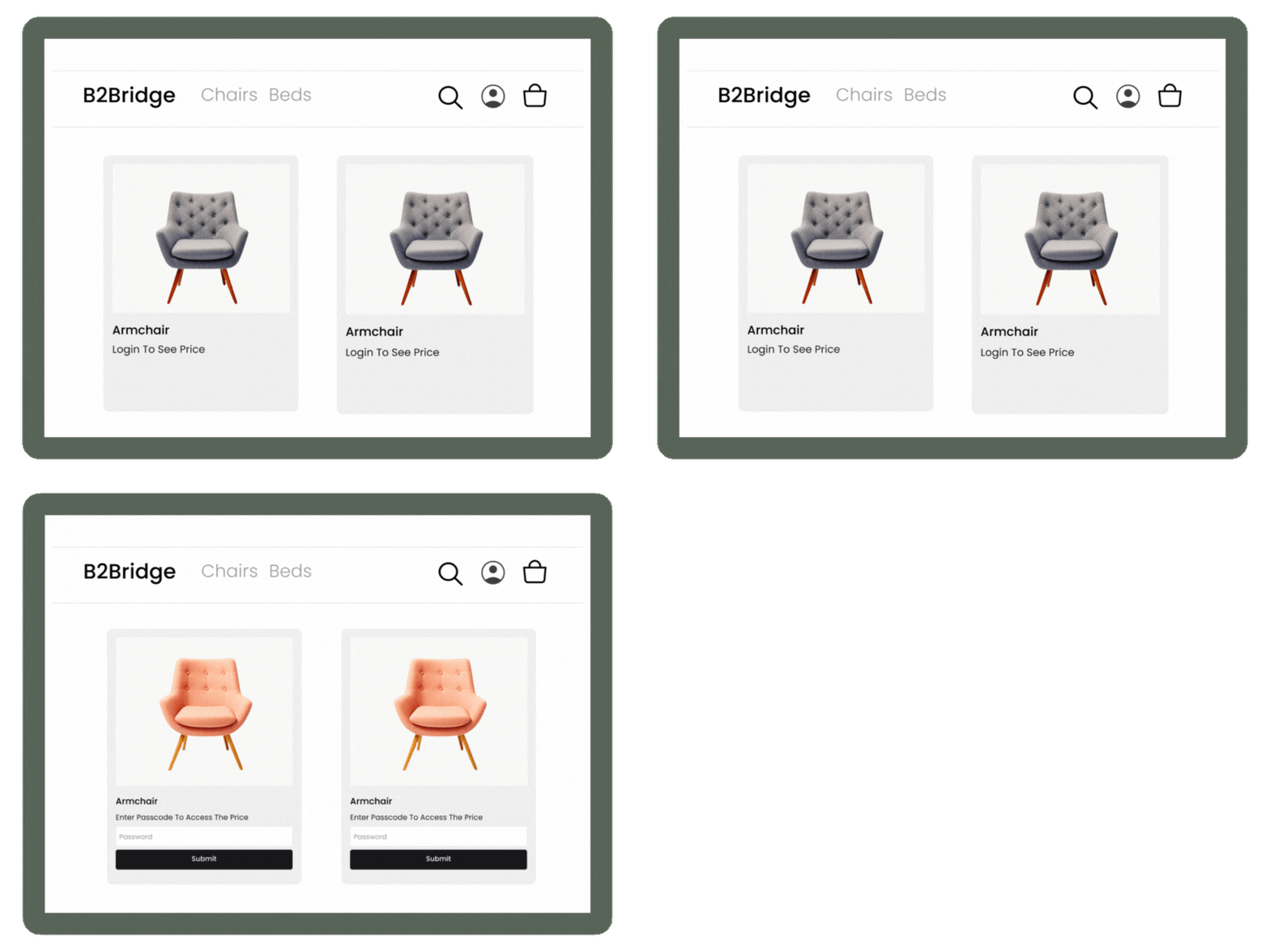
Showing different prices to different buyer segments is standard in B2B. SFCC offers this natively in B2B Commerce. Shopify Plus requires apps or its native B2B features, which are limited.
Solutions like B2Bridge add enterprise-grade pricing engines to Shopify, including role-based pricing, volume tiers, and customer-specific price lists.
Net Terms, RFQ, and Quote-to-Order Workflows
B2B buyers often expect to pay on Net 30/60 terms or negotiate quotes before ordering. SFCC supports these workflows natively. Shopify Plus merchants can enable them via apps.
B2Bridge provides net terms and RFQ-to-order workflows directly within Shopify checkout.
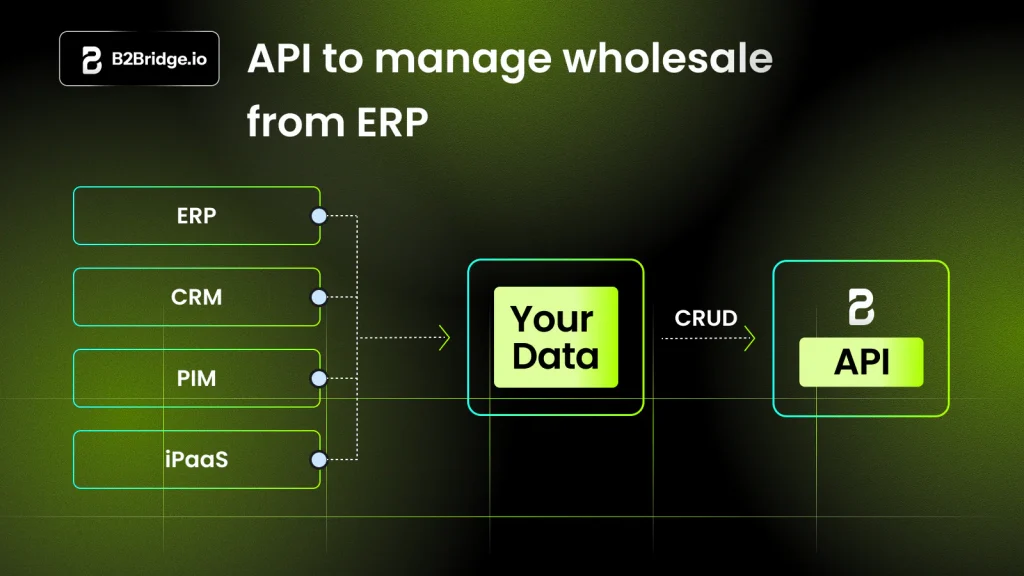
ERP and CRM Integration
Both platforms offer APIs for connecting to ERP systems like NetSuite, SAP, and Odoo, as well as CRM systems. SFCC has native Salesforce CRM integration. Shopify Plus relies on middleware or apps.
B2Bridge offers deep ERP/CRM connectors that sync pricing, customers, and orders for Shopify merchants.
Hybrid B2B and B2C on a Single Storefront
Running wholesale and retail from one store is operationally efficient. Shopify Plus supports this with segmented experiences. SFCC typically separates B2B and B2C instances.
B2Bridge enables unified B2B+B2C stores on Shopify without requiring Shopify Plus for B2B features.
Migrating from Salesforce Commerce Cloud to Shopify Plus
1. Audit Your Current Stack and Data Model
Inventory existing integrations, customizations, and data structures. Identify what you can replicate versus what you can simplify on Shopify.
2. Map Catalog, Pricing, and Customer Logic
Document product data, pricing rules, customer segments, and B2B-specific logic. Plan how these will translate to Shopify’s architecture or require app support.
3. Rebuild Storefront and B2B Workflows
Select a theme and apps, configure checkout, and implement B2B features. B2Bridge can replicate complex B2B workflows like pricing, net terms, and registration on Shopify.
4. Test, Cutover, and Stabilize
Run parallel testing, migrate historical data selectively, execute cutover, and monitor performance post-launch.
Choosing the Right Enterprise Commerce Platform for Your Business
The decision comes down to your priorities and constraints:
- Choose Shopify Plus if: You want fast launches, predictable costs, and can extend via apps. This works especially well for hybrid B2B/B2C models that leverage apps like B2Bridge.
- Choose Salesforce Commerce Cloud if: You want deep customization, native B2B at scale, or tight Salesforce ecosystem integration.
If you’re evaluating Shopify for B2B wholesale, Book a Demo with B2Bridge to see how enterprise B2B features work on Shopify without requiring Shopify Plus.
Frequently Asked Questions
Is Shopify Plus or Salesforce Commerce Cloud better for B2B wholesale?
Salesforce Commerce Cloud offers more robust native B2B features. However, Shopify Plus merchants can achieve comparable B2B functionality through specialized apps like B2Bridge, including customer-specific pricing, net terms, and ERP integration.
How much does Salesforce Commerce Cloud cost compared to Shopify Plus?
Shopify Plus uses a predictable monthly subscription. Salesforce Commerce Cloud employs GMV-based licensing that scales with revenue, often resulting in higher total costs when factoring in implementation and ongoing SI fees.
Can Shopify Plus support headless and composable commerce architecture?
Yes. Shopify Plus supports headless commerce through its Storefront API and Hydrogen framework. Brands can build custom frontends while using Shopify’s backend for checkout, inventory, and order management.
How long does a typical Shopify Plus or Salesforce Commerce Cloud implementation take?
Shopify Plus implementations typically complete in weeks to a few months. Salesforce Commerce Cloud projects often require several months to over a year depending on customization and integration complexity.
Can I run a hybrid B2B and B2C store on Shopify Plus?
Yes. Shopify Plus supports hybrid B2B and B2C storefronts. Apps like B2Bridge enable merchants to show different prices, payment terms, and checkout experiences to wholesale versus retail customers from a single Shopify store.

As a Product Marketing Executive at B2Bridge, I focus on the Enterprise B2B Ecommerce domain. I leverage my understanding of product and user psychology to deliver customer-centric content that addresses business challenges and fuels growth.