Open source B2B ecommerce platforms give you full access to the source code, letting you self-host, modify, and extend the software to fit complex wholesale operations like tiered pricing, bulk ordering, and account-based purchasing. For manufacturers, distributors, and wholesalers with pricing logic or ERP integrations that don’t fit a standard template, open source offers a level of control that SaaS platforms simply can’t match.
But that control comes with trade-offs—development costs, security responsibility, and infrastructure management that can quickly add up. This guide breaks down the top 7 open source B2B ecommerce platforms, the features that matter most for wholesale, and how to decide whether open source is actually the right path for your business.
What Is an Open Source B2B Ecommerce Platform
An open source B2B ecommerce platform provides freely accessible source code that you can self-host and customize for wholesale and corporate transactions. The source code is publicly available, which means your development team can modify pricing logic, build custom integrations, and extend functionality without waiting on a vendor’s product roadmap.
Unlike proprietary systems where the vendor controls everything behind the scenes, open source gives you full visibility into every line of code. You own the infrastructure, decide where your data lives, and control how the platform evolves over time.
Open source B2B platforms typically include:
- Source code access: Full visibility into the codebase for custom development
- Self-hosting or cloud deployment: You choose where the platform runs
- B2B-specific modules: Customer group pricing, net terms, and RFQ workflows
- Community or enterprise support: Options range from free forums to paid vendor SLAs
Open Source vs SaaS B2B Ecommerce Platforms
The core distinction comes down to ownership and responsibility. With open source, you host, maintain, and develop the platform yourself. With SaaS (Software as a Service), the vendor handles hosting and maintenance in exchange for subscription fees.
| Factor | Open Source B2B Platform | SaaS B2B Platform |
|---|---|---|
| Upfront cost | Lower licensing fees (often free) | Monthly/annual subscription |
| Customization | Unlimited—modify any code | Limited to platform capabilities |
| Hosting responsibility | You manage servers and security | Vendor handles infrastructure |
| Time to launch | Longer—requires development | Faster—turnkey setup |
| Long-term flexibility | Full control over roadmap | Dependent on vendor updates |
So why do some wholesale brands still choose open source despite the heavier lift? It often comes down to control over pricing logic, integrations, and data ownership.
Why Wholesale Brands Choose Open Source B2B Ecommerce
If your B2B pricing logic, ERP integrations, or buyer workflows don’t fit a standard template, open source gives you the freedom to build exactly what you want. The decision typically comes down to a few key factors.
- Complex pricing requirements: Contract pricing, volume tiers, and customer-specific discounts that SaaS platforms may not support natively
- Deep system integrations: Syncing with legacy ERPs, custom CRMs, or proprietary inventory systems
- Data sovereignty: Regulations or internal policies requiring full control over where customer and order data lives
- Avoiding vendor lock-in: Concern about being tied to a single platform’s pricing changes or feature limitations
Must Have Features in an Open Source B2B Ecommerce Platform
Before evaluating platforms, it helps to know which capabilities are non-negotiable for wholesale operations.
B2B Pricing Engine and Customer Group Pricing
B2B pricing works differently from B2C.
Wholesale buyers expect negotiated rates, volume discounts, and segment-specific pricing rather than a single price for everyone.
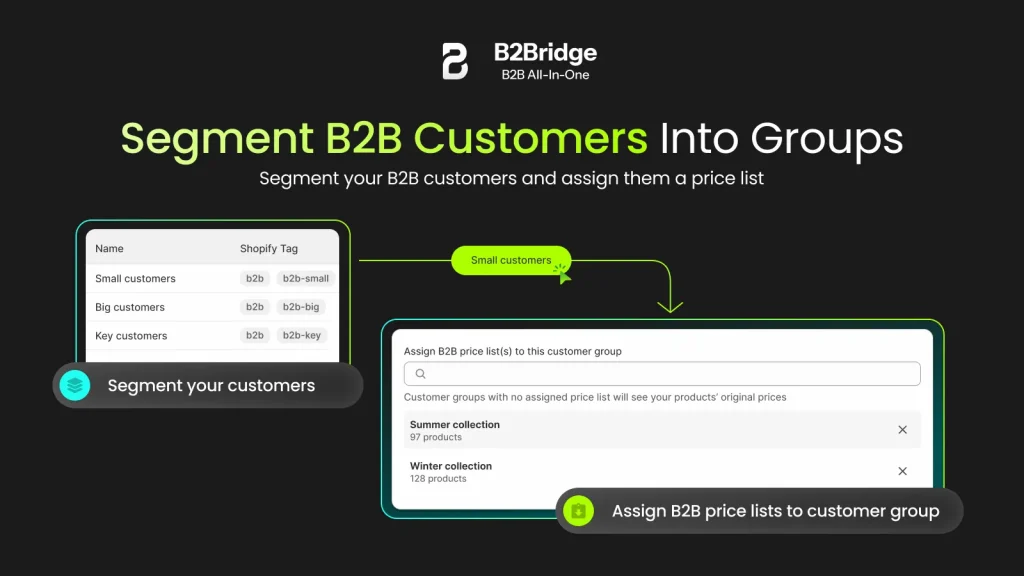
Customer group pricing means assigning different price lists to different buyer segments. For example, distributors might see one set of prices while retailers see another. Look for role-based pricing, contract price lists, and variant-level pricing as core capabilities.
Quote to Order and RFQ Workflows
RFQ stands for Request for Quote. It’s a process where buyers submit quote requests that merchants review, adjust, and convert into orders. For large or custom orders where pricing isn’t fixed upfront, RFQ workflows are essential.
The platform you choose will ideally support quote submission, negotiation, and conversion to draft orders—all within the same system rather than through email chains.

Net Payment Terms and Credit Controls
Net terms means payment is due 15, 30, or 60 days after invoicing rather than at checkout. B2B buyers expect invoice-based payment and credit lines because procurement cycles don’t align with instant checkout.
A capable platform lets you assign different payment methods and terms by customer group, so your VIP distributors can pay on Net 60 while new accounts pay upfront.

ERP and CRM Integration
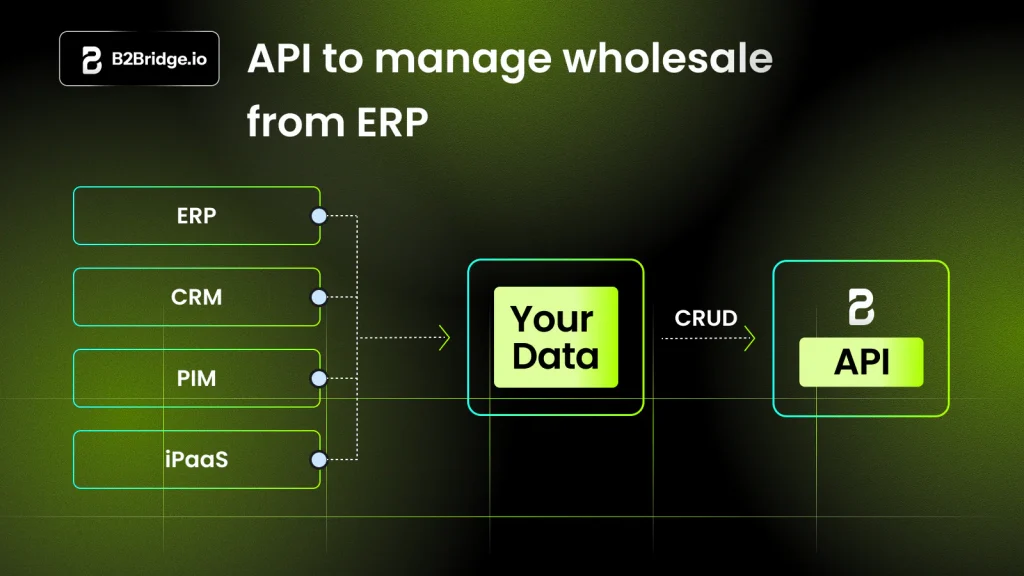
Wholesale operations rely on ERP (Enterprise Resource Planning) systems for inventory, pricing, and order data. CRM (Customer Relationship Management) systems handle buyer relationships and sales history.
Robust APIs or pre-built connectors for systems like NetSuite, Zoho, Odoo, or custom ERPs keep pricing, customers, and orders synchronized across your entire operation.
Wholesale Registration and Account Management
B2B buyers typically register, submit business credentials like tax IDs and resale certificates, and get approved before seeing wholesale pricing. Custom registration forms, approval workflows, and automatic assignment to customer groups upon verification are table stakes for any serious B2B platform.
Best Open Source B2B Ecommerce Platforms
The following platforms offer open source codebases with B2B capabilities. Each one has different strengths depending on your technical stack and wholesale complexity.
1. OroCommerce
OroCommerce was purpose-built for B2B from the ground up rather than adapted from a B2C platform. It offers native B2B features including corporate accounts, custom price lists, RFQ/quote workflows, and configurable product catalogs. The platform runs on PHP/Symfony.
Best for: Mid-market to enterprise manufacturers and distributors with complex pricing and workflow requirements.
Standout features: Corporate account hierarchies with buyer roles, built-in RFQ and negotiation workflows, flexible pricing engine with customer-specific and volume-based rules.

2. Spree Commerce
Spree Commerce is a Ruby on Rails-based headless platform with strong multi-store, multi-currency, and marketplace support. B2B extensions are available for customer group pricing, bulk ordering, and wholesale catalogs.
Best for: Teams comfortable with Ruby seeking a flexible, API-first foundation for cross-border or marketplace B2B.
Standout features: Headless architecture with REST API and Next.js storefront, multi-vendor marketplace capabilities, international support with multi-currency.

3. Sylius
Sylius is a PHP/Symfony-based framework that emphasizes developer flexibility and modern architecture. It requires building or extending B2B features, but offers strong customization for teams with specific requirements.
Best for: Development teams wanting a clean, modular codebase to build tailored B2B experiences.
Standout features: Highly modular architecture, strong Symfony ecosystem integration, supports both B2C and B2B with custom development.
4. Bagisto B2B Commerce
Bagisto is a Laravel-based platform with a dedicated B2B marketplace module. It offers supplier management, bulk upload, and tiered pricing out of the box.
Best for: Teams familiar with Laravel seeking a ready-made B2B marketplace foundation.
Standout features: Multi-vendor B2B marketplace support, supplier onboarding and management, quote management and bulk pricing.

5. nopCommerce
nopCommerce is a .NET-based platform with B2B features including customer roles, tiered pricing, and purchase order support.
Best for: Microsoft/.NET shops wanting an open source option within their existing technology stack.
Standout features: Multi-store and multi-vendor capabilities, customer role-based pricing, strong plugin ecosystem.

6. Magento Open Source
Magento Open Source is a PHP-based platform with extensive B2B extensions available through the marketplace. Full B2B functionality requires significant development work.
Best for: Enterprises with existing Magento expertise and budget for customization.
Standout features: Large extension marketplace for B2B modules, mature ecosystem with many implementation partners, scalable architecture.

7. Saleor
Saleor is a Python/Django-based headless commerce platform with a GraphQL API. The modern architecture suits custom B2B builds, though B2B-specific features require development.
Best for: Python-focused teams building custom wholesale experiences with a headless approach.
Standout features: GraphQL-first API design, multi-channel and multi-warehouse support, cloud-native architecture.

How to Choose the Right Open Source B2B Ecommerce Platform
Choosing the wrong platform leads to expensive rebuilds. Following a structured evaluation process helps avoid that outcome.
Step 1. Map Your B2B Pricing and Order Rules
Start by documenting your wholesale pricing models: contract pricing, volume tiers, customer-specific rates. Then add your order rules: minimum order quantities, quantity increments, approval workflows. Match these requirements against each platform’s native capabilities.
Step 2. Audit Your ERP and CRM Stack
List the systems the platform will integrate with—ERP for inventory and pricing, CRM for customer data, accounting software for invoicing. Check whether each platform offers pre-built connectors or requires custom API development.
Step 3. Estimate Total Cost of Ownership
Open source licensing may be free, but factor in hosting, security, development, and ongoing maintenance. Build a realistic cost estimate covering initial build, integrations, and multi-year operational costs.
Step 4. Validate Community and Long Term Support
Assess the health of the open source community by looking at active contributors, recent releases, and responsive forums. Consider whether enterprise support options exist if you want guaranteed SLAs.
Step 5. Run a Proof of Concept
Before committing, build a limited proof of concept testing your most complex B2B workflow—like customer-specific pricing with ERP sync. This validates that the platform handles your edge cases before you’re fully invested.
Hidden Costs and Trade Offs of Open Source B2B Platforms
Open source platforms come with costs that aren’t always obvious upfront.
- Development resources: You’ll want developers who know the platform’s tech stack on an ongoing basis
- Security responsibility: You own patching, PCI compliance, and vulnerability management
- Upgrade complexity: Major version upgrades can break customizations and require significant rework
- Integration maintenance: API changes in connected systems require your team to update integrations
- Opportunity cost: Time spent on infrastructure is time not spent on growth initiatives
For some teams, these trade-offs tip the balance toward a managed solution.
When a SaaS B2B Ecommerce Solution Outperforms Open Source
Open source isn’t always the right fit. SaaS platforms tend to work better when:
- Limited development capacity: You lack in-house developers or budget for ongoing custom work
- Speed to market priority: Launching quickly matters more than unlimited customization
- Predictable budgeting: Subscription pricing is easier to plan than variable development costs
- Existing SaaS ecosystem: Your ERP, CRM, and other tools are already SaaS-based
For Shopify merchants specifically, adding enterprise B2B capabilities through wholesale Shopify apps can deliver open-source-level flexibility without the infrastructure burden.
Bringing Enterprise B2B Operations to Shopify With B2Bridge
If you’re already on Shopify—or evaluating it—you can get enterprise-grade B2B capabilities without building from open source.
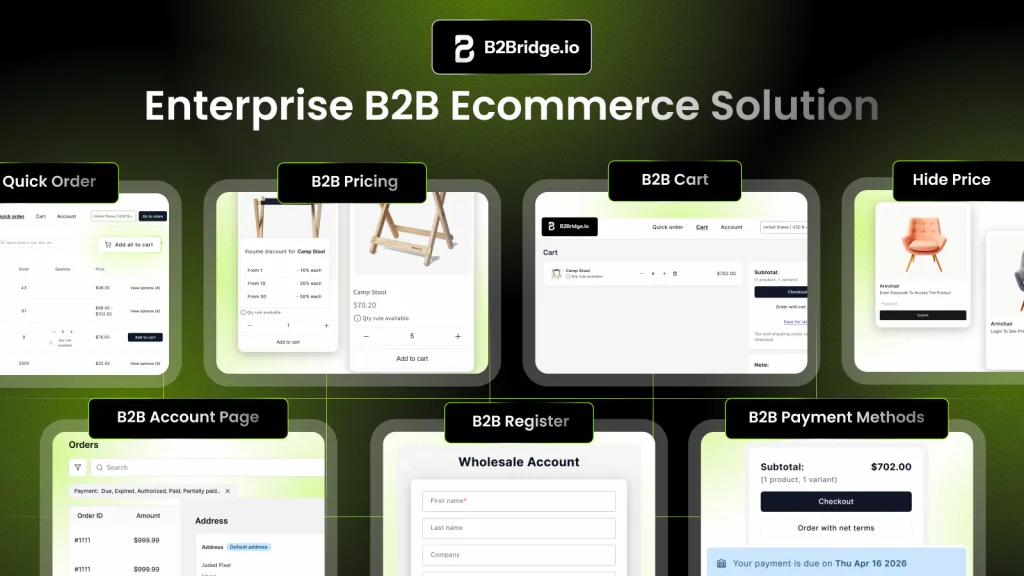
B2Bridge embeds complex wholesale operations directly into Shopify:
- B2B pricing engine: Customer group pricing, contract price lists, volume tiers, and variant-level pricing
- Net terms and RFQ: Offer Net 15/30/60 payment terms with credit limits and quote-to-order workflows
- ERP and CRM integration: Connect to NetSuite, Zoho, Odoo, and custom systems via enterprise APIs
- Wholesale registration and access control: Custom registration forms, approval workflows, and gated B2B pricing
- Unified B2B and B2C storefront: Run both channels from one Shopify store without Shopify Plus
Book A Demo to see how B2Bridge delivers enterprise B2B on Shopify without the open source overhead.
FAQs About Open Source B2B Ecommerce Platforms
How long does it take to launch an open source B2B ecommerce platform?
Timeline varies widely based on complexity. Most implementations require several months of development, integration, and testing before going live—significantly longer than SaaS alternatives that can launch in weeks.
Do you need in house developers to run an open source B2B platform?
Ongoing development resources are essential for maintenance, security patches, customizations, and integrations. You can use an internal team or a contracted agency with expertise in the platform’s tech stack.
Are open source B2B ecommerce platforms truly free?
The software license is typically free, but total cost includes hosting, development, integrations, security, and support. For teams without existing technical capacity, open source often ends up more expensive than SaaS over time.
Can you migrate from an open source B2B platform to Shopify?
Migration is possible by exporting customer, product, and order data and rebuilding B2B logic using Shopify’s native B2B features or apps like B2Bridge. The process requires careful planning to preserve pricing rules and customer relationships.
Is open source B2B ecommerce secure and PCI compliant?
Open source platforms can be secure and PCI compliant, but the responsibility falls on you to implement proper security controls, maintain patches, and complete compliance certifications—unlike SaaS where the vendor handles much of this work.

As a Product Marketing Executive at B2Bridge, I focus on the Enterprise B2B Ecommerce domain. I leverage my understanding of product and user psychology to deliver customer-centric content that addresses business challenges and fuels growth.