B2B Wave works well until it doesn’t. The moment your pricing rules outgrow a spreadsheet, your ERP data lives in a different system, or your Shopify store sits disconnected from your wholesale portal, you’re spending more time on workarounds than on selling.
This guide breaks down the top B2B Wave alternatives for wholesale brands, what to look for when switching platforms, and how to migrate without disrupting your existing buyer relationships.
What B2B Wave is and who uses it
The best B2B Wave alternative depends on your platform, pricing complexity, and how deeply you want to integrate with existing systems. For Shopify-based wholesalers, B2Bridge delivers enterprise-grade B2B capabilities without requiring Shopify Plus. BigCommerce B2B works well for mid-market brands wanting native features out of the box, while NetSuite fits large enterprises that prioritize full ERP integration over storefront flexibility.
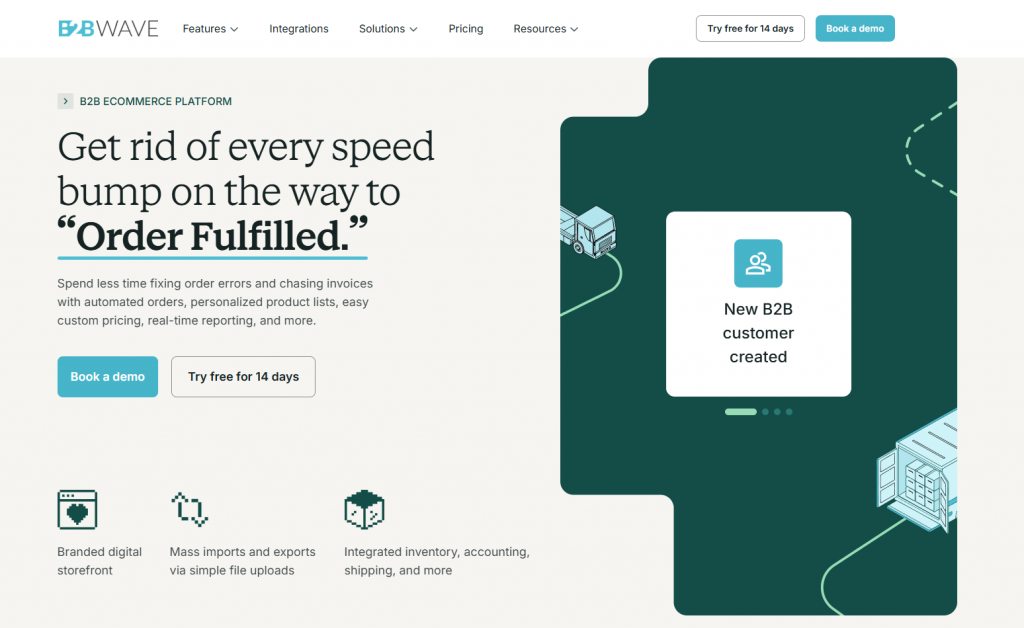
B2B Wave itself is a standalone ordering portal built for small wholesalers and distributors. It handles catalog management, customer accounts, and order capture—the basics that work fine when you’re starting out with straightforward pricing and a manageable customer list.
The platform serves businesses that want a simple way to accept wholesale orders online. You get a dedicated portal, basic customer segmentation, and order tools that cover the essentials without much setup.
Where B2B Wave fits best: operations with fewer than a few hundred wholesale customers, simple pricing structures, and no pressing requirement to sync with an existing Shopify store or ERP.
Why wholesale brands search for a B2B Wave alternative
Most brands searching for alternatives have hit limits that B2B Wave wasn’t designed to handle. The friction shows up as wholesale operations scale past basic ordering.
- Limited pricing flexibility: B2B Wave struggles with contract-specific pricing, volume breaks across product lines, and customer-tier rules that change based on purchase history.
- Disconnected systems: Running an ERP like NetSuite or Zoho means manually entering data between platforms—a process that creates errors and slows fulfillment.
- No native Shopify alignment: Brands already selling DTC on Shopify face the overhead of managing two separate systems, with duplicated product updates and split inventory.
The search for an alternative usually signals that your wholesale operation has grown past what a basic ordering portal can support.
Signs you have outgrown B2B Wave
Your pricing rules and contract price lists are too complex
B2B Wave’s pricing engine doesn’t support role-based pricing, per-customer contract rates, or tiered volume discounts that adjust automatically based on order size. If you’re managing pricing in spreadsheets outside the platform, that’s a clear signal you’ve outgrown it.
Outcome: Manual workarounds create pricing errors and slow your ability to close deals.
You run B2B and B2C on separate platforms
Managing two storefronts means duplicated product updates, inventory mismatches between channels, and split reporting. Every catalog change requires work in two places.
Outcome: Your team spends time managing duplicate systems instead of scaling sales.
Your ERP and CRM are not synced with wholesale orders
B2B Wave lacks deep integration with systems like NetSuite, Zoho, or Odoo. If your team spends hours reconciling customer data, order history, or inventory levels between platforms, you’re paying for that gap in labor costs and errors.
Your buyers need net terms, RFQ, and company accounts
Net terms (Net 30/60 payment), RFQ workflows (request for quote for large orders), and company accounts (multiple buyers under one organization) are standard expectations for wholesale buyers. B2B Wave doesn’t natively support these workflows, which means buyers face friction at checkout.
Manual order entry is slowing your sales team
If reps are re-keying orders from emails or PDFs into B2B Wave, the platform is no longer efficient. Growing teams benefit from quick order forms, CSV upload, and automated order capture that eliminate manual data entry.
What to look for in a B2B Wave alternative
Advanced B2B pricing engine with contract and role-based pricing
A strong B2B pricing engine supports customer group pricing, contract price lists, min/max order quantities, case packs, volume rules, and B2B-only pricing hidden from retail shoppers. The ability to manage pricing rules without spreadsheets or manual overrides separates basic tools from enterprise-ready platforms.

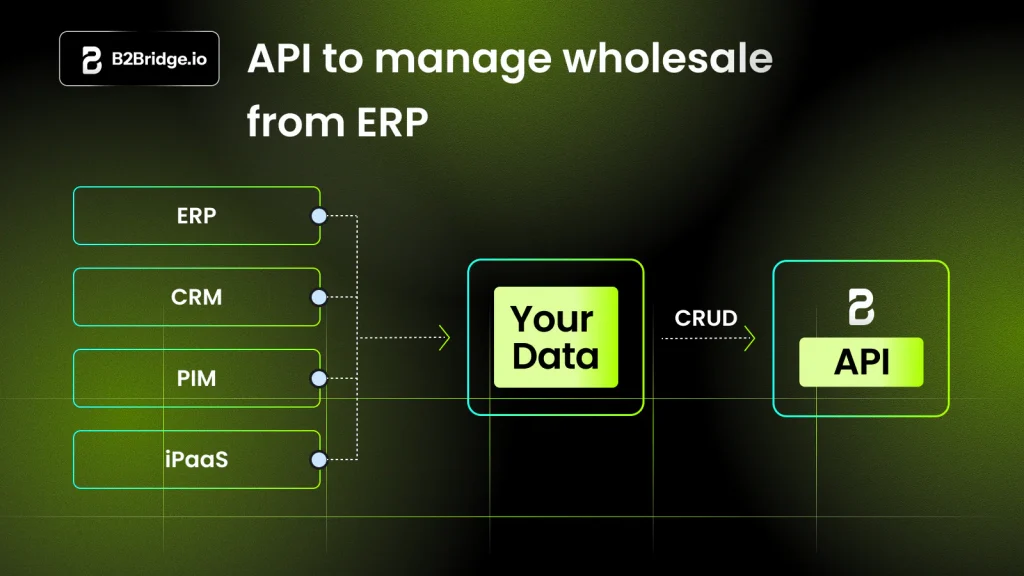
Deep ERP and CRM integration for NetSuite, Zoho, and Odoo
Bi-directional sync means pricing, customers, and orders flow automatically between your B2B platform and back-office systems. Look for platforms with API access for custom ERPs and pre-built connectors for common systems.
Unified B2B and B2C storefront on a single platform
Running wholesale and retail from one store means a single product catalog, shared inventory, and consolidated reporting. You avoid the operational overhead of maintaining separate sites.
Wholesale UX with quick order, RFQ, and company accounts
Real wholesale buyers expect quick order pages for bulk SKU entry, quote request workflows for large orders, and company accounts with roles and approval hierarchies. These features reflect how B2B purchasing actually works.

Implementation support and long-term technical partnership
Enterprise B2B isn’t plug-and-play. Look for vendors offering onboarding, customization, and ongoing support rather than just software.
Best B2B Wave alternatives for wholesale and B2B ecommerce
B2Bridge
Enterprise B2B ecommerce solution built specifically for Shopify. B2Bridge embeds advanced pricing, sales agent portal, ERP integration, and a unified B2B+B2C storefront directly into your existing Shopify store—without requiring Shopify Plus.
Best for: Manufacturers, distributors, and growing wholesalers on Shopify that want enterprise-grade B2B capabilities without upgrading to Plus.

SparkLayer
B2B layer for Shopify and BigCommerce that adds self-serve wholesale portals with price lists and quick ordering.
Best for: Brands wanting core B2B functionality without deep customization.

Shopify B2B
Native B2B features within Shopify on all plans, including customer-specific catalogs and company accounts. The limitation is that it requires Shopify Plus for advanced features, which starts at $2,300/month.
Best for: Existing Shopify Plus merchants that prefer native functionality inside Shopify.

Wholesale Gorilla
Shopify app for wholesale pricing and order management with basic tiered pricing and customer groups.
Best for: Smaller wholesalers that want simple pricing tiers and customer segmentation.

Wholesale Club
Shopify app focused on discount rules and wholesale pricing for straightforward volume discount requirements.
Best for: Brands with basic wholesale discount and volume pricing setups.

B2Bify
B2B app with custom pricing and quote management, offering RFQ functionality and basic net terms.
Best for: Mid-market wholesalers that want quote functionality and basic payment terms.

Bold Commerce
Suite of B2B and subscription tools for Shopify, offering modular apps for pricing, subscriptions, and checkout customization.
Best for: Brands looking for modular commerce tools across multiple functions.

SimplyDepo
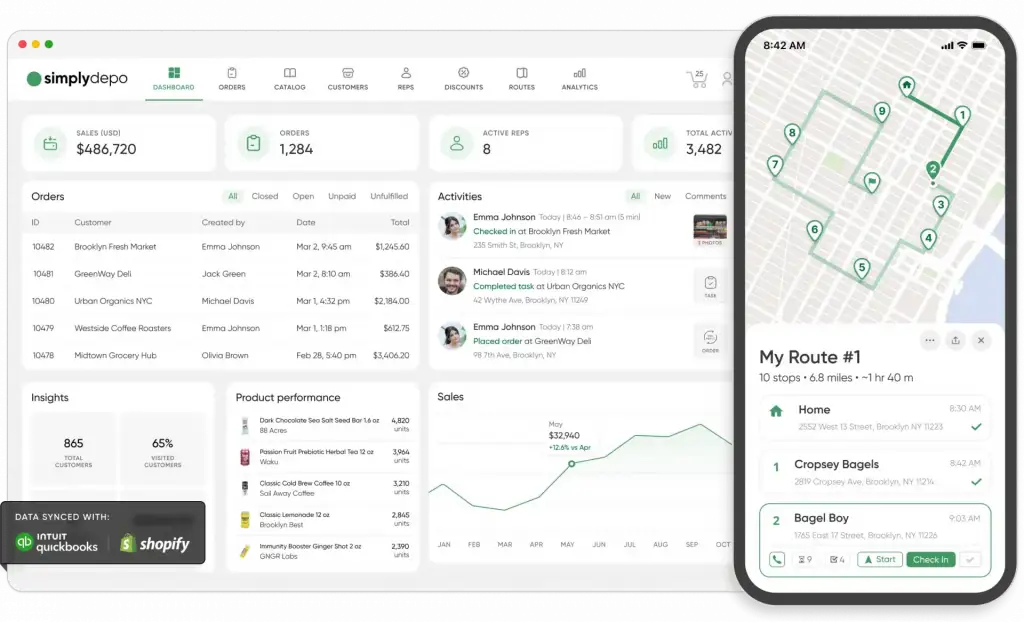
Field sales and distribution platform designed for wholesalers with outside sales reps. SimplyDepo focuses on mobile ordering and route management—it’s not a Shopify-native solution.
Best for: Distributors with field reps who prioritize mobile ordering and route workflows.
WizCommerce
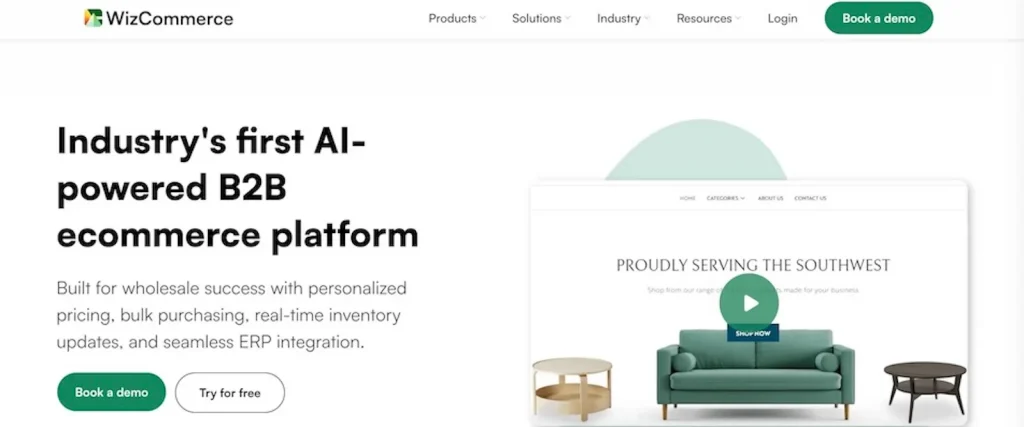
AI-powered B2B commerce platform for large distributors wanting automated order processing and sales rep tools outside of Shopify.
Best for: Large distributors seeking AI-assisted workflows and rep-focused ordering.
Adobe Commerce
Enterprise ecommerce platform (formerly Magento) for large enterprises wanting full platform control. Adobe Commerce requires significant implementation investment.
Best for: Large enterprises with the budget for complex, custom implementation.
B2B Wave alternatives comparison table
| Platform | Shopify Native | Advanced Pricing | ERP Integration | Net Terms | Unified B2B+B2C | Implementation Support |
| B2Bridge | Yes | Yes | Yes | Yes | Yes | Yes |
| SparkLayer | Yes | Yes | Limited | Yes | Yes | Limited |
| Shopify B2B | Yes | Limited | Limited | Yes | Yes | No |
| Wholesale Gorilla | Yes | Limited | No | No | Yes | No |
| Wholesale Club | Yes | Limited | No | No | Yes | No |
| B2Bify | Yes | Yes | Limited | Yes | Yes | Limited |
| Bold Commerce | Yes | Yes | Limited | Limited | Yes | Limited |
| SimplyDepo | No | Yes | Yes | Yes | No | Yes |
| WizCommerce | No | Yes | Yes | Yes | No | Yes |
| Adobe Commerce | No | Yes | Yes | Yes | Yes | Required |
How to migrate from B2B Wave to a new B2B platform
Step 1. Audit your pricing rules and customer groups
Document all pricing tiers, customer segments, and contract rates currently managed in or outside B2B Wave. This inventory becomes your requirements list for evaluating alternatives.
Step 2. Export your catalog, customers, and order history
Extract product data, customer accounts, and historical orders via CSV or API. This data ensures continuity and preserves reporting in your new system.
Step 3. Map ERP and CRM fields to the new platform
Align your ERP/CRM data structure—customer IDs, price list codes, payment terms—with the new platform’s schema before integration. Mismatched fields create sync errors that compound over time.
Step 4. Run a pilot with a small wholesale segment
Test the new platform with a subset of customers and products to validate pricing, ordering, and sync workflows. Catching issues with ten customers is easier than catching them with a thousand.
Step 5. Switch over and train your wholesale team
Migrate remaining data, redirect buyers to the new portal, and train sales and support staff on new workflows.
Choosing the right B2B Wave alternative for your wholesale operation
The right alternative depends on where your operation sits today and where it’s heading. If you’re already on Shopify and want to avoid the cost of Shopify Plus while gaining enterprise B2B capabilities, B2Bridge offers that path with hands-on implementation support.
Consider your pricing complexity, ERP integration requirements, and whether you want a technical partner or just software. Growing wholesale brands typically benefit from platforms that can scale with them rather than requiring another migration in two years.
Book A Demo to see how B2Bridge can replace B2B Wave for your wholesale operation.
Frequently asked questions about B2B Wave alternatives
Is there a free alternative to B2B Wave?
Most robust B2B platforms are paid, though some offer free trials or limited free tiers. Shopify’s native B2B features require Shopify Plus, which has its own cost structure.
How does B2B Wave pricing compare to other B2B ecommerce platforms?
B2B Wave is positioned as an affordable entry-level option. Alternatives like B2Bridge and SparkLayer are priced for growing and enterprise operations with more advanced feature sets.
Can you run a B2B Wave alternative on a standard Shopify plan without Shopify Plus?
Yes. Apps like B2Bridge work on regular Shopify plans, giving brands enterprise B2B capabilities—advanced pricing, ERP integration, net terms—without upgrading to Plus.
How long does it take to migrate from B2B Wave to a new B2B platform?
Migration timelines vary based on catalog size and integration complexity. Platforms with dedicated implementation support can launch in days to a few weeks.
Which B2B Wave alternative is best for manufacturers and distributors on Shopify?
B2Bridge is designed specifically for manufacturers, distributors, and large wholesalers on Shopify. Its strengths include advanced pricing engines, deep ERP integration, and a unified B2B+B2C storefront without requiring Shopify Plus.
Do B2B Wave alternatives support net payment terms and credit limits for wholesale buyers?
Most enterprise-grade alternatives support Net 30/60 terms, credit limits, and payment term management directly within the platform.

As a Product Marketing Executive at B2Bridge, I focus on the Enterprise B2B Ecommerce domain. I leverage my understanding of product and user psychology to deliver customer-centric content that addresses business challenges and fuels growth.