B2B ecommerce examples are companies that sell to other businesses through a website, portal, or marketplace. Well-known examples include Amazon Business, Alibaba, Grainger, and McMaster-Carr, along with brands like Tony’s Chocolonely and AMR Hair & Beauty that sell wholesale and retail from the same store.
Most B2B sales still happen offline, but that share is shrinking. US manufacturers and wholesale distributors sold $15.12 trillion in 2025, and Digital Commerce 360 notes that digital channels are growing at a double-digit pace inside that total. Buyers are pushing the shift: in a Gartner survey of 646 B2B buyers, 67% said they prefer a rep-free experience. This guide groups 14 real examples by business model, so you can find the one closest to yours and see what to copy.
What Counts as a B2B Ecommerce Example
A B2B ecommerce example is any business where companies buy online from another company instead of ordering by phone, email, or through a sales rep. The buyer might be a retailer, a contractor, a clinic, or a procurement team.
What separates these sites from consumer stores is the buying logic. Prices depend on who’s logged in. Orders come in cases and pallets. Payment often happens 30 or 60 days after delivery on net terms, which means the buyer receives an invoice and pays later.
The examples below fall into four models:
- Marketplaces and distributors that aggregate thousands of suppliers or SKUs
- Manufacturers selling direct to dealers and retailers
- Hybrid brands running wholesale and DTC from one store
- Wholesale-only stores and trade programs that gate the whole catalog
If you want the theory behind each model, our guide to B2B ecommerce models covers it in depth. Here, the focus is on what real companies built.
B2B Ecommerce Examples at a Glance
Here’s the full list before the details. Each company’s model is the main thing to match against your own business.
| Company | Model | Standout B2B feature |
|---|---|---|
| Amazon Business | Marketplace | Business-only pricing and approval workflows |
| Alibaba.com | Marketplace | RFQ and Trade Assurance |
| Grainger | Distributor | Account pricing across a huge MRO catalog |
| McMaster-Carr | Distributor | Spec-level search and next-day delivery |
| Angelus Direct | Manufacturer | Wholesale portal replacing fax and email orders |
| CeramicSpeed | Manufacturer | Mobile ordering app for field sales reps |
| Trailer Valet | Manufacturer | Dealer price lists and net terms |
| AMR Hair & Beauty | Hybrid store | Ten B2B pricing tiers behind one login |
| Tony’s Chocolonely | Hybrid store | Volume pricing portal with pay by invoice |
| Brooklyn Bicycle Co. | Hybrid store | Login-only wholesale pages synced to NetSuite |
| MIDAN | Wholesale-only | Locked store with approval-based registration |
| The Conran Shop | Trade program | Dedicated site for designers and architects |
| The Somewhere Co. | Wholesale-only | Postcode exclusivity for stockists |
| Mokobara | Wholesale portal | Private portal with bulk pricing and branding |
Marketplace and Distributor Examples
What does B2B ecommerce look like at enterprise scale? These four sites set the expectations your buyers bring to every other supplier.
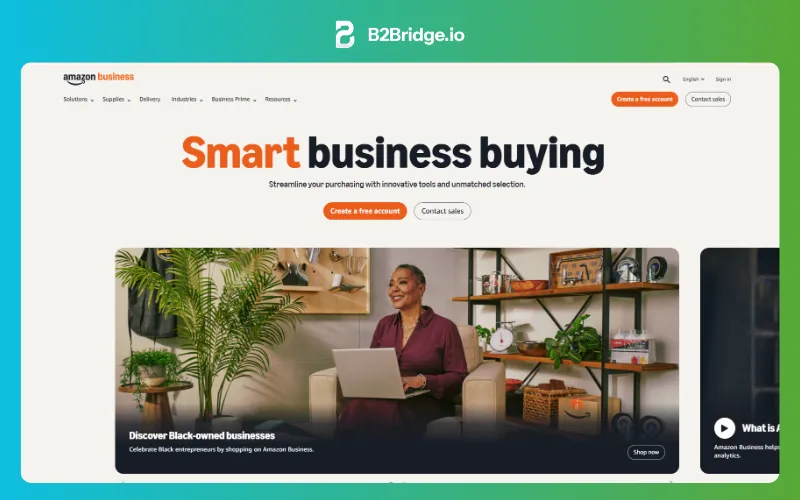
Amazon Business for Multi-Department Procurement
Amazon Business took the consumer Amazon experience and added business-only pricing, quantity discounts, and approval workflows. It reached $60 billion in annualized gross sales in Q2 2026 and serves over 11 million organizations.
Key lesson: buyers expect consumer-grade speed, even when the order needs a manager’s sign-off.
Alibaba.com for Global Supplier Sourcing
Alibaba.com connects buyers with manufacturers worldwide. Its request-for-quote system lets a buyer post one spec and collect bids, while Trade Assurance protects the payment until the order ships as agreed.
Key lesson: when buyers don’t know you yet, trust signals do the selling. A clear RFQ workflow shortens negotiation.

Grainger for Industrial MRO Supply
Grainger sells maintenance, repair, and operations supplies to businesses that reorder the same items constantly. Its 2025 sales reached $17.9 billion, and its online-first Endless Assortment segment (Zoro and MonotaRO) grew nearly 16% for the year.
Key lesson: logged-in buyers should see their contract price immediately, without asking.

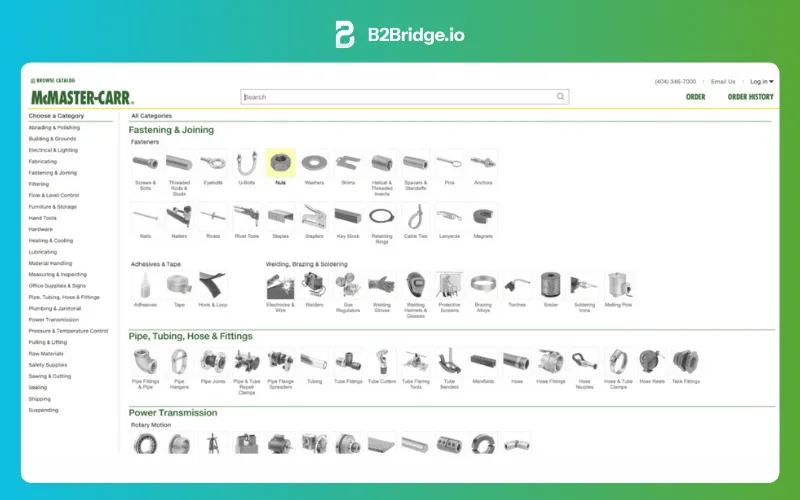
McMaster-Carr for Search-Driven Ordering
McMaster-Carr lists over 700,000 products and says 98% of ordered items ship from stock for same or next-day delivery. Engineers search by dimension, material, or thread size and land on the exact part.
Key lesson: for technical catalogs, search quality beats visual design every time.
Manufacturers Selling Direct to Dealers
Manufacturers usually start with a sales team and a spreadsheet. These three moved dealer ordering online without losing the rep relationship.
Angelus Direct for Replacing Manual Order Entry
Angelus Direct makes leather paint and sneaker customization supplies. Wholesale orders used to arrive by fax and email, and errors were constant. After moving partners to a B2B portal on Shopify, the brand reported a 10x increase in worldwide sales within five years.
Key lesson: a portal removes the retyping step where most order errors happen.

CeramicSpeed for Field Sales Ordering
CeramicSpeed builds premium bicycle components in Denmark. Its US sales reps drive between bike shops and place orders from their phones through a back-end Shopify app, which made B2B order placement 5% faster.
Key lesson: if your reps sell in person, give them the same catalog and pricing your online buyers see.

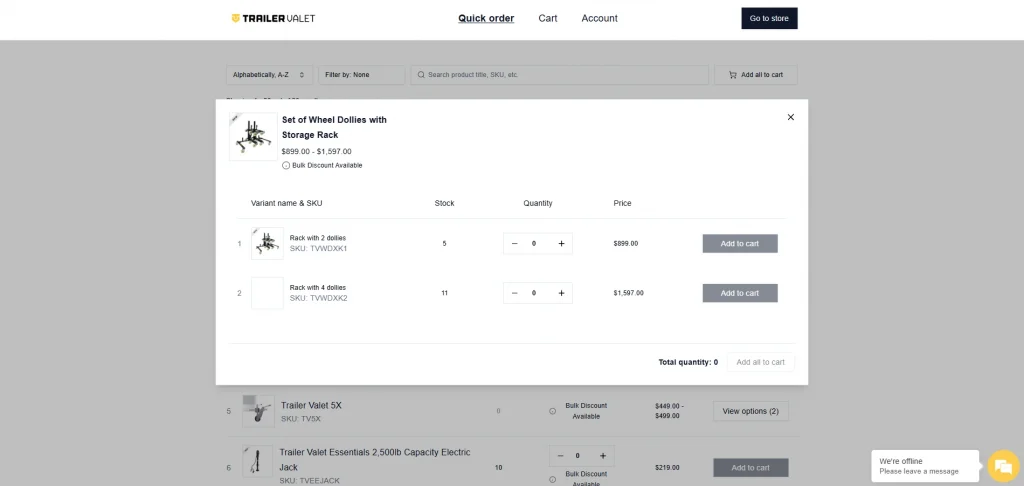
Trailer Valet for Dealer Pricing and Net Terms
Trailer Valet sells trailer movers and jacks to consumers, and dealers started asking to buy in bulk. With B2Bridge, dealers log in to the same Shopify store, see their own price list, and check out on net terms. There’s no second storefront to maintain.
Key lesson: enter products once and let the buyer’s login decide what they see.
Brands Running B2B and DTC From One Store
Running both channels from one store is the most common setup for growing brands. It’s also the hardest to get right, because retail shoppers and wholesale buyers share the same pages.
AMR Hair & Beauty for Tiered Wholesale Pricing
AMR Hair & Beauty is an Australian hair and beauty supplier with more than 6,000 products. It runs two logins, one for consumers and one for trade, with ten B2B pricing tiers applied automatically. Better search and visible B2B pricing helped lift B2B average order value 77%.
Key lesson: when salons can’t find B2B pricing in search, they phone their orders in.

Tony’s Chocolonely for Volume Pricing at Scale
Tony’s sells chocolate to consumers and to retailers through one site. Its “ChocoPortal” applies ladder pricing and volume discounts by segment and order size. A pay-by-invoice feature replaced about 30 manual credit requests a day, and US revenue grew 70%.
Key lesson: automate credit checks before order volume forces you to.

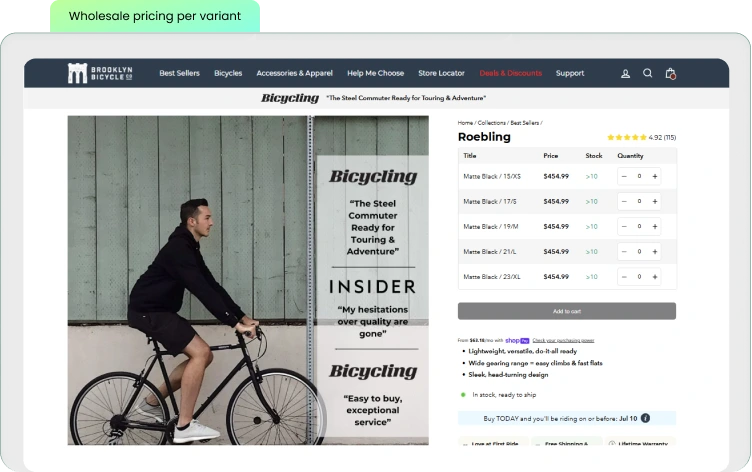
Brooklyn Bicycle Co. for ERP-Synced Wholesale
Brooklyn Bicycle Co. sells city bikes to riders and to bike shops. Its wholesale buyers see variant-level pricing on login-only pages, check out on terms, and every order syncs to NetSuite with B2Bridge.
Key lesson: tag wholesale orders clearly so your ERP never confuses them with retail.
Wholesale-Only and Trade Program Examples
Why would a business hide its whole catalog? Some don’t want the public browsing wholesale prices at all. These four show how gating works in practice.
MIDAN for Verified-Buyer Access
MIDAN is a Canadian LED lighting distributor. Its wholesale store sells only to approved businesses. Visitors fill in a registration form, the team approves them, and only then does the store unlock. B2Bridge set up locked access, wholesale price lists, and an English and French storefront.
Key lesson: an approval form protects pricing and doubles as lead capture.

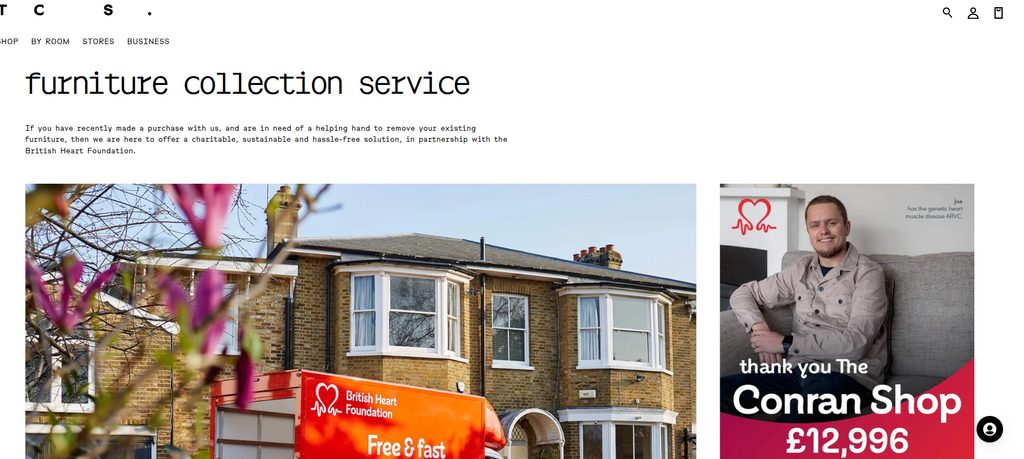
The Conran Shop for Trade Professionals
The Conran Shop sells premium furniture and launched a dedicated B2B site for interior designers and architects in 2024. After migrating to Shopify, it reported a 54% lift in conversion rates, though that figure covers the whole migration.
Key lesson: perks like a dedicated account manager and private previews keep trade buyers loyal.
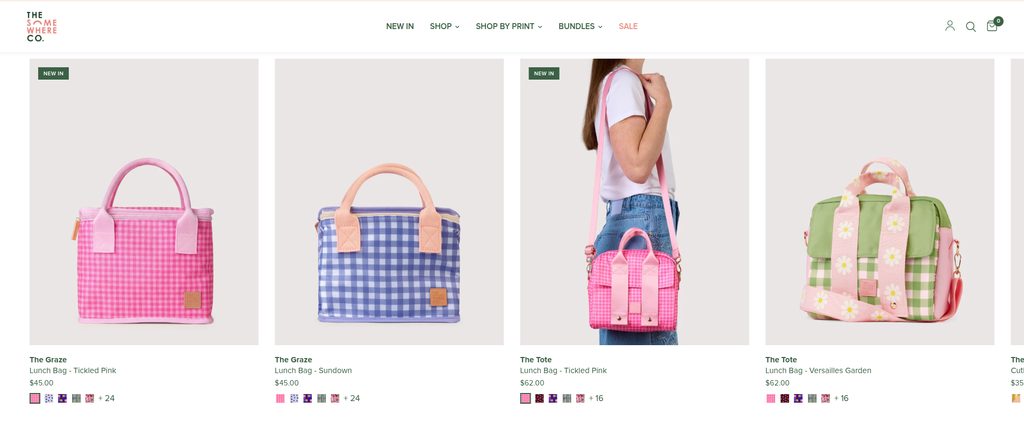
The Somewhere Co. for Stockist Protection
The Somewhere Co. is a lifestyle brand that wholesales to independent stockists. It offers postcode exclusivity to stockists who meet its criteria. Moving wholesale to Shopify’s native B2B produced a 33% reduction in average B2B order time.
Key lesson: territory rules can make your wholesale offer more attractive than a lower price.
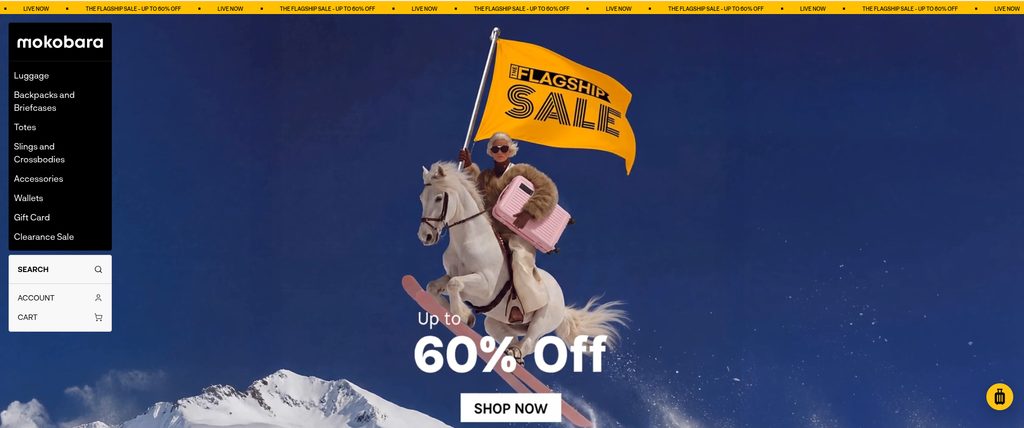
Mokobara for Corporate and Bulk Orders
Mokobara started as a DTC luggage brand, then added a login-only portal for wholesale and corporate buyers. The portal shows dynamic bulk pricing and offers engraving and corporate branding. The brand reported 2x year-on-year revenue.
Key lesson: customization options turn a one-off bulk order into a repeat account.
What the Best B2B Ecommerce Sites Have in Common
Across all four models, the same features keep showing up. If you’re planning your own build, start with this list.
| Feature | Examples that use it | Why it matters |
|---|---|---|
| Customer-specific pricing | Grainger, AMR, Trailer Valet | Buyers see their contract rate without asking |
| Gated access and registration | MIDAN, Mokobara, Brooklyn Bicycle | Protects margins and qualifies new accounts |
| Net terms and invoicing | Tony’s, Trailer Valet, Brooklyn Bicycle | Matches how procurement teams pay |
| Quick order and reorder | Amazon Business, McMaster-Carr | Repeat buyers order in seconds |
| ERP sync | Brooklyn Bicycle, Angelus Direct | Removes retyping and stock errors |
| Sales rep ordering | CeramicSpeed | Keeps field sales and online pricing aligned |
None of the smaller brands built all six on day one. They started with pricing and access, then added terms and integrations as order volume grew. Our roundup of B2B portal examples goes deeper on the self-service side.
How to Choose Which B2B Ecommerce Example to Copy
Which of these companies looks most like yours today? Match on business model and catalog size first. The biggest name on the list is rarely the right template.
| If you are… | Closest examples | Setup to copy |
|---|---|---|
| A DTC brand adding wholesale | AMR, Tony’s, Brooklyn Bicycle | One store, pricing by login |
| A manufacturer with dealers | Trailer Valet, Angelus Direct | Dealer accounts, price lists, net terms |
| A distributor with a large catalog | Grainger, McMaster-Carr | Search, account pricing, reorder |
| Wholesale-only or trade-focused | MIDAN, The Conran Shop | Locked store, approval-based registration |
| Selling through field reps | CeramicSpeed | Rep ordering on the same catalog |
The one-store versus two-store decision affects everything after it. Our comparison of blended and dedicated stores walks through it. For more Shopify-only stores by industry, see these Shopify B2B examples.
Build Your B2B Ecommerce Store With B2Bridge
If you sell on Shopify, you can build most of what these examples have without a second platform. Shopify’s native B2B is now free on all plans, but non-Plus stores are capped at three catalogs. That cap is where growing wholesale programs usually get stuck.
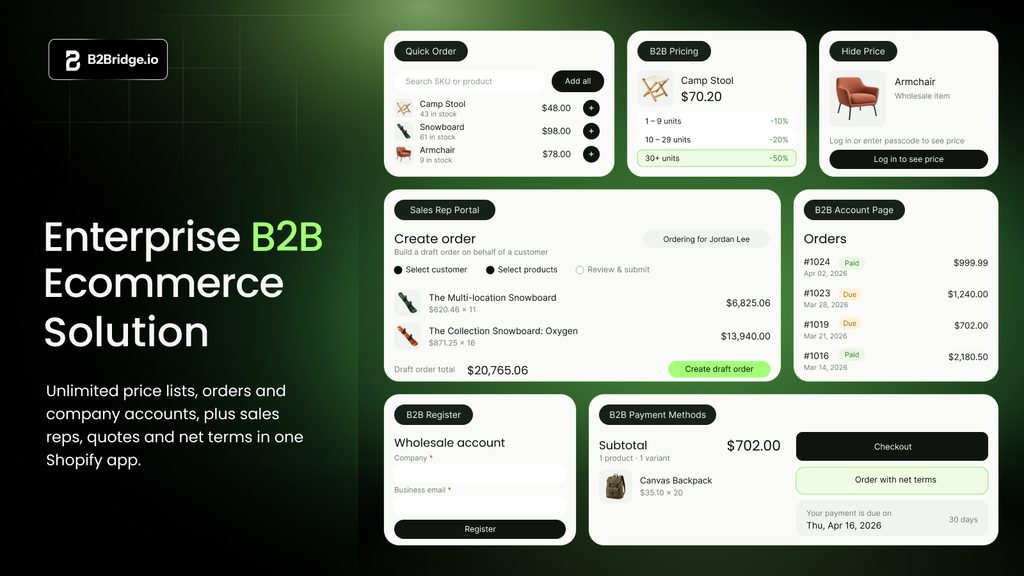
B2Bridge is an all-in-one B2B app that runs inside your existing Shopify store. Here’s what it adds:
- Unlimited price lists, customer groups, and orders, so the setup keeps working as your buyer base grows
- Pricing, gated access, registration forms, quick order, RFQ, and net terms in one app instead of four
- A Sales Rep Portal for ordering on behalf of accounts, plus ERP sync with NetSuite, Zoho, Odoo, or custom systems
That’s the setup behind the Trailer Valet, Brooklyn Bicycle, and MIDAN examples above. See plans and pricing, or check how it compares in Shopify B2B vs B2Bridge.
Book a Demo to see how B2Bridge runs wholesale and retail from one Shopify store.
FAQs About B2B Ecommerce Examples
What is an example of B2B ecommerce?
Amazon Business is a common example. Companies use it to buy supplies with business pricing, multi-user accounts, and approval workflows. Grainger, Alibaba.com, and McMaster-Carr are other widely cited B2B ecommerce examples.
Is Amazon a B2B or B2C ecommerce company?
Amazon is both. Amazon.com mainly sells to consumers, while Amazon Business sells to organizations with business-only pricing and approvals. It reached $60 billion in annualized gross sales in 2026.
What is the difference between a B2B and a B2C ecommerce website?
A B2B site sells to businesses, so prices change by account, orders are larger, and buyers often pay on net terms. A B2C site shows one public price and takes payment at checkout.
Can a small brand run B2B ecommerce on Shopify?
Yes. Many brands run wholesale and retail from one Shopify store, with pricing and access set by customer login. Apps like B2Bridge add price lists, net terms, and quick order without a second store.
How long does it take to launch a B2B ecommerce store?
An app-based setup on an existing Shopify store can launch within days. Custom enterprise builds with deep ERP integration usually take several months, depending on catalog size and pricing complexity.

Hi, I’m Hanh – a product marketing professional passionate about driving growth, simplifying complex solutions, and creating impactful strategies for Shopify that connect products with customers.