Net 30 payment terms give buyers 30 calendar days from the invoice date to pay the full balance owed. It’s the most common form of trade credit in B2B transactions, and getting it right affects everything from cash flow to customer relationships.
This guide covers how Net 30 works, when the payment window starts, how it compares to other net terms, and how to decide whether offering it makes sense for your wholesale operation.
What Are Net 30 Payment Terms
Net 30 is a B2B payment term where the full invoice balance is due 30 calendar days after the invoice date. It functions as trade credit, giving buyers time to pay while sellers build loyalty and offer flexible terms. The 30 days typically includes weekends and holidays, not just business days.
The word “net” here means the total amount owed with no deductions. When you see Net 30 on an invoice, the buyer owes the entire balance and has 30 days to pay it.
Every Net 30 arrangement breaks down into a few core elements:
- Invoice date: The starting point for the 30-day countdown
- Payment window: 30 calendar days to remit full payment
- Full balance: The total amount due with no early payment discount applied

How Net 30 Payment Terms Work
The seller issues an invoice with Net 30 terms clearly stated, and the buyer then has 30 calendar days from that invoice date to remit the full payment. If the buyer pays late, penalties or interest may apply, but only if those consequences were outlined in the original agreement.
Most B2B relationships formalize payment terms in a contract, purchase order, or credit application before the first invoice goes out. This step protects both parties and sets clear expectations from the start.
When Do Net 30 Payment Terms Start
The 30-day window typically starts from the invoice date, not from delivery or receipt of goods. This distinction matters more than you might expect. Disputes often arise when buyers assume the clock starts when they receive the shipment rather than when the invoice was issued.
Specifying the start date explicitly in your terms avoids confusion. A simple line like “Payment due 30 days from invoice date” eliminates ambiguity. And those 30 days include weekends and holidays unless your agreement states otherwise.

Net 30 Payment Terms Example
If an invoice is dated June 1, payment is due by July 1. That’s the core concept in action.
| Invoice Date | Payment Due Date | Terms |
|---|---|---|
| June 1 | July 1 | Net 30 |
| October 15 | November 14 | Net 30 |
On the invoice itself, you’ll typically see “Net 30” or “Payment Terms: Net 30” near the total amount due. Some invoices also include the specific due date calculated for the buyer’s convenience.
Transform your B2B store with B2Bridge.
Discover how B2Bridge can transform your wholesale business.
Schedule a demo today to see our payment management tools in action.
Benefits of Offering Net 30 Payment Terms
For sellers in B2B wholesale, offering Net 30 creates competitive advantages that go beyond simply being flexible with payment timing.
Attracts and Retains Wholesale Buyers
B2B buyers expect trade credit. Offering payment flexibility makes your business more appealing compared to competitors who demand payment upfront. Wholesale accounts often evaluate vendors partly on payment terms before placing their first order.
Increases Average Order Size
Buyers tend to order more when they don’t need immediate cash on hand. Deferred payment removes a psychological barrier and encourages larger purchases, especially for buyers managing their own cash flow cycles.
Builds Long Term B2B Customer Trust
Extending credit signals that you trust the buyer’s business. This gesture strengthens relationships over time and often leads to preferred vendor status with your wholesale accounts.
Supports Repeat and High Volume Orders
Once a Net 30 relationship is established, reordering becomes frictionless. Buyers can place orders without coordinating payment each time, which encourages consistent purchasing cycles.
Drawbacks of Net 30 Payment Terms
Net 30 carries risks that sellers can manage proactively with the right processes in place.
Cash Flow Strain
Waiting 30 days for revenue, or longer if payments arrive late, can create working capital gaps. A QuickBooks report found 47% of small businesses had invoices overdue by 30+ days, making this pressure especially acute when inventory costs are high.
Risk of Late or Missed Payments
Some buyers pay beyond 30 days or default entirely — the Atradius Payment Practices Barometer found 44% of B2B credit sales in North America were overdue in 2025. Without proper vetting and follow-up processes, sellers can find themselves chasing payments instead of growing their business.
Higher Accounts Receivable Overhead
Managing unpaid invoices requires time, tracking, and follow-up resources. The administrative burden increases as your customer base grows, making automation increasingly valuable.
Net 30 vs Due in 30 Days
These terms sound identical but can mean different things depending on context.
“Net 30” typically starts from the invoice date. “Due in 30 days” may start from receipt of the invoice or delivery of goods, and the interpretation varies by industry and agreement.
| Term | Start Date | Common Usage |
|---|---|---|
| Net 30 | Invoice date | B2B invoicing standard |
| Due in 30 Days | May vary (receipt, delivery) | Less standardized |
The safest approach is to specify exactly when the clock starts in your terms. Ambiguity here leads to disputes that damage buyer relationships.
Net 30 vs Other Net Payment Terms
Net 30 is the most common term, but alternatives exist based on industry norms, cash flow needs, and buyer relationships.
Net 15
A shorter payment window, often used when sellers want faster cash flow or for smaller transactions where extended terms aren’t necessary.
Net 45
Slightly longer than Net 30, this term is common in industries with longer procurement cycles or where buyers require extra time to process invoices internally.
Net 60
A two-month payment window often reserved for larger orders or established buyer relationships where trust has been built over time.
Net 90
A three-month term typically used for enterprise accounts or industries with extended sales cycles, such as government contracts or large-scale manufacturing.
Cash on Delivery
Payment required at delivery eliminates credit risk entirely but may deter buyers who expect terms. COD is often used for new or unvetted accounts.
| Payment Term | Days to Pay | Best For |
|---|---|---|
| Net 15 | 15 days | Fast turnover, smaller orders |
| Net 30 | 30 days | Standard B2B transactions |
| Net 45 | 45 days | Longer procurement cycles |
| Net 60 | 60 days | Large orders, trusted buyers |
| Net 90 | 90 days | Enterprise accounts |
| COD | At delivery | New or unvetted buyers |
Net 30 vs Credit Card Payments
Credit cards offer immediate payment but come with processing fees, typically 2-3% of the transaction. Net 30 defers revenue but avoids those fees entirely, which matters when wholesale margins are tight.
- Credit cards: Immediate payment, processing fees apply, common in B2C
- Net 30: Deferred payment, no processing fees, standard in B2B wholesale
For B2B transactions with larger order values, the fee savings from Net 30 can be substantial. However, credit cards may still make sense for smaller orders or new accounts you haven’t vetted yet.
What Does 2/10 Net 30 Mean
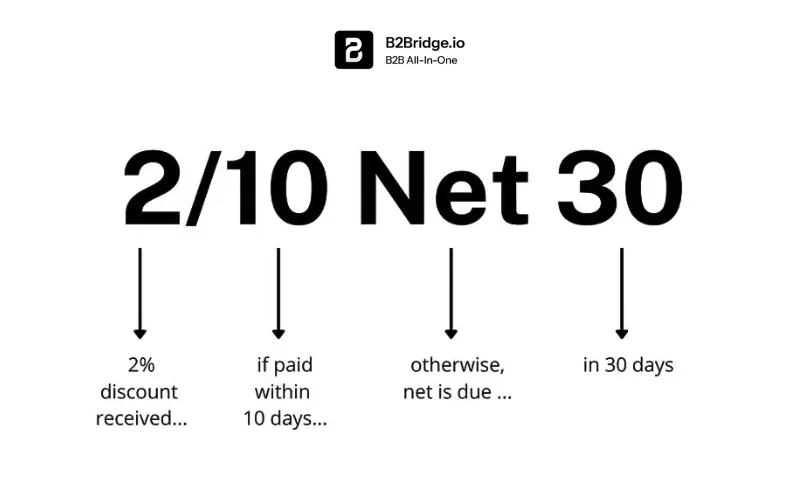
This notation represents an early payment discount. “2/10 Net 30” means the buyer receives a 2% discount if they pay within 10 days. Otherwise, the full amount is due in 30 days.
- 2%: Discount percentage offered for early payment
- 10: Days within which buyer pays to receive the discount
- Net 30: Full payment due if the discount is not taken
Sellers offer this incentive to accelerate cash flow. For buyers, a 2% discount for paying 20 days early translates to a significant annualized return, making it worthwhile when cash is available.
What Types of Businesses Use Net 30 Payment Terms
Net 30 is standard across B2B industries where trade credit is expected.
Manufacturers and Distributors
Businesses selling raw materials or finished goods in bulk routinely offer Net 30 to their downstream buyers.
Wholesalers and Suppliers
Wholesale operations typically extend Net 30 to retail or reseller accounts as a baseline expectation.
B2B Service Providers
Professional services like consulting, logistics, and marketing agencies often invoice on Net 30 for ongoing contracts and project work.
How to Decide if Net 30 Payment Terms Are Right for Your Business
Before offering Net 30, consider whether your operation can support it.
1. Evaluate Your Cash Flow Position
Can your business absorb delayed payments without operational strain? Review your working capital and determine how much outstanding receivables you can carry at any given time.
2. Vet the Creditworthiness of Your Buyers
Check buyer history, request trade references, or run credit checks before extending terms. Not every account deserves Net 30 from day one.
3. Benchmark Against Your Industry Standard
Research what competitors and peers offer. If Net 30 is table stakes in your industry, not offering it puts you at a disadvantage.
4. Define Credit Limits and Approval Rules
Set maximum credit amounts per customer and establish internal approval workflows. A buyer might qualify for Net 30 on orders up to $5,000 but require prepayment beyond that threshold.
Best Practices for Managing Net 30 Payment Terms
Offering Net 30 requires operational discipline to avoid cash flow problems and collection headaches.
1. Verify Buyers Before Granting Terms
Require B2B registration, tax IDs, or credit applications before approving Net 30 accounts. This step filters out buyers who may not pay reliably.
2. Set Clear Terms on Every Invoice
Each invoice states the payment due date, start date, and any late fees explicitly. Don’t assume buyers remember the terms from your original agreement.
3. Monitor Accounts Receivable Aging
Track outstanding invoices regularly and flag overdue accounts early. Waiting until an invoice is 60 days past due makes collection significantly harder.
4. Automate Invoicing and Reminders
Automated tools can send invoices, payment reminders, and overdue notices without manual effort. This consistency improves collection rates.
5. Sync Net Terms with Your ERP
Payment terms, invoices, and customer data stay aligned across ERP and ecommerce systems when properly integrated. B2Bridge syncs Net 30 terms with ERPs like NetSuite, Zoho, and Odoo to reduce manual errors.
How to Offer Net 30 Payment Terms on Shopify with B2Bridge
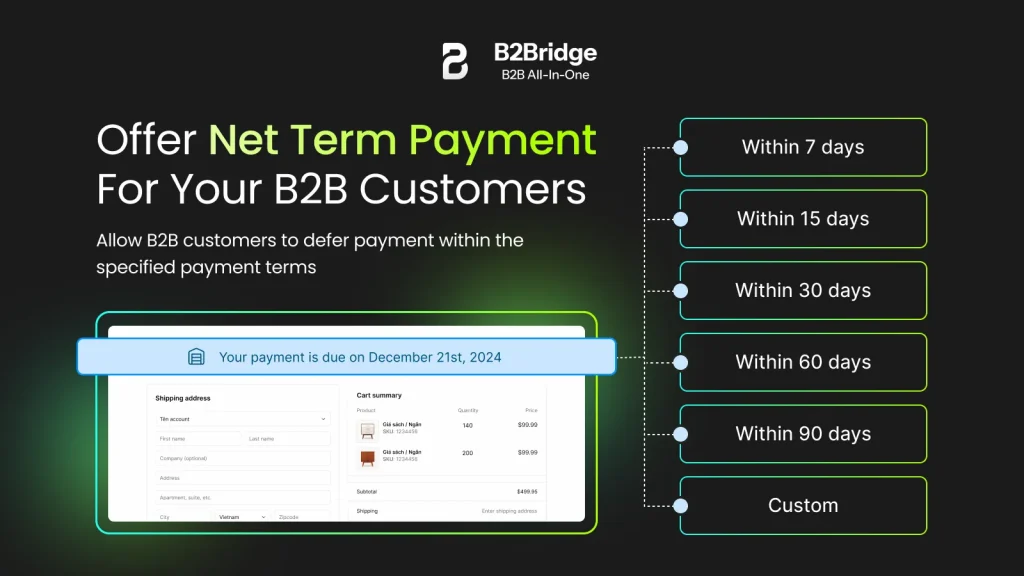
B2Bridge enables Shopify merchants to offer Net 15, Net 30, and Net 60 payment terms directly in their B2B store without requiring Shopify Plus.
- Net payment terms: Offer Net 15, Net 30, or Net 60 at checkout
- Credit limits: Set maximum order values per customer
- Buyer verification: Approve wholesale accounts before granting terms
- ERP sync: Keep terms aligned with NetSuite, Zoho, Odoo, or custom ERPs
The dedicated B2B cart displays net payment terms clearly, and B2B registration forms let you verify wholesale buyers before they place their first order.
Frequently Asked Questions About Net 30 Payment Terms
Does Net 30 include weekends and holidays?
Yes, Net 30 typically counts calendar days, including weekends and holidays, not just business days. If an invoice is dated December 1, payment is due December 31 regardless of holidays in between.
What does $6,000 Net 30 mean on an invoice?
It means the buyer owes $6,000 total and has 30 days from the invoice date to pay. The dollar amount is the balance due, and Net 30 is the payment term.
Is Net 30 legally binding?
Net 30 terms become legally binding when both parties agree to them, typically through a signed contract, purchase order, or accepted invoice. The agreement itself creates the obligation.
Are Net 30 payment terms negotiable?
Yes, payment terms are often negotiable between buyer and seller. Large accounts or long-term relationships frequently negotiate extended terms like Net 45 or Net 60.
Can Net 30 payment terms affect creditworthiness?
Consistently paying Net 30 invoices on time helps a business build trade credit and establish positive payment history with suppliers. Some credit reporting services track B2B payment behavior.

Hi, I’m Ha My Phan – an ever-curious digital marketer crafting growth strategies for Shopify apps since 2018. I blend language, logic, and user insight to make things convert. Strategy is my second nature. Learning is my habit. And building things that actually work for people? That’s my favorite kind of win.