Can You Really Run Retail and Wholesale From One Shopify Store?
Yes. One Shopify store can serve both retail shoppers and wholesale buyers, showing each group different prices and products after they log in. Shopify calls this model a “blended store,” and finding the best Shopify app for running retail and wholesale from one store is the key to making it work.
The practical setup for most merchants is native Shopify B2B plus a wholesale app when you outgrow the built-in limits. Native B2B gives you company profiles and catalogs, plus basic volume pricing on any paid plan. A wholesale app fills the remaining gaps: unlimited price tiers and gated catalogs, plus quick order forms, net terms with credit, and registration workflows that turn a prospect into an approved buyer.
This hybrid approach matters because the wholesale opportunity is large and growing. The global B2B ecommerce market is worth USD 36.86 trillion in 2026 and is growing at a CAGR of 10.84% to reach USD 61.66 trillion by 2031 (Mordor Intelligence). If you want to run B2B and B2C together without maintaining two storefronts, one well-configured Shopify store can do both.
What Changed in 2026: Shopify Apps for Retail and Wholesale on Every Plan
Shopify B2B is the platform’s built-in wholesale toolkit. It includes company accounts and B2B catalogs, customer-specific pricing and volume rules, plus net payment terms with a B2B checkout flow. Until recently, most of these features required Shopify Plus.
That changed on April 2, 2026. According to Shopify’s April 2026 announcement, “Today, Shopify is extending its foundational B2B features to merchants on Basic, Grow, and Advanced plans, at no extra cost.”
The update means merchants on any paid Shopify plan can now set up company profiles and assign catalogs with custom pricing. They can also offer net payment terms without upgrading to Plus.
The timing matters for another reason. Shopify’s legacy Wholesale Channel (a separate, password-protected storefront for Plus merchants) was retired on April 30, 2024. B2B on Shopify replaced it, moving wholesale management inside your normal Shopify admin rather than a disconnected add-on.
Where Native B2B Stops and an App Starts
Native B2B covers the basics, but its limits show up quickly for merchants with complex wholesale operations.
- Catalog cap: On Basic, Grow, and Advanced plans, you can assign up to 3 active catalogs (Shopify B2B features by plan). Need four or more pricing tiers? You need Plus or an app.
- No storefront gating: A blended store shows retail prices by default. B2B pricing only appears after a logged-in buyer reaches checkout. To gate prices behind registration and approval, you need an app.
- Limited registration and MOQ options: Native B2B lacks a wholesale registration form. It also has minimal support for minimum order quantities and quantity increments.
- Quote and RFQ gaps: If your buyers negotiate pricing or request quotes before ordering, you need a quote-to-order workflow. Native B2B does not include RFQ.
These gaps are exactly what wholesale apps fill. For a deeper breakdown, see where native B2B falls short.
Features to Look For in a Retail-and-Wholesale App
When one Shopify store serves retail and wholesale, the app you add should close the gaps that native B2B leaves open. Below are the capabilities that matter most, tied to what your wholesale buyers actually need.
Customer-Specific Pricing and Price Lists
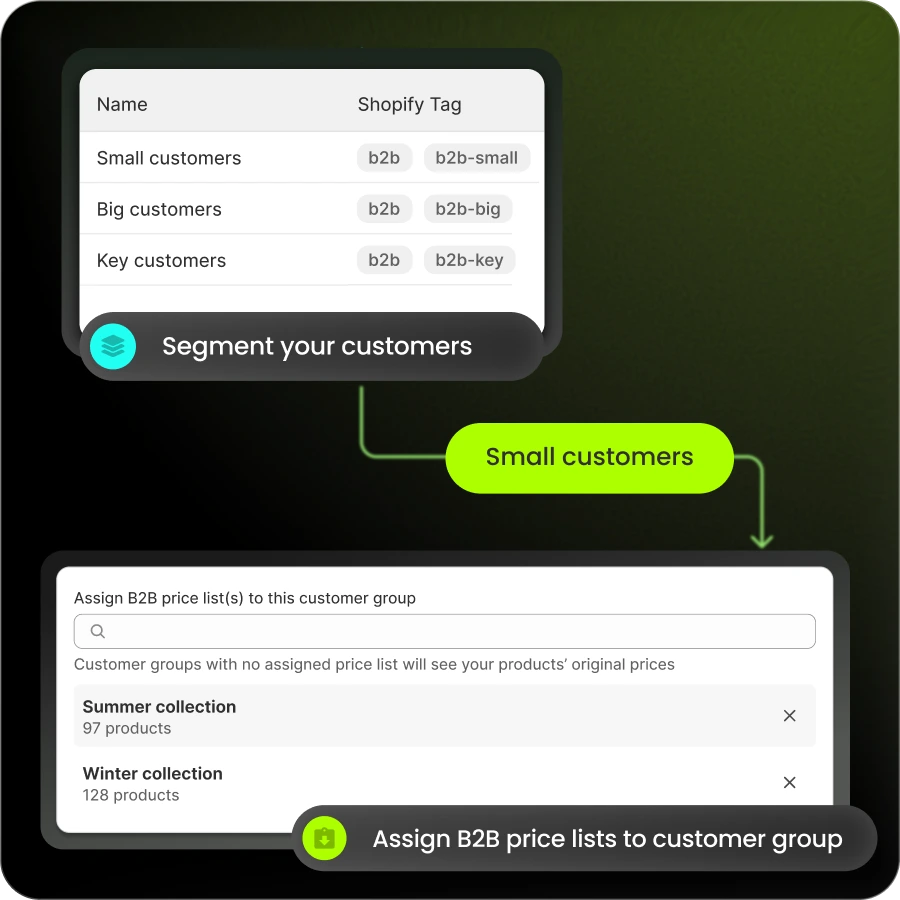
The first gap to address is pricing. Wholesale buyers expect their own negotiated rates. A strong app lets you create price lists by customer tag and set per-variant pricing. You can also stack volume discounts (buy 100 units, get 10% off; buy 500, get 20% off).
The key advantage over native B2B is scale. Native B2B on non-Plus plans caps you at three active catalogs. Once you need a fourth tier or a regional pricing variant, you hit the limit.
Apps like B2Bridge offer unlimited price lists and tiers on any plan. Your pricing structure can grow with your customer base. Learn more about setting up custom B2B price lists.
Gated Catalogs and Hidden Pricing
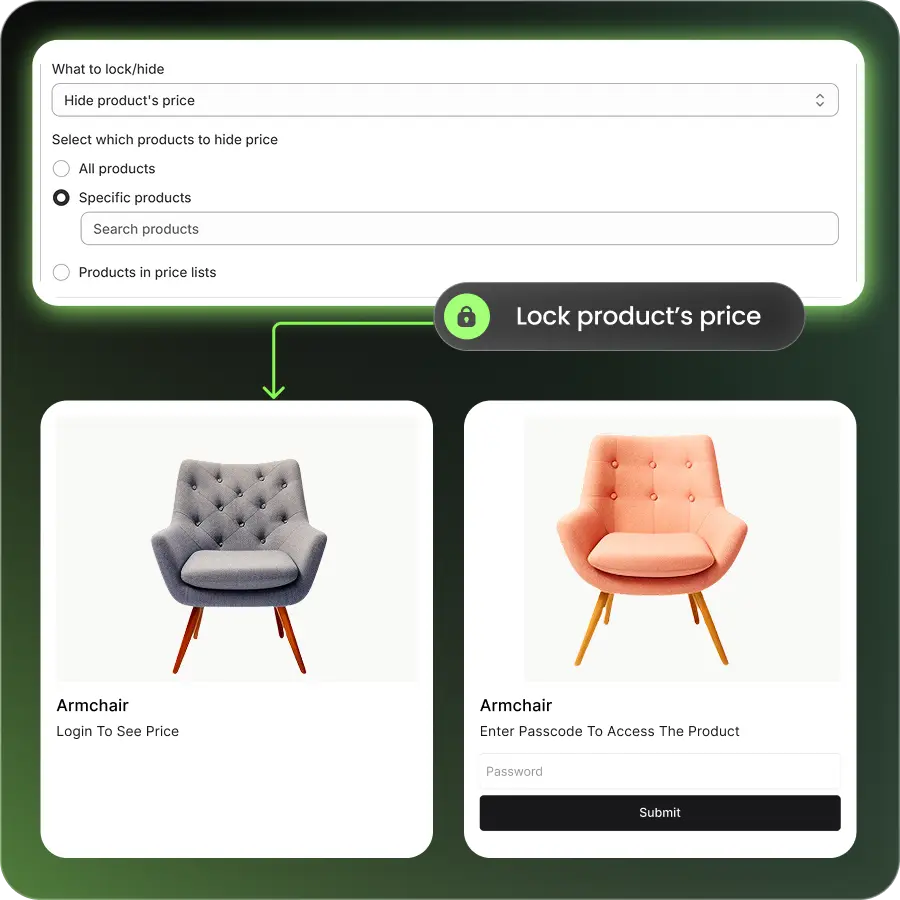
Once pricing is set, the next requirement is controlling who sees it. Many manufacturers and distributors need to protect wholesale pricing from the public. Retail customers should see standard prices; wholesale buyers should see their negotiated rates only after they log in and get approved.
Native blended stores do not gate the storefront. Retail pricing is visible to everyone by default, and B2B pricing only appears at checkout for logged-in company buyers.
If you want a “login to see price” experience or hidden collections for approved accounts, you need an app. This feature is often called a gated catalog. See how to hide wholesale prices on Shopify.
Bulk Ordering, MOQs, and Quick Order
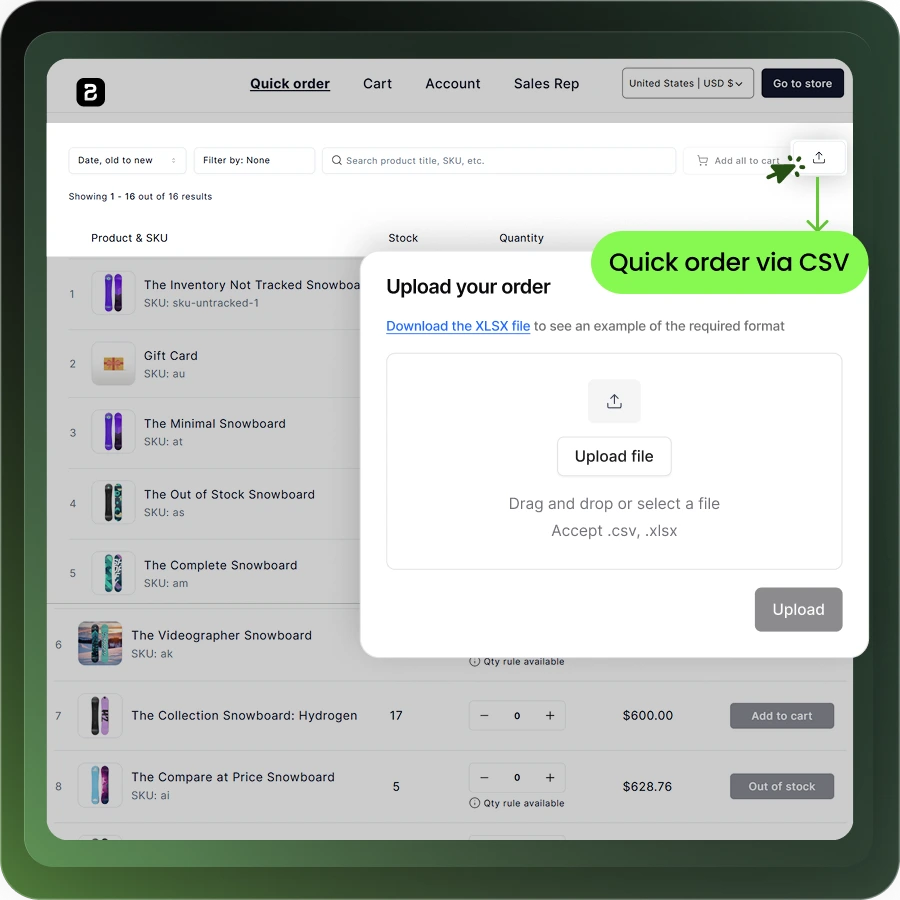
Retail carts are small; wholesale carts are large. A buyer restocking 50 SKUs does not want to add each product one at a time.
Key point: Quick order pages let buyers enter SKUs or product names and quantities in a table format, then add the entire order to cart at once.
Apps built for wholesale include CSV bulk ordering and saved carts, plus reorders from past orders and MOQ controls. These features reduce friction for repeat buyers. For setup guidance, see set up bulk ordering.
Net Terms, Credit, and Quote-to-Order
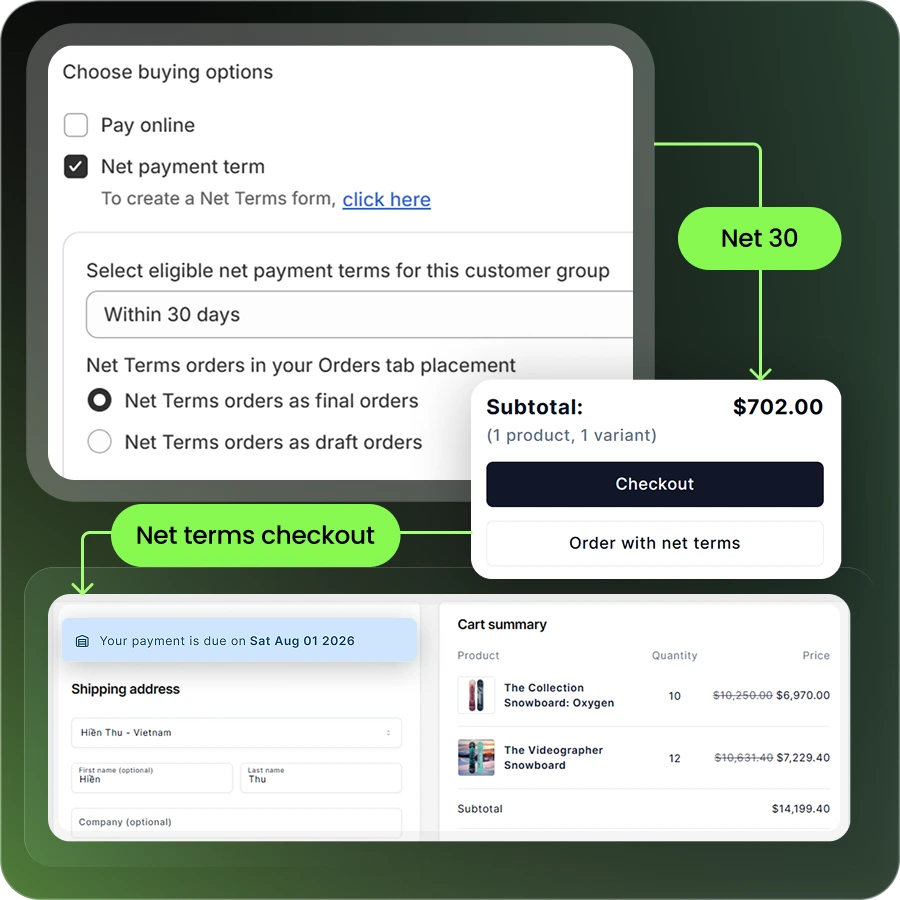
After buyers can find products and order efficiently, they need payment terms that match wholesale purchasing. Wholesale buyers rarely pay at checkout. They expect net 30 or net 60 terms, along with PO numbers and invoicing.
A capable wholesale app offers net terms with credit limits. You can extend credit up to a set amount and cut off orders when the buyer reaches that ceiling.
Quote-to-order workflows (RFQ) are another key capability. A buyer submits a quote request, your sales team reviews and adjusts pricing, and the buyer accepts and converts to an order.
These features pay off. Among B2B companies that sell online, online sales account for 34 percent of revenue (McKinsey’s B2B research, 2024). Giving buyers a self-serve portal with net terms keeps them ordering instead of calling. For a full walkthrough, see net payment terms explained.
How to Choose: Native B2B, an App, or Both
Use this decision framework to figure out your setup:
| Scenario | Recommendation |
|---|---|
| Few customer tiers (3 or fewer), no hidden pricing, simple net terms | Native Shopify B2B may be enough |
| More than 3 pricing tiers or catalogs | Add an app (or upgrade to Plus for unlimited native catalogs) |
| Need to hide wholesale prices until login/approval | Add an app with gated catalogs |
| Wholesale registration and approval workflow required | Add an app with registration forms |
| RFQ or quote-to-order needed | Add an app with quote workflows |
| ERP, CRM, or external system sync | Add an app with API or ERP integration |
One blended store is the default setup for mixed DTC and B2B. Running two separate stores (one for retail, one for wholesale) adds operational overhead without clear benefit for most merchants.
The store-structure choice is hard to reverse, so plan carefully. For a deeper comparison, see blended store vs dedicated store.
The Payoff of Getting It Right
When your blended store works well, the results compound. Wholesale buyers can log in, see their pricing, and reorder with a few clicks. You manage everything from one Shopify admin with one inventory pool.
According to Shopify’s April 2026 announcement, merchants using B2B on Shopify see up to a 4.1x increase in reorder frequency compared to DTC orders. That lift comes from giving buyers a self-serve portal with saved payment methods and one-click reorders.
The opportunity is global. According to the U.S. Department of Commerce, the global B2B ecommerce market is valued at USD $36 trillion by 2026. Capturing even a small share through a well-run wholesale channel can transform a retail brand into a hybrid business with higher order values and repeat revenue.
Frequently Asked Questions
Do I need Shopify Plus to sell wholesale and retail from one store?
No. Since April 2, 2026, foundational B2B features are available on Basic, Grow, and Advanced plans. Plus adds unlimited catalogs and partial payments.
Can one customer be both a retail and a wholesale buyer?
In a blended store, a customer assigned to a company sees B2B pricing instead of retail pricing. A wholesale app that uses customer tags gives you more flexibility to handle mixed buyers.
Does Shopify hide wholesale prices from retail shoppers automatically?
No. Blended stores show retail prices to everyone by default, so hiding or gating wholesale prices requires an app.
What’s the difference between the Shopify Wholesale Channel and B2B on Shopify?
The legacy Plus Wholesale Channel was retired on April 30, 2024. B2B on Shopify replaced it and runs inside your normal Shopify admin.
Which is the best app for running retail and wholesale from one store?
The best fit depends on which native gaps you need to close. Look for an all-in-one app that covers gated pricing, unlimited tiers, MOQs, net terms, and RFQ on your current plan. B2Bridge is built for this on any Shopify plan.

As a Product Marketing Executive at B2Bridge, I focus on the Enterprise B2B Ecommerce domain. I leverage my understanding of product and user psychology to deliver customer-centric content that addresses business challenges and fuels growth.