Selling wholesale to retailers through spreadsheets and phone orders worked fine—until it didn’t. As buyer expectations shift toward self-service and 24/7 ordering, brands without a digital B2B channel are losing ground to competitors who’ve already made the switch.
B2B ecommerce for retailers refers to online platforms where manufacturers, distributors, and wholesalers sell products in bulk to retail buyers through digital portals that support negotiated pricing, account-specific catalogs, and flexible payment terms. This guide breaks down how B2B ecommerce works, what features matter most, and how the leading platforms compare for brands selling to retailers.
What Is B2B Ecommerce for Retailers
B2B ecommerce for retailers refers to online platforms where businesses sell products in bulk to other retailers, wholesalers, or corporate clients through digital portals. Unlike consumer-facing stores, B2B platforms support complex workflows like negotiated pricing, bulk ordering, and account-specific catalogs.
The idea is simple: take the wholesale ordering process—traditionally handled through phone calls, faxes, and emailed spreadsheets—and move it online. Retail buyers can then browse catalogs, see their negotiated pricing, and place orders without waiting for a sales rep to call back.
On the seller side, you’ll typically find manufacturers, distributors, and wholesalers. On the buyer side, independent retailers, retail chains, and resellers looking to stock their shelves.
How B2B Ecommerce Differs from B2C Ecommerce
If you’ve only worked with consumer storefronts, B2B ecommerce operates on different logic. Business buyers aren’t browsing for impulse purchases—they’re executing procurement workflows with budgets, approvals, and vendor relationships to manage.
| Factor | B2B Ecommerce | B2C Ecommerce |
|---|---|---|
| Pricing | Account-specific, negotiated | Fixed, public |
| Order size | Bulk, case packs | Single units |
| Payment | Net 30/60 terms | Immediate checkout |
| Buyer relationship | Long-term accounts | One-time or repeat |
| Purchasing process | Multi-step approval | Individual decision |
Pricing alone creates complexity that standard ecommerce platforms weren’t designed to handle. A single product might have different prices for a Gold-tier distributor, a regional retailer, and a first-time wholesale buyer—all visible only to the right logged-in account.
Types of B2B Ecommerce Models for Retail Sales
Not all types of B2B ecommerce follow the same supply chain path. The model you operate under affects which platform features matter most.
Manufacturer to Retailer
Brands and producers sell directly to retail stores, bypassing distributors entirely. This model gives manufacturers more control over margins and brand presentation, though it also means handling logistics that a distributor would typically manage.
Distributor to Retailer
Distributors aggregate products from multiple manufacturers and sell them to retailers. They often handle warehousing, fulfillment, and regional logistics—making them valuable partners for retailers who want one-stop sourcing.
Wholesaler to Retailer
Wholesalers purchase in bulk from manufacturers and resell smaller quantities to retailers. They typically serve regional markets or specialized niches where retailers can’t meet manufacturer minimums.
Hybrid B2B and B2C
Some brands sell both direct-to-consumer and to retail accounts from a single platform. This model is increasingly common, though it requires careful pricing controls and access management to keep wholesale rates hidden from retail shoppers.
Why Brands Selling to Retailers Need a B2B Ecommerce Platform
Manual wholesale operations—phone orders, emailed spreadsheets, faxed purchase orders—create friction at every step. A B2B ecommerce platform addresses the operational pain points that slow growth and frustrate buyers.
- Manual order entry: Phone, fax, and email orders require re-keying into your systems, which takes time and introduces errors
- Pricing inconsistencies: Without automation, contract pricing and volume discounts are prone to mistakes
- Disconnected systems: Orders, inventory, and customer data often live in separate tools that don’t talk to each other
- Limited scalability: Adding wholesale accounts means adding sales headcount when ordering is manual
- Poor buyer experience: Retailers expect 24/7 access to catalogs, order history, and account information
The efficiency gains compound quickly. Buyers can place orders at midnight, reorder from their purchase history in seconds, and check real-time inventory without waiting for a callback.
Must-Have Features in a B2B Ecommerce Platform for Retailers
Standard ecommerce features won’t cut it for wholesale operations. Here’s what distinguishes B2B-capable platforms from consumer-focused tools.
Account-Specific Pricing and Price Lists
A price list is a custom pricing structure assigned to a specific customer account, group, or a specific company account. You might offer a 15% discount to Gold distributors, a 10% discount to Silver retailers, and standard wholesale pricing to everyone else—all managed automatically based on who logs in.

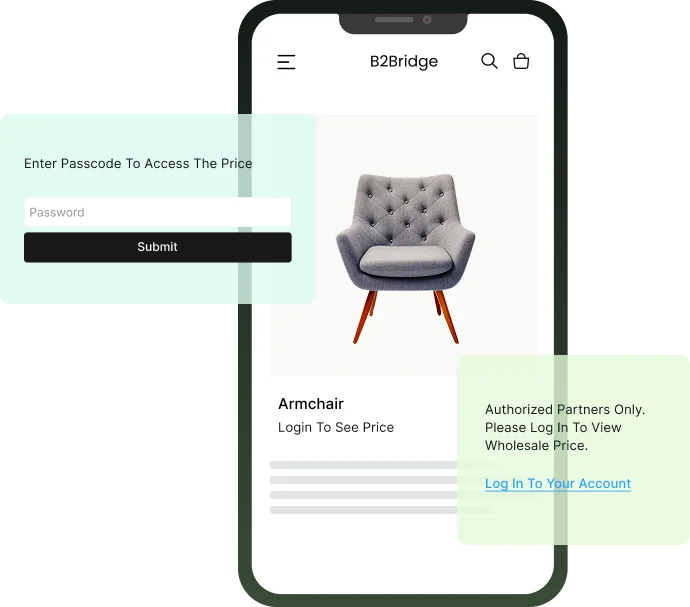
Gated Catalogs and Hidden Wholesale Pricing
Access controls hide wholesale pricing from public visitors and competitors. Only logged-in, approved retailers see B2B prices and products. This protects your margins and creates an incentive for buyers to register.
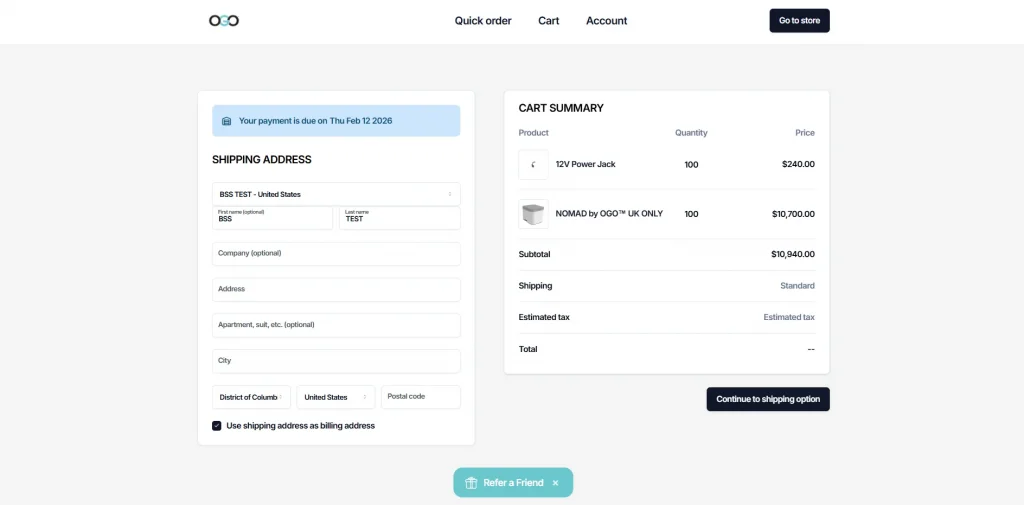
Net Payment Terms and Request for Quote
Net terms—Net 15, Net 30, Net 60—let retailers pay after delivery rather than at checkout. For large or custom orders, Request for Quote (RFQ) workflows allow buyers to submit inquiries that you can review, adjust, and convert into orders.
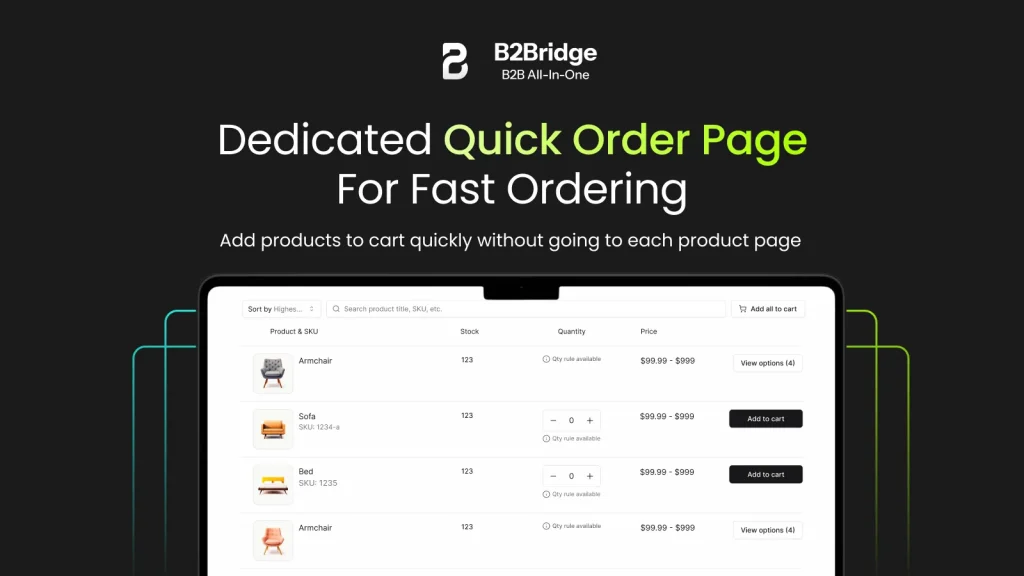
Quick Order Pages and Reorder Workflows
Quick order forms let retailers enter SKUs directly or upload CSV files for bulk purchasing. Saved carts and one-click reorder functionality make repeat purchases fast—critical for buyers who order the same products monthly.
Minimum Order Quantities and Case Packs
Minimum order quantities (MOQs) set the smallest order a retailer can place. Case pack logic and quantity increments ensure orders align with your packaging and shipping requirements, protecting margins on small orders.

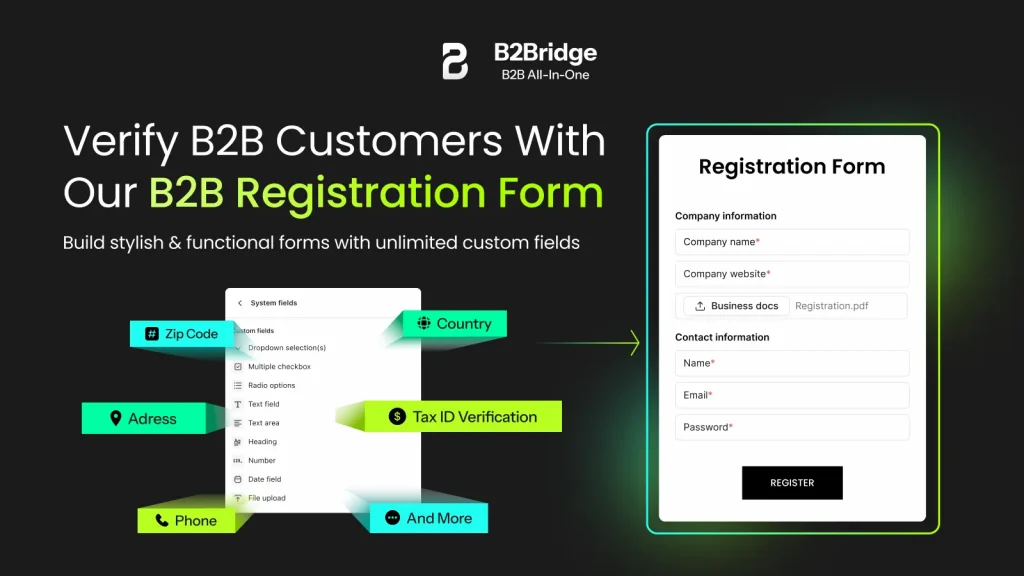
B2B Registration and Customer Approval
Custom registration forms capture business credentials like tax IDs and resale certificates. Approval workflows let you verify retailers before granting wholesale access—keeping your pricing exclusive to legitimate business buyers.
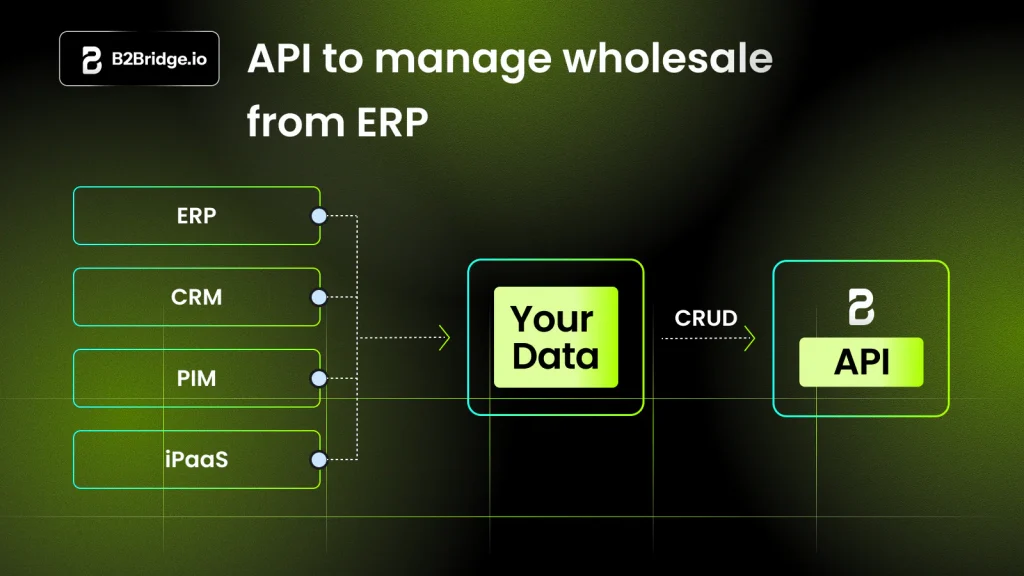
ERP and CRM Integration
Enterprise Resource Planning (ERP) systems manage inventory, orders, and financials. Customer Relationship Management (CRM) systems track buyer relationships. Integrating both with your ecommerce platform reduces manual data entry and keeps your back-office operations aligned with your storefront.
How to Choose a B2B Ecommerce Platform for Retailers
With dozens of platforms claiming B2B capabilities, the selection process can feel overwhelming. Here are the criteria that matter most.
Match the Platform to Your Business Model
Evaluate whether you need manufacturer-direct capabilities, distributor functionality, or hybrid B2B and B2C support. Not all platforms handle every model equally well—some excel at complex distribution scenarios while others optimize for simpler wholesale setups.
Evaluate ERP and CRM Integration Depth
Check which systems the platform connects with natively. NetSuite, SAP, Zoho, and Odoo integrations vary widely in depth and reliability. Ask whether APIs are available for custom integrations if your stack isn’t on the standard list.
Check Pricing and Catalog Flexibility
Confirm support for customer-specific price lists, volume tiers, contract pricing, and multi-currency. Verify catalog controls for product visibility by customer group—you’ll want granular control over who sees what.
Review Total Cost of Ownership
Look beyond subscription fees. Factor in implementation, integrations, customization, and ongoing support. SaaS platforms typically have lower upfront costs but may charge more for advanced features, while on-premise solutions require infrastructure investment.
Confirm Time to Launch
Ask about typical implementation timelines. Some platforms launch in days or weeks, while enterprise solutions with extensive ERP integration may require several months of configuration and testing.
>> You may also like: Best Customized B2B Ecommerce Solutions for Growing Businesses in 2026
Best B2B Ecommerce Platforms for Retailers Compared
Here’s how the leading platforms stack up for brands selling to retailers.
| Platform | Best For | Key Strength | Pricing Model |
|---|---|---|---|
| B2Bridge | Shopify merchants | Enterprise B2B without Shopify Plus | Tiered SaaS |
| Shopify B2B | Shopify Plus merchants | Native Shopify integration | Included with Plus |
| BigCommerce | Mid-market B2B | Built-in B2B features | SaaS |
| Adobe Commerce | Enterprise/complex | Customization depth | License + hosting |
| SAP Commerce Cloud | Large enterprise | ERP integration | Enterprise license |
| OroCommerce | B2B-first businesses | Purpose-built B2B | Open source + SaaS |
| Sana Commerce | ERP-centric companies | Deep ERP integration | SaaS |
B2Bridge for Shopify
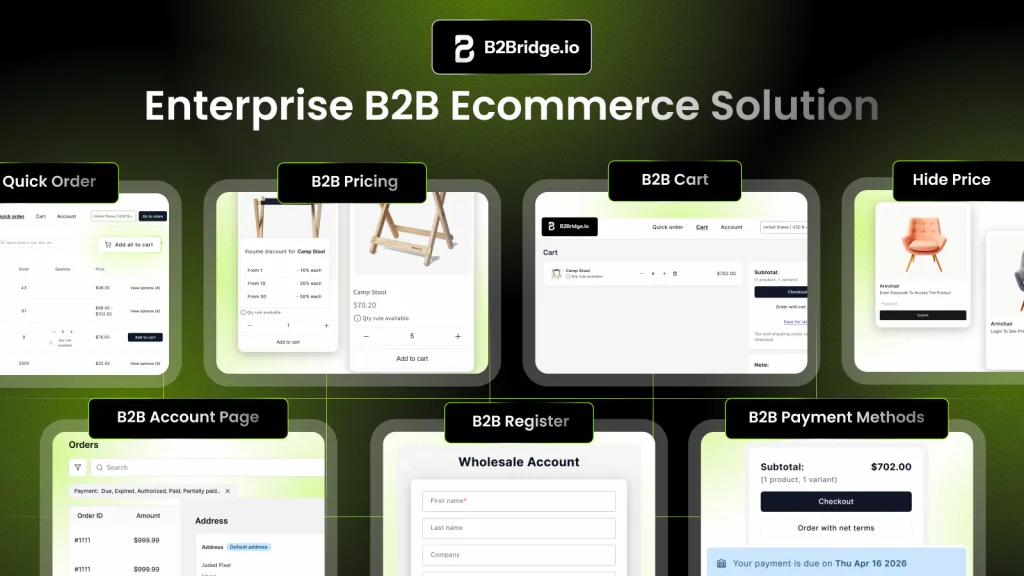
B2Bridge is an enterprise-grade B2B solution that embeds wholesale operations into Shopify without requiring Shopify Plus. It works with any Shopify plan, making it accessible for growing brands that want sophisticated B2B capabilities without a platform migration.
Standout features: Customer-specific and role-based pricing, unlimited B2B price list assigned to company account or customer group, net terms and RFQ workflows, integrations with NetSuite, Zoho, and Odoo, quick order and reorder functionality, unified B2B and B2C store capability.
Shopify B2B
Shopify B2B is native B2B functionality within Shopify Plus. It’s a solid fit for existing Shopify Plus merchants who want basic B2B functionality without third-party apps, though it requires the Plus subscription.
Standout features: Company accounts and buyer permissions, quantity rules and volume pricing, payment terms at checkout.

BigCommerce B2B Edition
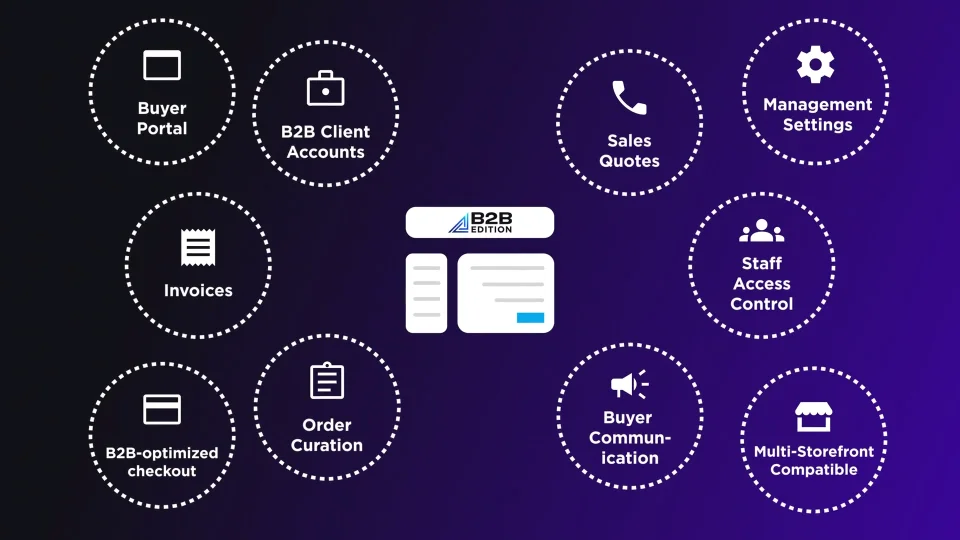
BigCommerce B2B Edition is a SaaS platform with native B2B functionality. It’s particularly strong for mid-market companies that want multi-storefront and headless capabilities.
Standout features: Customer groups with custom pricing, quote management, multi-storefront support.
Adobe Commerce
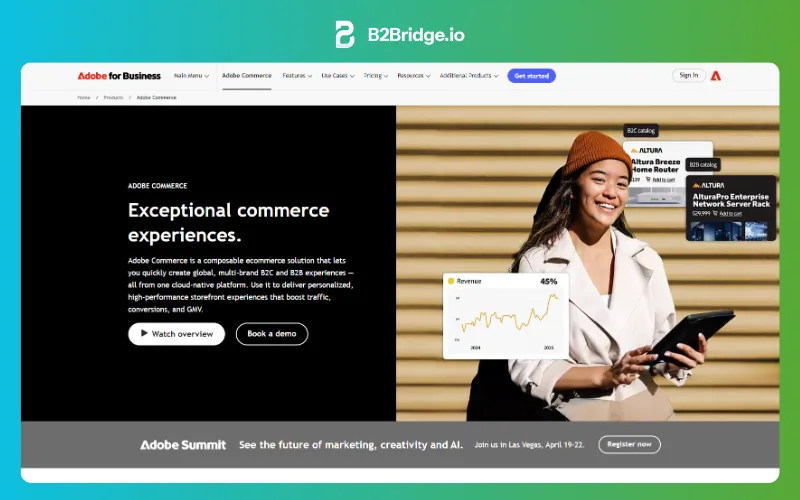
Adobe Commerce (formerly Magento) is highly customizable but resource-intensive. It’s best for enterprises with complex requirements and dedicated technical teams.
Standout features: Shared catalogs and custom pricing, requisition lists and quick order, negotiated quotes.
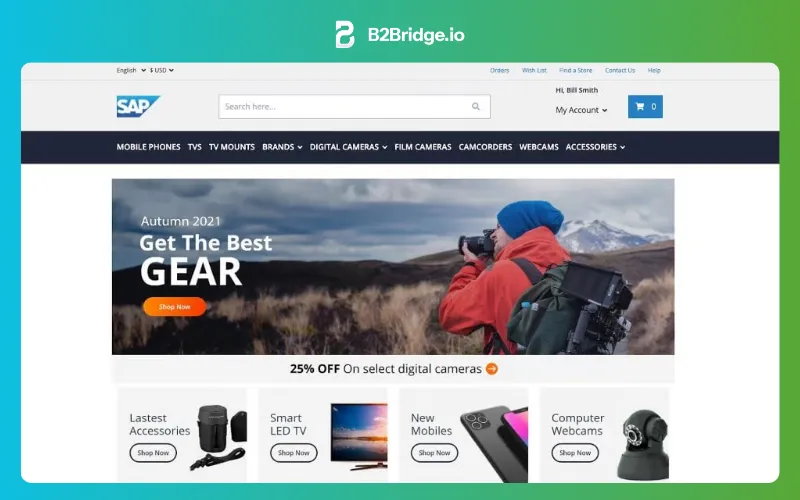
SAP Commerce Cloud
SAP Commerce Cloud is an enterprise-grade platform with deep SAP ERP integration. It’s best for large organizations already invested in the SAP ecosystem.
Standout features: Native SAP integration, product content management, order management.
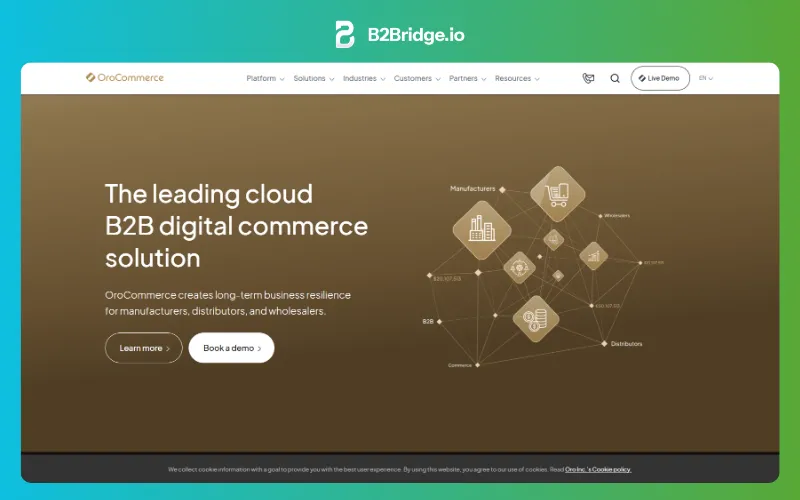
OroCommerce
OroCommerce is an open-source, B2B-first platform purpose-built for complex B2B workflows rather than adapted from B2C.
Standout features: Built-in CRM, workflow automation, multi-organization support.
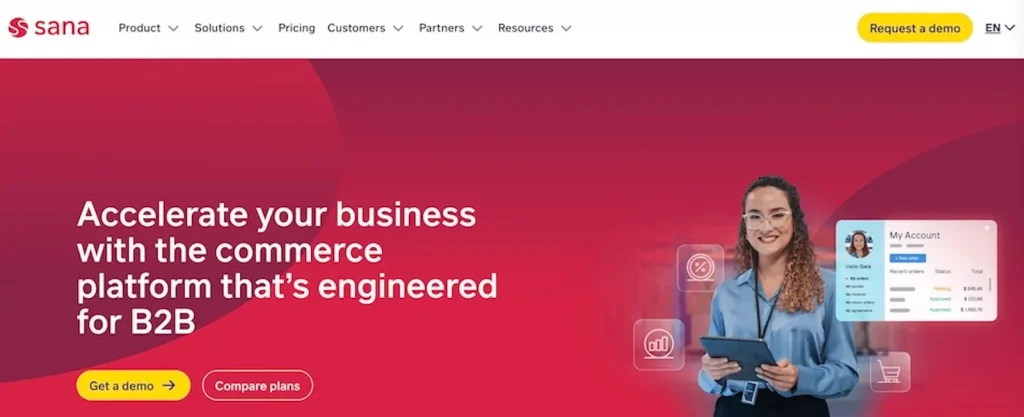
Sana Commerce
Sana Commerce integrates directly with Microsoft Dynamics and SAP ERPs, using real-time ERP data on the storefront without middleware.
Standout features: Live ERP integration, personalized pricing from ERP, self-service portal.
What the Best B2B Ecommerce Platforms Have in Common
Analyzing the top platforms reveals consistent patterns. The features that appear across high-performing B2B ecommerce solutions directly address how business buyers actually purchase.
- Granular pricing control: Support for customer-specific, tiered, and contract pricing
- System integration: APIs or native connectors to major ERPs and CRMs
- Buyer self-service: Account dashboards, order history, and reorder tools
- Access management: Gated catalogs and approval workflows
- Operational efficiency: Automation that reduces manual order processing
The platforms that struggle typically bolt on B2B features as an afterthought. The ones that succeed build B2B logic into their core architecture.
Steps to Launch a B2B Ecommerce Store for Retailers
Getting from decision to live store follows a predictable path. Here’s the sequence that works.
1. Map Retailer Segments and Pricing Rules
Document your customer groups, pricing tiers, discount structures, and payment terms before touching platform configuration. This groundwork prevents rework later.
2. Audit ERP, CRM, and Inventory Data
Clean and organize product data, customer records, and inventory levels for migration. Identify integration requirements now—not after you’ve started building.
3. Pick a Platform That Fits Your Stack
Select a platform based on your technology ecosystem, business model, and growth plans. Revisit the selection criteria above and prioritize the factors that matter most for your operation.
4. Configure Catalogs, Approvals, and Net Terms
Set up product visibility rules, B2B registration workflows, payment terms by customer group, and pricing logic. Test thoroughly with sample accounts before going live.
5. Onboard Retailers and Train Your Sales Team
Invite existing wholesale accounts, provide buyer training, and prepare internal teams to support the new ordering process. The best platform in the world fails if buyers don’t know how to use it.
Run Retailer B2B Ecommerce on Shopify with B2Bridge
For Shopify merchants who want enterprise B2B capabilities without Shopify Plus or a separate storefront, B2Bridge delivers the full toolkit.
- B2B Pricing Engine: Customer-specific lists, volume discounts, tiered/unit pricing, hidden wholesale pricing
- ERP/CRM Integration: Native connections to NetSuite, Zoho, Odoo, and custom systems
- B2B Buyer Experience: Quick order, net terms, RFQ, and saved carts
- Access Control: Gated catalogs and B2B registration with approval workflows
- Technical Partnership: Hands-on onboarding and ongoing customization support
The result is unified B2B and B2C operations on one Shopify store, with the flexibility to adapt to your pricing models, systems, and workflows rather than forcing you into a fixed template.
Book a Demo to see how B2Bridge can power your wholesale operations.
Frequently Asked Questions about B2B Ecommerce for Retailers
What is the best B2B ecommerce platform for retailers?
The best platform depends on your technology stack, business model, and budget. Shopify merchants often benefit from B2Bridge for enterprise B2B without Shopify Plus, while companies using SAP or NetSuite may prefer platforms with native ERP integration.
What are examples of B2B ecommerce?
Common examples include a clothing manufacturer selling wholesale to boutique retailers, a food distributor supplying restaurants and grocery stores, and a consumer electronics brand offering bulk pricing to authorized resellers through an online portal.
What is the difference between B2B, B2C, C2C, and D2C?
- B2B: Business-to-business commerce between companies
- B2C: Business-to-consumer sales to end customers
- C2C: Consumer-to-consumer transactions, such as marketplace resale
- D2C: Direct-to-consumer selling by brands without retail intermediaries
Can you run B2B and B2C on the same Shopify store?
Yes. With solutions like B2Bridge, brands can operate a hybrid B2B and B2C store on one Shopify setup. B2B pricing and catalogs remain hidden from retail shoppers and visible only to logged-in wholesale accounts.
How long does it take to launch a B2B ecommerce store for retailers?
Timelines vary by platform complexity and integration requirements. Lightweight Shopify solutions like B2Bridge can launch in days to weeks, while enterprise platforms with extensive ERP integration may require several months.

As a Product Marketing Executive at B2Bridge, I focus on the Enterprise B2B Ecommerce domain. I leverage my understanding of product and user psychology to deliver customer-centric content that addresses business challenges and fuels growth.