For B2B and wholesale merchants, repeat orders aren’t a nice-to-have; they’re the backbone of the business. Unlike DTC brands that often chase one-time impulse buyers, Shopify B2B ecommerce runs on relationships: distributors reordering the same SKUs monthly, manufacturers restocking components on a schedule, and retailers replenishing inventory they know sells.
The challenge is that many B2B storefronts still make repeat buying harder than it needs to be. If a buyer has to rebuild a 40-line order from scratch every time, hunt for the right SKU numbers, or wait on a sales rep to confirm pricing, they’ll eventually look for a supplier who makes it easier. For a large share of B2B purchases, especially consumable and consistently reordered products, the single biggest fix is removing the manual reorder step entirely, which is where recurring order automation comes in.
Below are the strategies that consistently help Shopify B2B merchants increase repeat purchases and build lasting wholesale customer retention.
1. Automate Recurring Orders for Frequently Purchased Products
Some B2B products follow a predictable rhythm. Think:
- Coffee and beverages
- Food and ingredient supplies
- Packaging materials
- Office supplies
- Pet products
- Beauty and personal care supplies
- Cleaning products
- Manufacturing consumables
If a buyer orders the same box of packaging tape every three weeks, why should they have to manually place that order 17 times a year? This is exactly the problem a tool like Easy Subscriptions is built to solve for wholesale accounts, not just consumer stores.
Easy Subscriptions lets merchants set up recurring purchasing with features such as:
- Weekly, monthly, or custom subscription schedules
- Prepaid subscriptions
- Subscription bundles
- Customer self-service management
- Pause, skip, swap, or reschedule options
- Payment retry and dunning handling
- Subscription analytics
This isn’t the right fit for every SKU; one-off custom orders or highly variable purchases won’t benefit much. But for consistently reordered, consumable-style products, recurring orders quietly remove a whole category of manual reordering from both the buyer’s and the merchant’s plate, often becoming the single highest-leverage retention lever a B2B merchant can pull.
2. Make Manual Reordering Easy Where Subscriptions Don’t Fit
Not every product belongs on a subscription schedule. For one-off or variable purchases, B2B buyers still need to reorder the same list of products without rebuilding it from scratch. To reduce that friction, consider offering:
- One-click reordering from a past order
- Order history that’s easy to browse and filter
- Saved carts for recurring purchase lists
- Quick-order pages where buyers type in SKUs and quantities directly
- SKU-based ordering for buyers who already know their product codes
- CSV/bulk ordering for large, multi-line purchases
- Saved product lists for different departments, locations, or projects
A dedicated B2B ordering layer, like the tools built into B2Bridge, can handle much of this natively, giving buyers a self-service portal with reorder functionality, quick ordering, and saved carts, a useful complement to subscriptions for the portion of the catalog that doesn’t follow a fixed schedule.
3. Offer Customer-Specific Pricing
Nothing slows down a repeat purchase faster than a buyer having to email and confirm “is this still my price?” This matters just as much for subscription orders as one-off ones, a subscriber whose price changes unexpectedly is a subscriber who cancels. Key pricing structures to support:
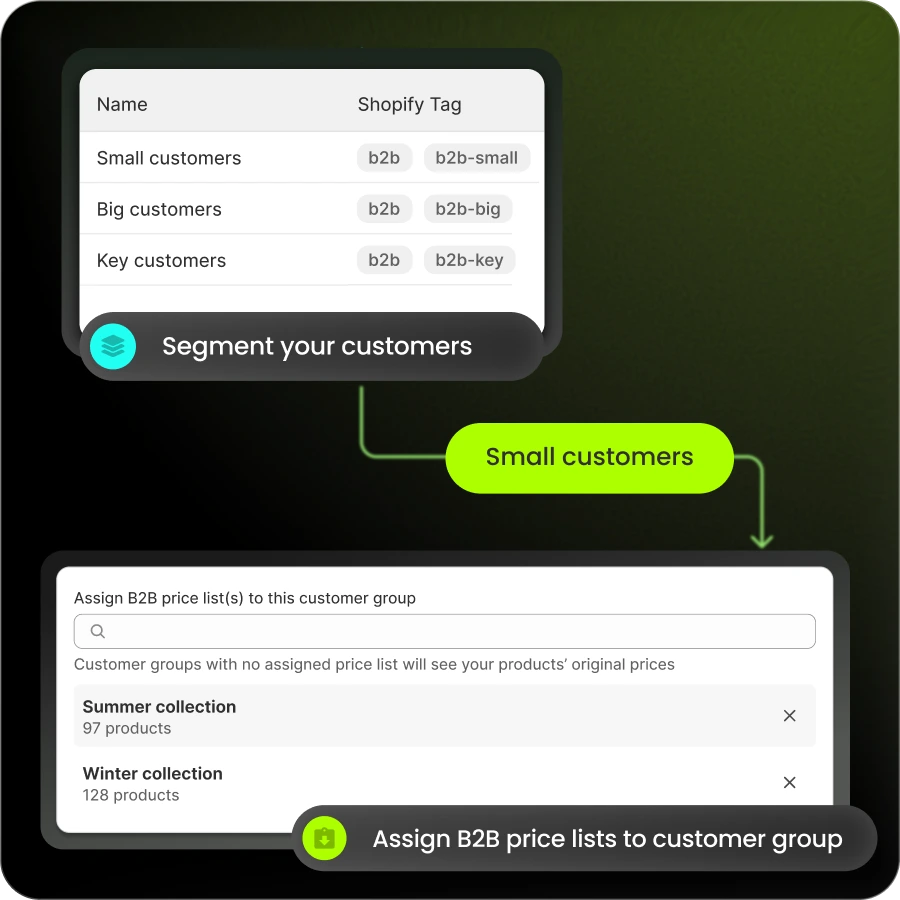
- Customer-specific price lists
- Contract pricing for long-term accounts
- Customer groups (e.g., retailer vs. distributor tiers)
- Volume discounts
- Quantity-based pricing
- Minimum order quantities (MOQs)
When agreed pricing shows up automatically at checkout, and stays consistent across every recurring cycle, buyers are far more likely to complete, and repeat, the purchase.
4. Use Volume Discounts to Encourage Larger Repeat Orders
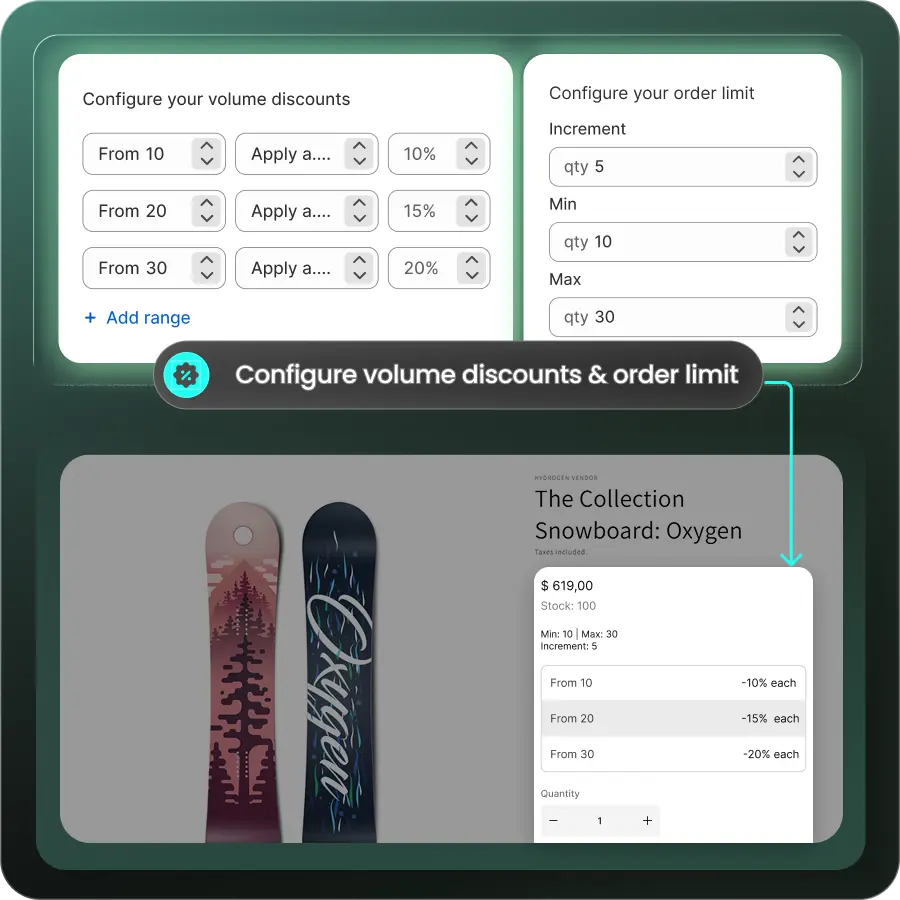
Volume discounts don’t just reward big buyers; they nudge repeat customers toward ordering more per cycle, including within a subscription. A simple tiered structure works well:
| Quantity | Price per Unit |
| 1–9 units | $12.00 |
| 10–24 units | $10.50 |
| 25–49 units | $9.25 |
| 50+ units | $8.00 |
The goal is clarity, not complexity. Buyers should be able to glance at a pricing table and immediately understand what ordering more will save them, whether that order is a one-time purchase or a standing subscription.
5. Let Subscribers Manage Their Own Orders
B2B buyers increasingly expect the same convenience they get as consumers, without needing to call or email a rep for routine tasks. With subscriptions in place, self-service becomes even more important, since buyers need to adjust standing orders as their needs change. A strong self-service experience typically includes:
- Subscription management (pause, skip, swap, reschedule)
- Account management
- Order history
- Reordering
- Multiple shipping addresses
- Invoice access
- Order tracking
Self-service doesn’t replace your sales team; it frees them up. Instead of processing routine reorders and subscription tweaks, reps can focus on larger accounts, new business, and relationship-building where their time actually adds value.

6. Use Reminders and Dunning to Protect Recurring Revenue
Purchase history is one of the most underused retention tools in B2B ecommerce, and it’s especially critical for subscriptions, where a single failed payment can silently end a recurring relationship. Two things matter here:
- Reorder reminders for non-subscription products, timed to typical purchase cycles (“Your last order was 30 days ago, ready to reorder?”)
- Payment retry and dunning handling for subscription products, so a declined card doesn’t quietly cancel a recurring order
These reminders can go out via email, SMS, or directly inside a buyer’s account portal. The specific lift will vary by industry and product type, so it’s worth testing timing and channel rather than assuming one approach fits every customer base.
7. Create B2B Loyalty and Retention Incentives
Discounts aren’t the only lever. Consider incentives built around ongoing relationships rather than single transactions:
- Loyalty pricing for long-term subscribers
- Volume-based rewards
- Free shipping thresholds
- Early access to new products
- Account-level benefits
- Exclusive product lines
- Prepaid subscription discounts
The most effective B2B retention strategies weigh customer lifetime value and purchase frequency, subscription retention being one of the clearest signals of both, not just the size of any one order.
8. Reduce Checkout and Payment Friction
B2B buyers often follow internal procurement processes that don’t match typical consumer checkout flows. Supporting the way they actually pay reduces friction at the exact moment repeat orders recurring or one-off are placed. Consider offering:
- Net 15/30/60 payment terms
- Saved payment methods (essential for subscriptions to run smoothly)
- Purchase order (PO) support
- Customer-specific payment options
- A streamlined, low-step checkout
The closer your checkout mirrors a buyer’s established procurement workflow, the less friction stands between them and their next order, or their next renewal.
9. Use Cross-Sells and Product Recommendations
Repeat orders don’t have to stay the same size forever. Relevant recommendations, based on actual purchase and subscription history, can increase order value naturally:
- Frequently purchased together items
- Complementary products worth adding to an existing subscription
- Replacement parts or consumables
- Bulk alternatives to items already being reordered
The key word is relevant. Generic “you might also like” widgets tend to get ignored by B2B buyers who are focused on a specific procurement task.
10. Track the Metrics Behind Repeat Orders
You can’t improve what you don’t measure. These KPIs give a clear picture of retention health:
| Metric | What It Tells You |
| Repeat purchase rate | % of customers who order more than once |
| Subscription retention | How long recurring orders stay active |
| Churn/cancellation rate | Rate of lost customers or canceled subscriptions |
| Customer retention rate | How many customers you keep over time |
| Purchase frequency | How often customers reorder |
| Average order value (AOV) | Revenue per order |
| Customer lifetime value (CLV) | Total value of a customer relationship |
| Reorder interval | Typical time between orders |
| Revenue from returning customers | Share of revenue from repeat buyers |
Reviewing these regularly helps you spot which retention tactics are actually working and, in particular, whether your subscription program is retaining customers or quietly leaking them.
11. Combine Recurring Commerce With B2B Ordering Tools
Repeat purchasing in B2B doesn’t have to rely on one single tactic. Many merchants get the best results by leading with recurring commerce for predictable products, and layering B2B ordering tools on top for everything else.
Easy Subscriptions typically covers:
- Recurring orders
- Subscription schedules
- Prepaid subscriptions
- Subscription bundles
- Customer self-service for subscriptions
B2Bridge typically covers:
- Customer accounts
- B2B-specific pricing
- Quick ordering
- Reordering
- Saved carts
For merchants whose products and buying patterns support it, building your retention strategy around a strong subscription foundation, then layering self-service B2B ordering on top, covers both predictable, subscription-style purchases and one-off bulk reorders, without forcing every customer into the same purchasing model.
Conclusion
Increasing repeat orders on a Shopify B2B store comes down to a consistent theme: remove friction from the next purchase. That means:
- Automating recurring orders where the buying pattern supports it
- Making manual reordering simple where it doesn’t
- Personalizing wholesale pricing
- Using volume discounts thoughtfully
- Providing genuine self-service purchasing
- Protecting recurring revenue with reminders and dunning
- Rewarding loyal buyers
- Reducing payment and checkout friction
- Recommending relevant products
- Tracking repeat-purchase metrics
The goal isn’t to convince a customer to buy again through pressure or gimmicks; it’s to make their next purchase, recurring or otherwise, easier, faster, and more aligned with how their business actually buys.
FAQ
How can I increase repeat orders on Shopify B2B?
Focus on reducing friction: automate recurring orders with a subscription app like Easy Subscriptions, apply consistent customer-specific pricing, offer self-service account tools, and send timely reminders based on purchase history.
Are Shopify subscriptions useful for B2B businesses?
Yes, for products purchased on a predictable schedule, such as consumables or supplies, a Shopify subscription app like Easy Subscriptions can automate these recurring purchases, though it’s not necessary for every product type.
What is the easiest way to let B2B customers reorder?
For subscription-eligible products, automating the order with a recurring subscription removes reordering entirely. For everything else, one-click reordering, saved carts, and quick-order or SKU-based pages are the fastest ways to let buyers repeat a purchase without rebuilding it.
How can wholesale businesses encourage repeat purchases?
Combine automation (recurring orders for predictable products) with convenience (fast reordering, self-service accounts), fair pricing (volume discounts, contract pricing), and proactive communication (reorder reminders, payment retry).
What B2B features help increase customer retention?
Recurring order automation, customer-specific pricing, order history, saved carts, quick ordering, flexible payment terms, and loyalty incentives all contribute to stronger retention.
Should B2B businesses offer recurring orders?
For frequently reordered, consumable-style products, yes recurring orders through a tool like Easy Subscriptions reduce manual work for both buyer and seller. For highly variable or custom orders, a self-service reordering system is often a better fit.
How can I track repeat purchases in Shopify?
Monitor metrics like repeat purchase rate, subscription retention, purchase frequency, reorder interval, and revenue from returning customers to understand and improve retention over time.

As a Product Marketing Executive at B2Bridge, I focus on the Enterprise B2B Ecommerce domain. I leverage my understanding of product and user psychology to deliver customer-centric content that addresses business challenges and fuels growth.