B2B ecommerce best practices focus on delivering a frictionless, B2C-like purchasing experience tailored to complex business needs—personalized pricing, bulk orders, robust reordering tools, and full integration with ERP and CRM systems. The difference between a B2B store that converts and one that frustrates buyers often comes down to how well these elements work together.
This guide breaks down the practices that high-performing wholesale operations use to grow revenue, reduce manual work, and keep business buyers coming back—plus how to implement them on Shopify without Shopify Plus.
What Is B2B Ecommerce
B2B ecommerce best practices center on delivering a frictionless, B2C-like purchasing experience tailored to complex business requirements—personalized pricing, bulk orders, robust reordering tools, and full integration with ERP and CRM systems. The goal is enabling self-service portals where wholesale buyers manage quotes, place repeat orders, and access account-specific pricing without contacting a sales rep.
B2B ecommerce refers to online transactions between businesses rather than between a business and individual consumers. Manufacturers selling to distributors, wholesalers supplying retailers, and brands offering bulk pricing to resellers represent distinct types of B2B ecommerce.
- B2B ecommerce: One business selling products or services to another business through an online platform
- Key difference from B2C: Larger order volumes, negotiated pricing, longer sales cycles, and multiple decision-makers

Why B2B Ecommerce Matters for Modern Sellers
Wholesale buyers have changed how they purchase. They research products online, compare suppliers, and increasingly prefer completing transactions without picking up the phone.
A well-built B2B ecommerce experience reduces dependence on sales reps for routine orders while speeding up the entire purchasing cycle. For sellers, a digital storefront handles the heavy lifting—scaling wholesale revenue without proportionally increasing headcount.
Key Differences Between B2B and B2C Ecommerce
You can’t simply copy B2C tactics and expect them to work for wholesale. The operational differences shape everything from pricing structure to checkout design.
Buyer Behavior and Decision Cycles
B2B purchases often involve multiple stakeholders—procurement, finance, operations—each with different priorities. Buying cycles run longer, involve more research, and many buyers already know exactly what they want.
Fast reordering matters more than discovery browsing. Repeat customers want to get in, place an order, and get out.
Pricing and Contract Complexity
B2B pricing is rarely one-size-fits-all. You might offer different rates to distributors versus retailers, volume discounts that kick in at certain thresholds, or negotiated contract pricing for key accounts.
A price list is a set of custom prices assigned to specific customers or customer groups. Managing price lists accurately is central to B2B operations.
Order Volume and Fulfillment Logic
B2B orders typically involve cases, pallets, or bulk quantities rather than single units. MOQs (minimum order quantities) set the smallest amount a buyer can order, while case packs and quantity increments keep orders aligned with packaging and fulfillment constraints.
Payment Methods and Credit Terms
B2B buyers often expect to pay by invoice using terms like Net 30 or Net 60 rather than paying at checkout. Net payment terms let buyers receive goods now and pay within an agreed timeframe—a standard expectation in wholesale relationships.
| Factor | B2C Ecommerce | B2B Ecommerce |
|---|---|---|
| Buyer | Individual consumer | Business/procurement team |
| Pricing | Fixed public price | Customer-specific, negotiated |
| Order size | Single units | Bulk, cases, pallets |
| Payment | Immediate (card) | Net terms, invoicing |
| Decision process | Fast, emotional | Longer, multiple approvers |
B2B Ecommerce Best Practices to Grow Wholesale Revenue
Each practice below addresses a specific friction point that wholesale buyers encounter. Removing friction directly impacts conversion rates and order values.
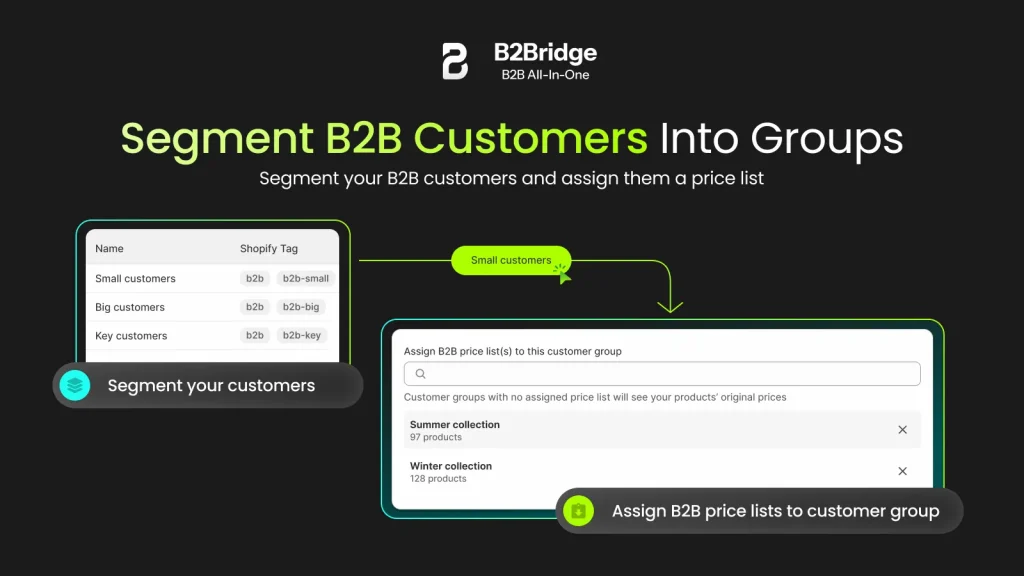
1. Personalize Pricing With Customer Groups and Contract Price Lists
B2B buyers expect to see their negotiated pricing when logged in. Customer groups segment buyers—”Gold Distributor,” “Regional Retailer,” “VIP Wholesale”—while contract price lists tie custom pricing to specific accounts.
Automating pricing replaces the manual quoting that sales reps often handle. Enterprise B2B solutions can manage unlimited price lists with customer-group logic, keeping pricing accurate without constant oversight.
Outcome: Faster purchasing decisions, fewer pricing errors, stronger buyer trust.
2. Hide Wholesale Pricing Behind a Verified B2B Account
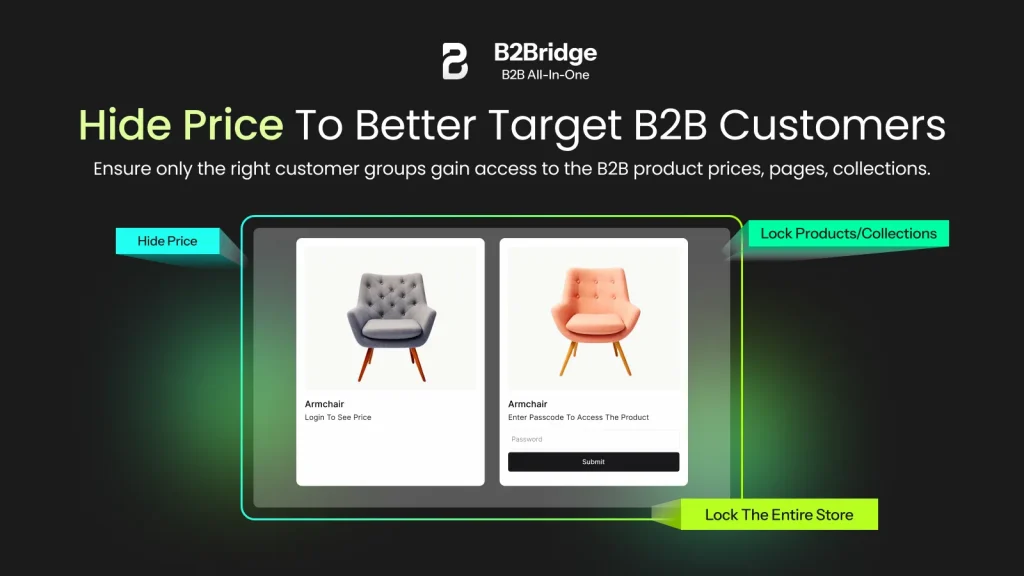
Wholesale pricing visible to the public creates problems. Competitors can see your rates, retail customers get confused, and margins become vulnerable.
B2B lock or access control restricts product and pricing visibility to logged-in, approved buyers. Protecting wholesale pricing creates a clear incentive for business buyers to register.
3. Streamline B2B Registration and Account Approval
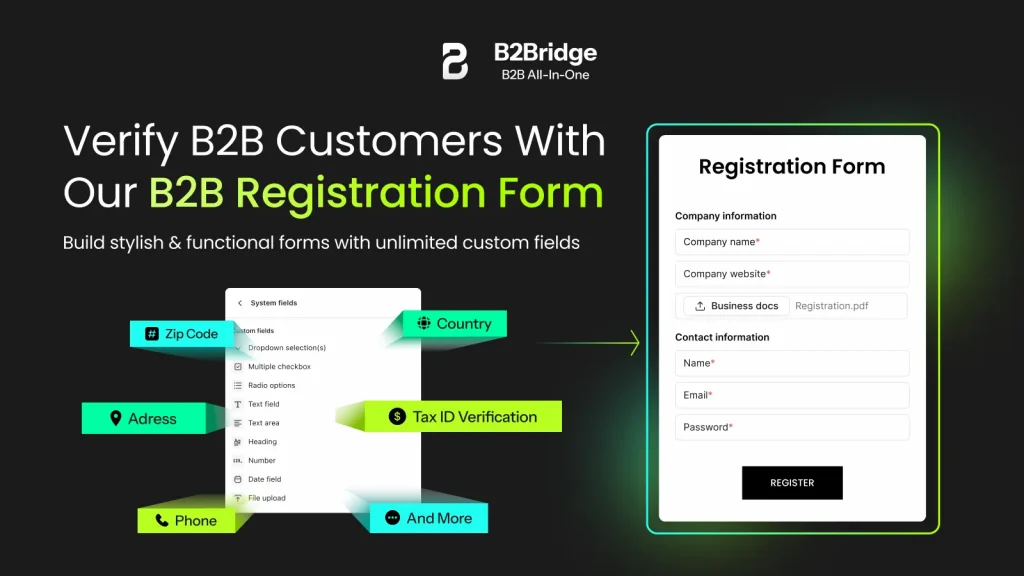
A professional B2B registration process captures the credentials you actually need: business name, tax ID, resale certificate, website verification. Approval workflows let you verify legitimacy before granting wholesale access.
The best setups auto-assign customer tags and groups once approved—no manual data entry required.
- Business name and type
- Tax ID or resale certificate
- Website or business verification
- Requested credit terms
4. Build a Self-Service Quick Order and Reorder Experience
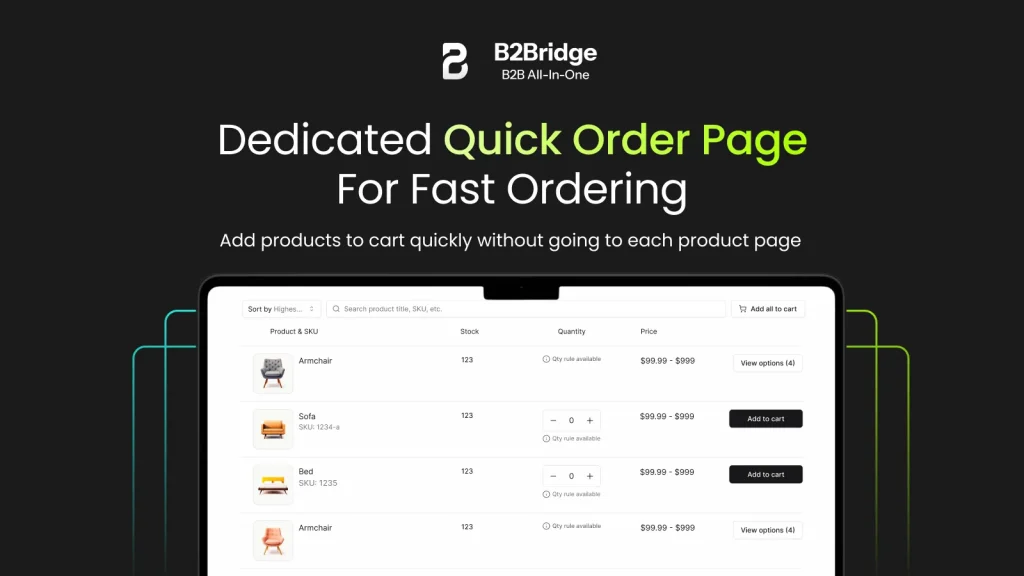
B2B buyers often want to reorder quickly without browsing a full catalog. Quick order pages let buyers enter SKUs and quantities directly, while saved shopping lists and one-click reorder from order history speed up repeat purchases.
For high-frequency wholesale buyers, the easier you make reordering, the more often they come back.
Outcome: Higher reorder rates, less sales rep involvement, improved buyer retention.
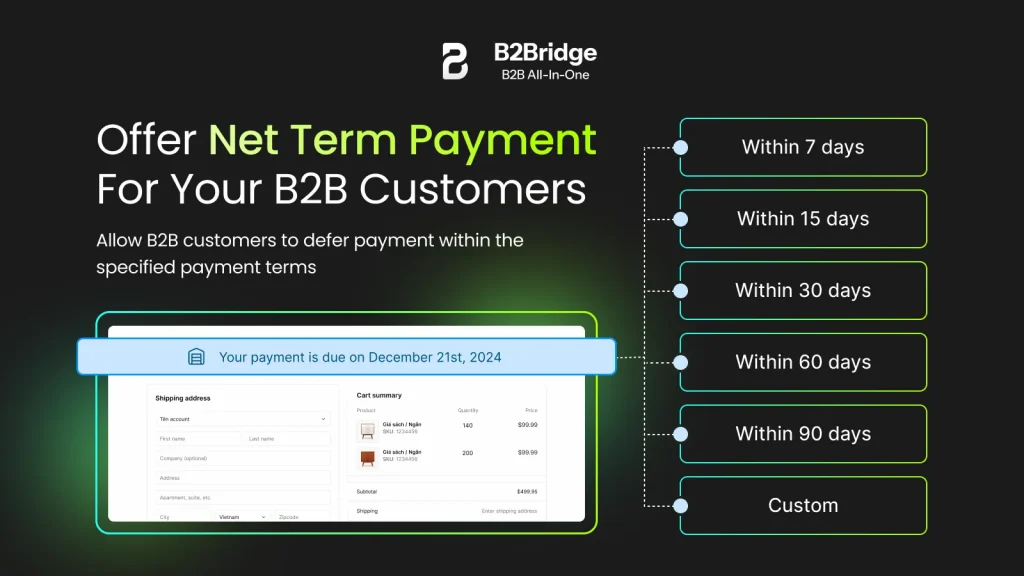
5. Offer Net Terms, RFQs, and Flexible B2B Payments
Net payment terms (Net 15, Net 30, Net 60) let buyers pay by invoice after delivery—a standard expectation for established wholesale relationships. RFQ (Request for Quote) workflows let buyers request pricing for large or custom orders before committing.
Modern B2B apps can assign payment methods per customer group directly in Shopify. VIP distributors get Net 60 while new accounts pay upfront.
- Net terms: Buyer pays invoice within agreed days (Net 30 = pay within 30 days)
- RFQ: Buyer submits quote request, seller reviews and converts to order
- Payment method control: Restrict which groups can pay on terms vs. credit card only
6. Enforce MOQs, Case Packs, and Quantity Increments
MOQ (minimum order quantity) sets the smallest amount a buyer can order. Case packs and quantity increments keep ordering aligned with packaging and fulfillment constraints.
Without order controls, you end up with unprofitable small orders that don’t match how you actually ship product.

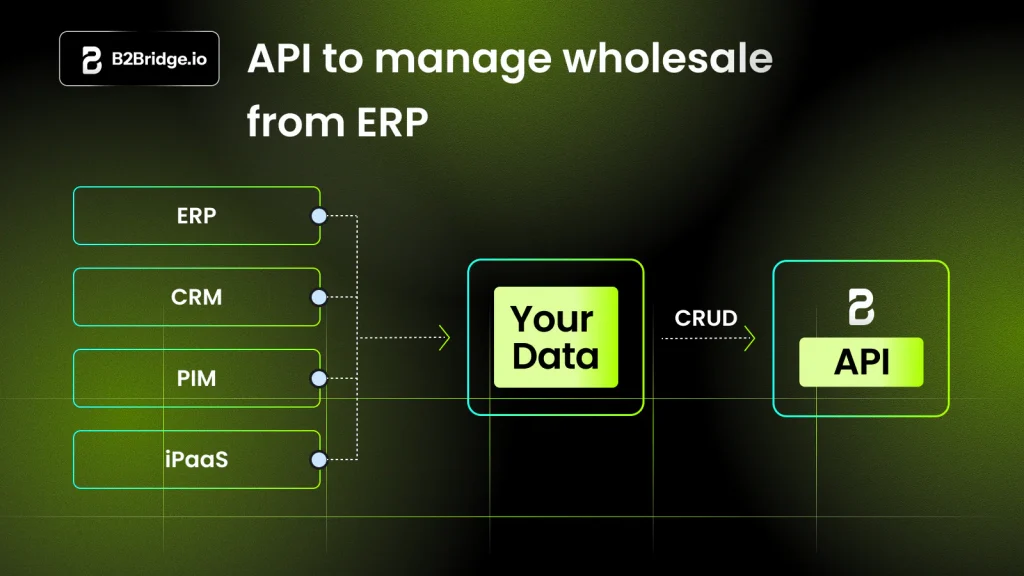
7. Integrate Your Storefront With Your ERP and CRM
Real-time integration is foundational. Your ecommerce platform syncs with your ERP for inventory, pricing, and orders—and with your CRM for customer data and account history.
Disconnected systems create pricing errors, overselling, and hours of manual reconciliation. Enterprise solutions integrate with NetSuite, Zoho, Odoo, and custom ERPs via API to eliminate data gaps.
- Inventory levels: Real-time stock availability
- Customer-specific pricing: Price lists from ERP reflected on storefront
- Order data: Orders flow automatically to fulfillment
- Customer records: Account changes sync both directions
8. Run B2B and B2C on a Single Storefront
Maintaining separate B2B and B2C stores doubles operational work—duplicate product management, inventory sync problems, and higher platform costs.
A unified setup shows logged-in B2B buyers wholesale pricing and workflows while public visitors see retail experiences. One catalog, one inventory, two audiences served cleanly.

9. Optimize Mobile and B2B Checkout UX
B2B buyers increasingly place orders on mobile—in the warehouse, on the road, between meetings. Mobile-responsive design and a simplified checkout flow with fewer steps directly impact conversion.
Removing unnecessary friction like account creation prompts for already logged-in B2B users keeps the focus on completing the purchase.
10. Use Rich Product Data and B2B Site Search
B2B buyers research products in depth before ordering. Detailed specifications, downloadable documentation, and compatibility information reduce support inquiries and increase buyer confidence.
Strong search and filtering by SKU, category, availability, or part number helps buyers find exactly what they want in seconds.
Common B2B Ecommerce Mistakes to Avoid
Even solid practices fail when common pitfalls undermine them.
Disconnected ERP and Storefront Data
Manual data entry between systems causes pricing mismatches, inventory errors, and delayed order processing. Integration is foundational—not optional.
Manual Pricing and Spreadsheet-Based Quotes
Relying on sales reps to manually quote prices slows down purchasing and introduces avoidable errors. Automating pricing logic inside your ecommerce platform eliminates the bottleneck.
Treating Wholesale Buyers Like Retail Shoppers
B2B buyers have different requirements. Forcing them through consumer-style checkout with single-unit quantities and immediate payment requirements creates friction that kills conversions.
Running a Separate B2B Store From Your B2C Store
Two platforms means double the operational work and constant sync problems. A unified store with buyer-specific experiences is almost always more efficient.
How to Choose the Right B2B Ecommerce Platform
Not every B2B ecommerce platform handles B2B complexity equally. Here’s what to evaluate.
B2B Pricing and Catalog Flexibility
Can the platform handle customer-specific pricing, volume discounts, and tiered price lists without custom development? If pricing logic requires workarounds from day one, you’ll hit walls as you scale.
ERP and CRM Integration Depth
Look for native integrations or robust APIs for systems like NetSuite, Zoho, Odoo, or custom ERPs. The depth of integration matters—surface-level connections create more problems than they solve.
Buyer Side UX and Self-Service Tools
Does the platform include quick order forms, saved carts, reorder tools, and B2B account management out of the box? Built-in features directly impact buyer retention and order frequency.
Hybrid B2B and B2C Support
Can the platform run both B2B and B2C experiences on one storefront without requiring Shopify Plus or a separate platform? Unified operations save significant time and cost.
How B2Bridge Helps You Apply B2B Ecommerce Best Practices on Shopify
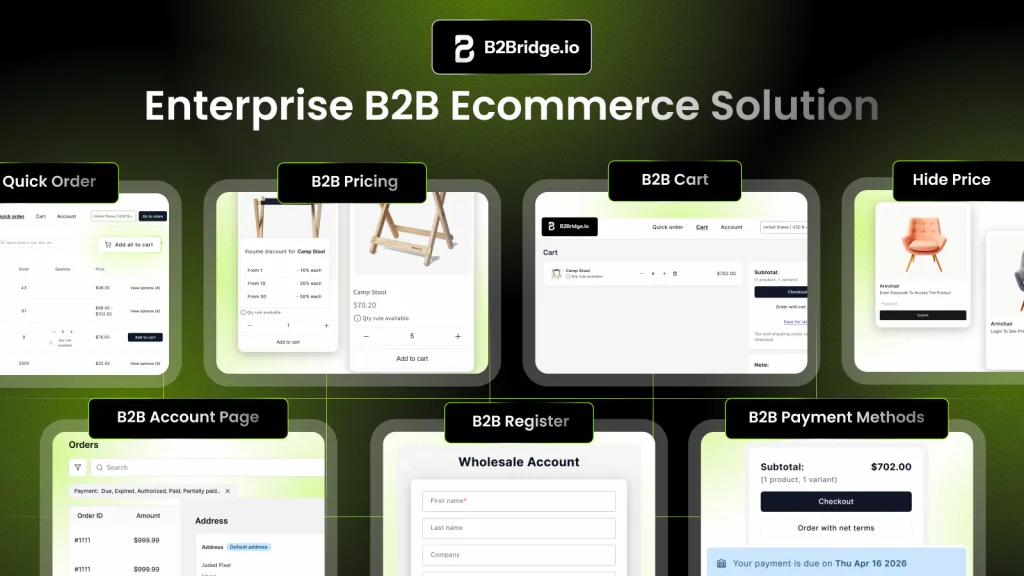
Every best practice above requires the right tooling to execute. B2Bridge brings enterprise B2B capabilities to Shopify—without requiring Shopify Plus or a separate wholesale platform.
- B2B Pricing Engine: Customer-specific and volume-based pricing with MOQs and quantity rules
- ERP & CRM Integration: Sync with NetSuite, Zoho, Odoo, and custom systems via enterprise API
- B2B Lock & Registration: Gate wholesale access and automate account approval workflows
- B2B Payment: Net terms (Net 15/30/60) and RFQ workflows by customer group
- Unified Storefront: Run B2B and B2C on one Shopify store without Shopify Plus
Book A Demo to see how B2Bridge can help you implement enterprise B2B ecommerce on Shopify.
Frequently Asked Questions About B2B Ecommerce Best Practices
How long does it take to launch a B2B ecommerce store on Shopify?
With the right B2B app and preparation, many merchants launch within days to a few weeks depending on complexity. The timeline depends on factors like ERP integration depth, price list migration, and customization requirements.
Do I need Shopify Plus to run B2B ecommerce on Shopify?
No—enterprise B2B apps like B2Bridge provide full B2B capabilities (pricing, access control, net terms, quick order) on standard Shopify plans. You can run a complete B2B operation without upgrading to Shopify Plus.
Can I sell B2B and B2C from the same Shopify store without confusing customers?
Yes. With proper access control and customer group logic, logged-in B2B buyers see wholesale pricing and experiences while public visitors see retail. A unified storefront reduces operational complexity and keeps both audiences served cleanly.
How do I handle tax exemption for wholesale customers across different regions?
Configure tax-exempt rules by customer group or individual account within your B2B platform, and collect resale certificates during B2B registration. Your platform applies the correct tax treatment automatically based on customer classification.
How do I migrate existing wholesale customers and price lists to a new B2B platform?
Most enterprise B2B solutions support CSV imports or API-based migration for customer data and price lists. Work with your platform provider to map existing customer groups and pricing structures to the new system before launch.

Hi, I’m Hanh – a product marketing professional passionate about driving growth, simplifying complex solutions, and creating impactful strategies for Shopify that connect products with customers.