Selling wholesale across borders used to mean trade shows, faxed purchase orders, and weeks of back-and-forth with freight forwarders. Now B2B buyers in Munich or Melbourne expect to browse your catalog, see their negotiated pricing, and place a net-terms order online—all before your sales team wakes up.
Cross-border B2B ecommerce involves businesses buying and selling wholesale goods or services across national borders using digital platforms, and it’s reshaping how manufacturers, distributors, and wholesalers reach international accounts. This guide covers how cross-border B2B works, the infrastructure you’ll need for multi-currency pricing and compliance, and how to launch international wholesale operations on Shopify without doubling your operational workload.
What is cross-border B2B ecommerce
Cross-border B2B ecommerce involves businesses buying and selling wholesale goods or services across national borders using digital platforms. Unlike B2C transactions where a single consumer makes a quick purchase, B2B cross-border trade typically involves larger order volumes, negotiated pricing, longer sales cycles, and multiple decision-makers within each buying organization.
The B2B cross-border payments market commands multi-trillion dollar transaction volumes annually. That scale comes from integrated supply chains and the growing expectation that wholesale buyers can research and order online without waiting for a sales rep to respond.
Here’s how B2B cross-border differs from B2C:
- Order size: Bulk purchasing in cases or pallets vs individual units
- Pricing: Negotiated contract rates and volume tiers vs fixed retail prices
- Payment terms: Net 30/60/90 invoicing vs immediate payment at checkout
- Buyer journey: Multiple stakeholders and approval workflows vs single consumer decisions
How cross-border B2B ecommerce works
The end-to-end flow starts when an international buyer discovers your products—often through search, a marketplace, or a referral—and ends when goods clear customs and arrive at their facility. Between discovery and delivery, you’re managing digital platforms, multi-currency payments, trade compliance, and international logistics all at once.
Four core components make cross-border B2B work:
- Digital platforms: Where buyers and sellers connect, whether that’s your own Shopify storefront or marketplaces like Alibaba, Amazon Business, or Faire
- Trade compliance: Navigating tariffs, duties, and export/import rules that vary by country and product category
- Payments and settlement: Multi-currency transactions, trade credit, and foreign exchange management
- Logistics and fulfillment: International freight, customs clearance, and inventory visibility across regions
The four types of B2B ecommerce
Understanding where your business fits helps clarify which cross-border challenges apply most directly to your operation.
B2B2C
Manufacturers or wholesalers sell through retail partners who then sell to end consumers. A footwear brand selling to boutiques across Europe operates this way—you manage wholesale relationships while your partners handle the final consumer sale.
Wholesale
Selling products in bulk to other businesses at discounted pricing. This model typically involves tiered pricing structures, minimum order quantities, and contract terms that reward larger commitments.
Manufacturers
Selling directly to distributors or retailers, often with custom production runs or private labeling. Cross-border adds complexity when production happens in one country and buyers sit in another.
Distributors
Acting as intermediaries between manufacturers and retailers or resellers across regions. Distributors often manage the cross-border logistics and compliance that manufacturers prefer to avoid.
Why B2B brands expand across borders
Access to new wholesale demand
Some markets have underserved demand for your product category. Expanding internationally lets you reach buyers who can’t easily source what you sell domestically.
Higher average order value from global buyers
B2B international orders often carry larger cart sizes than domestic B2C sales. When you’re shipping across borders anyway, buyers tend to consolidate orders to justify the logistics complexity.
Diversified supply chains and reduced regional risk
Spreading operations across markets reduces your dependency on any single economy. Economic downturns, regulatory changes, or supply disruptions in one region don’t sink your entire business.
Buyer expectation of self-serve digital procurement
Global B2B buyers now expect to research, compare, and order online without waiting for sales rep involvement. If you’re not offering that experience, a competitor likely is.
Localized storefronts and account-based pricing for global buyers
Cross-border B2B goes well beyond translating your website. International wholesale buyers expect an experience tailored to their region, currency, and negotiated terms—all accessible through a login-gated portal.
Account-based pricing means the prices a buyer sees depend on their specific contract, customer group, or role. A distributor in Germany might see different rates than a retailer in Australia, even for the same product.
Key localization elements include:
- Language and currency display: Buyers see prices in their local currency without mental conversion
- Region-specific catalogs: Only products available and compliant in their market appear
- Account-based pricing: Logged-in buyers see their negotiated rates, volume discounts, or contract prices
- Localized checkout: Region-appropriate payment methods and shipping options
Outcome: Buyers get a personalized, self-serve experience that mirrors working with a local supplier—even when you’re shipping from another continent.
Multi-currency pricing, payments, and net terms
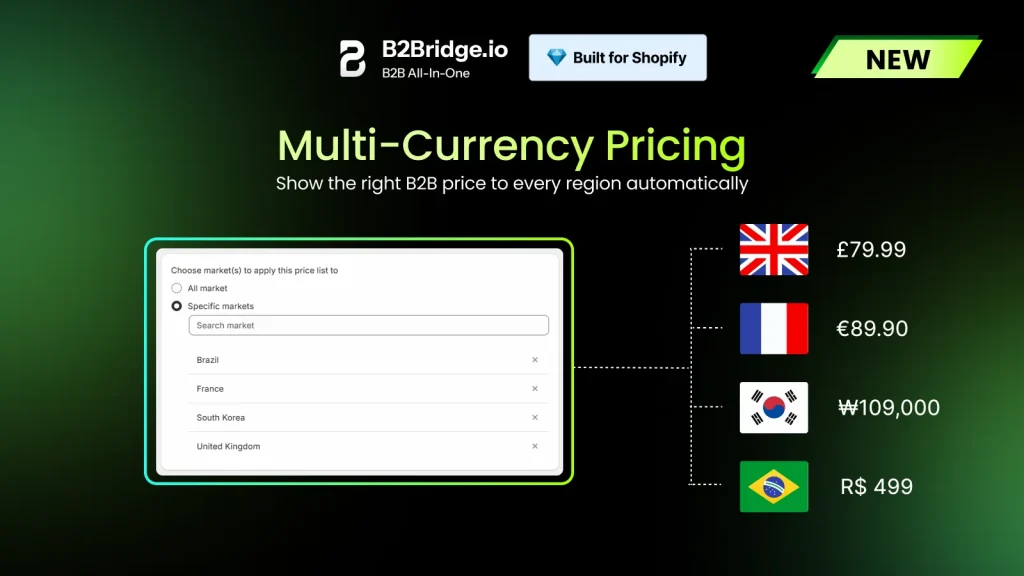
Multi-currency price lists
Maintaining separate price lists per currency or region prevents the confusion of constant conversion calculations. The challenge is keeping price lists synchronized with your ERP so updates don’t require manual work across systems.
Cross-border B2B payment methods
Payment preferences vary significantly by region. What works in North America often doesn’t apply in Europe or Asia-Pacific.
| Region | Common B2B Payment Methods |
|---|---|
| North America | ACH, wire transfer, credit card |
| Europe | SEPA, bank transfer, direct debit |
| APAC | Wire transfer, local rails, letters of credit |
Net payment terms and credit control
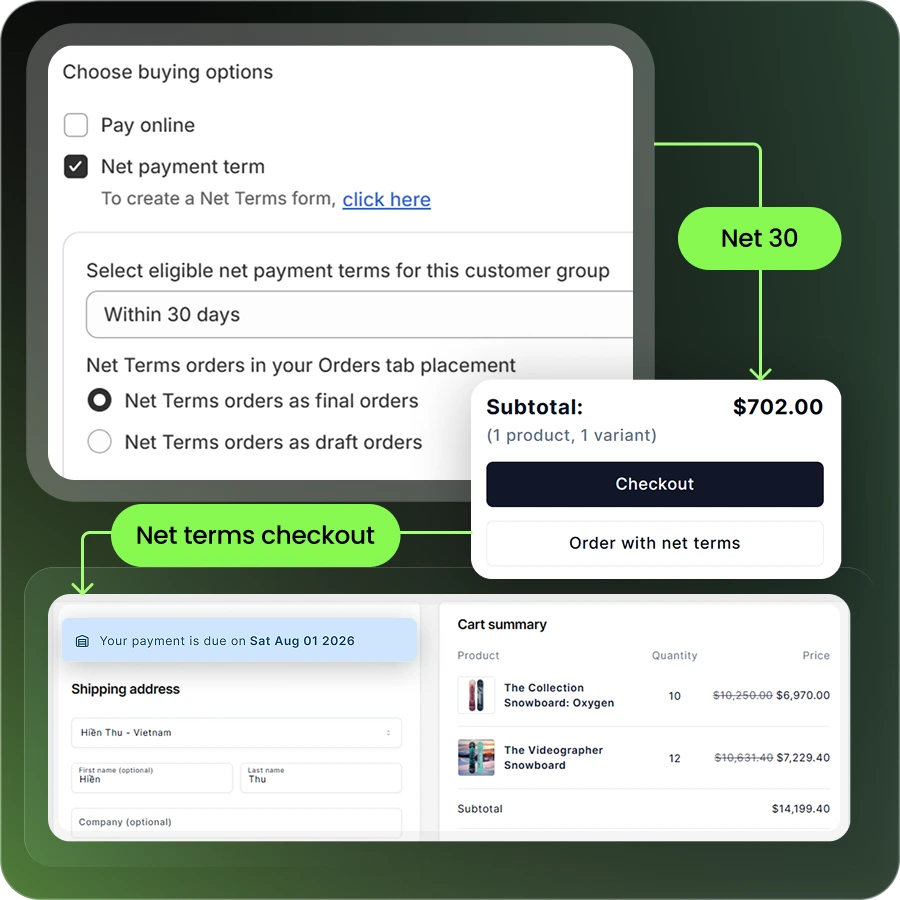
Net terms—Net 30, Net 60, Net 90—let buyers pay invoices within a set number of days after delivery. B2B buyers expect this flexibility, but offering net terms internationally requires credit checks, approval workflows, and clear credit limits per account.
FX and settlement
Foreign exchange adds another layer of complexity. Someone bears the FX risk—either you absorb currency fluctuations or the buyer does. Payment platforms like Airwallex or local acquiring banks can help manage settlement, though the right strategy depends on your margins and buyer expectations.
ERP and CRM integration for global B2B operations
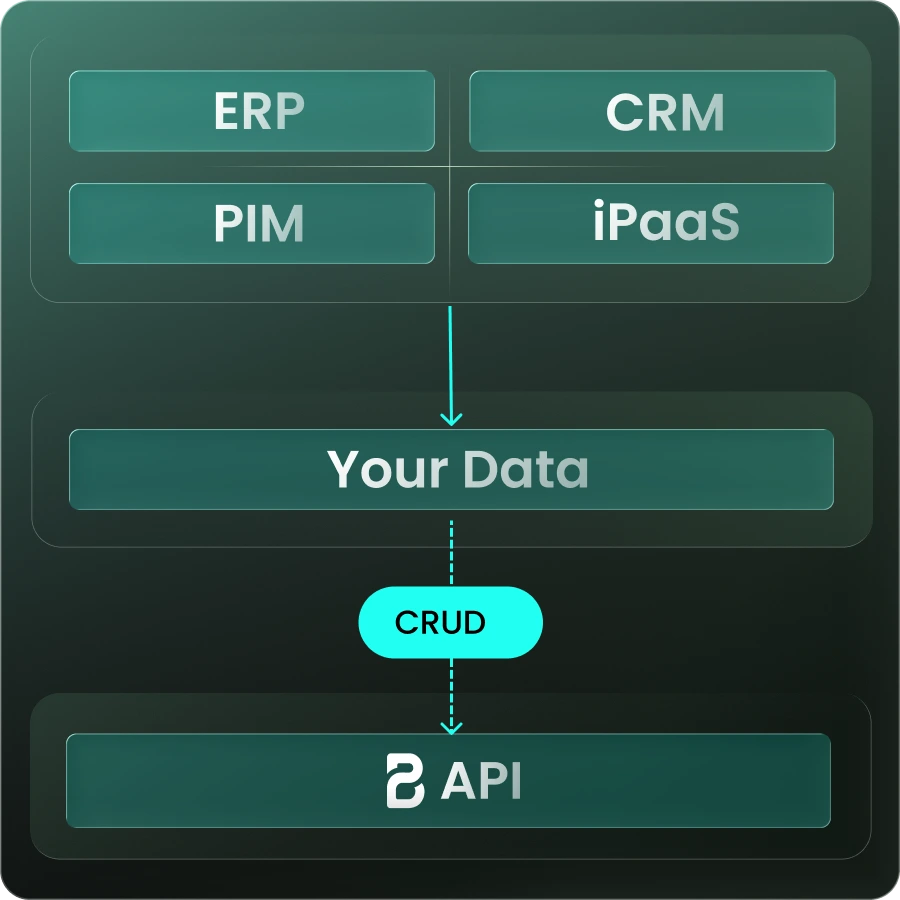
Backend system integration becomes critical when you’re managing long sales cycles, multiple decision-makers, and complex pricing across regions. Without integration, your team re-keys orders, pricing falls out of sync, and errors multiply.
What typically requires synchronization:
- Customer records: Company accounts, buyer roles, credit status
- Price lists: Contract pricing, volume tiers, currency-specific rates
- Orders: Quote-to-order conversion, manual orders, net terms invoices
- Inventory: Real-time stock visibility across warehouses and regions
Outcome: Fewer manual errors, faster order processing, and a single source of truth across your ecommerce platform and systems like NetSuite, Zoho, or Odoo.
Tax, VAT, and compliance for cross-border B2B
VAT, GST, and sales tax by region
Tax treatment varies by country: VAT in Europe, GST in Australia and India, sales tax in the US. Each jurisdiction has registration thresholds that determine when you’re required to collect and remit.
Tax-exempt B2B buyer logic
Many B2B buyers qualify for tax exemption—resellers, government entities, nonprofits. Your platform handles exemption certificates during registration and applies tax-exempt logic at checkout based on the buyer’s verified status.
HS codes, duties, and customs documentation
HS codes (Harmonized System codes) classify products for customs purposes. Assigning the correct codes determines the duties and tariffs applied to your shipments, plus the documentation required for clearance.
Data privacy and trade restrictions
GDPR in Europe, data localization requirements in certain countries, and sanctioned countries or entities all affect how you operate internationally. Compliance isn’t optional—it’s a prerequisite for doing business in many markets.
Cross-border logistics and fulfillment
DDP vs DDU shipping
DDP (Delivered Duty Paid) means you cover duties and taxes—the buyer pays one price with no surprises at delivery. DDU (Delivered Duty Unpaid) shifts those costs to the buyer, who pays customs charges upon arrival. DDP typically creates a better buyer experience but requires you to manage more complexity on your end.
Regional 3PLs and warehouses
Holding inventory in-region through third-party logistics providers speeds delivery and reduces shipping costs. For high-volume markets, regional fulfillment often makes economic sense.
Returns and reverse logistics
International returns involve customs clearance in reverse, restocking considerations, and potentially local return addresses. The complexity often surprises brands new to cross-border operations.
Common obstacles in cross-border B2B ecommerce
Fragmented pricing across regions
Managing multiple price lists manually leads to errors and inconsistent buyer experiences. A buyer in one region might see outdated pricing while another sees current rates.
Disconnected ERP and ecommerce systems
Without integration, teams re-key orders from one system to another, pricing falls out of sync, and errors multiply with every manual touchpoint.
Slow manual quote and order processing
RFQ workflows handled via email or spreadsheets delay sales and frustrate buyers who expect self-serve experiences. The lag between quote request and response can cost you deals.
Running separate B2B and B2C sites
Maintaining two storefronts doubles operational work and creates data silos. Inventory, pricing, and customer data live in different places, making reconciliation a constant headache.
Compliance and tax errors
Incorrect tax treatment or missing customs documentation leads to shipment delays, fines, or lost customers who don’t want to deal with the hassle again.
How to launch cross-border B2B ecommerce on Shopify
Step 1. Audit your B2B operation and target markets
Identify which products, pricing models, and buyer segments you’ll serve internationally. Assess regulatory requirements per market before committing resources.
Step 2. Configure multi-currency and regional price lists
Set up currency-specific pricing and customer group pricing. Shopify Markets provides the foundation, but you’ll likely want a B2B pricing layer for contract rates and volume tiers.
Step 3. Connect your ERP and CRM
Integrate backend systems to sync customers, pricing, and orders automatically. This prevents the manual re-keying that creates errors and slows operations.
Step 4. Set up tax, VAT, and customs logic
Configure tax rules per region, enable tax-exempt buyer handling, and assign HS codes to products for customs classification.
Step 5. Launch a unified B2B and B2C storefront
Avoid running two separate sites. A single Shopify store with login-gated B2B experiences consolidates operations while serving both audiences.
Step 6. Onboard international buyers with embedded registration
Provide a self-serve registration flow for new wholesale buyers, complete with approval workflows and automatic customer group assignment based on their application.
Run cross-border B2B ecommerce on Shopify with B2Bridge
B2Bridge embeds enterprise B2B operations directly into Shopify—multi-currency pricing, ERP integration, tax-exempt logic, and a unified B2B+B2C storefront—without requiring Shopify Plus or a separate wholesale site.
The platform supports the workflows cross-border B2B demands: customer-specific price lists by region, net payment terms with credit control, quote-to-order conversion, and deep integrations with systems like NetSuite, Zoho, and Odoo. Your international buyers get a localized, self-serve experience while your team manages everything from one Shopify admin.
Book A Demo to see how B2Bridge supports cross-border B2B ecommerce on Shopify.

Frequently asked questions about cross-border B2B ecommerce
Do you need Shopify Plus for cross-border B2B ecommerce?
No—B2Bridge enables enterprise-grade B2B features on standard Shopify plans, including multi-currency pricing, customer group pricing, and ERP integration.
What are B2B cross-border payments?
B2B cross-border payments are transactions between businesses in different countries, typically involving wire transfers, trade credit, or local payment rails with multi-currency settlement.
What is the 80/20 rule in ecommerce?
The 80/20 rule suggests that roughly 80% of revenue comes from 20% of customers—in B2B, this often means a small group of high-value wholesale accounts drives most of your sales.
How do you handle tax-exempt B2B buyers internationally?
You collect and validate exemption certificates during buyer registration, then apply tax-exempt logic at checkout based on the buyer’s account status and region.
How long does it take to launch cross-border B2B ecommerce on Shopify?
Timeline depends on your catalog complexity and ERP integration requirements—B2Bridge merchants typically launch within weeks, not months, with hands-on implementation support.

As a Product Marketing Executive at B2Bridge, I focus on the Enterprise B2B Ecommerce domain. I leverage my understanding of product and user psychology to deliver customer-centric content that addresses business challenges and fuels growth.