Industrial ecommerce refers to buying and selling industrial goods and services online—covering manufacturers, distributors, and wholesalers who serve other businesses through digital channels rather than phone orders, fax machines, or sales rep visits. It’s how B2B companies move complex operations like contract pricing, RFQ workflows, and net payment terms onto a platform where buyers can self-serve.
The shift is already underway. Digital channels are projected to account for more than half of B2B revenue in the coming years, and industrial buyers now expect the same convenience they experience in consumer shopping. This guide covers what industrial ecommerce actually involves, the features that matter for manufacturers and distributors, and how to evaluate platforms that fit your pricing models and ERP workflows.
What is industrial ecommerce
Industrial ecommerce takes complex B2B sales online by merging direct purchasing, custom quoting, and 24/7 self-service portals into a single digital channel. It’s how manufacturers, distributors, and wholesalers sell industrial goods to other businesses through the web rather than relying solely on sales reps, phone orders, or in-person transactions.
The term covers everything from MRO supplies and machinery parts to raw materials and heavy equipment. Your buyers are procurement managers and engineers who search by part numbers and technical specifications, not product names and lifestyle imagery.
What makes industrial ecommerce different from regular online retail? The pricing is negotiated, not fixed. Orders are large and often require approval workflows. Payment happens on net terms, not at checkout. And the systems behind the scenes—ERP, CRM, inventory—all have to talk to each other.
How industrial ecommerce differs from B2C and standard B2B
Industrial buyers expect their negotiated rates to appear automatically when they log in. They want volume discounts applied without asking, net 30 or net 60 payment terms, and the ability to submit RFQs (requests for quote) for large or custom orders. Fixed retail prices and immediate checkout don’t fit how industrial purchasing actually works.
| Factor | B2C Ecommerce | Standard B2B | Industrial Ecommerce |
|---|---|---|---|
| Pricing | Fixed retail price | Tiered discounts | Contract pricing, RFQs, customer-specific rates |
| Payment | Immediate checkout | Credit cards, invoices | Net 30/60 terms, purchase orders, credit limits |
| Order size | Single units | Small-medium bulk | Large bulk, case packs, minimum order quantities |
| Buyer verification | None | Basic login | Company accounts, role-based permissions, approval workflows |
| System integration | Minimal | Some CRM | Deep ERP, CRM, inventory sync |
Industrial catalogs often contain thousands of SKUs with technical specifications, configurable options, and variant-heavy products. A single fastener might come in dozens of sizes, materials, and finishes. Consumer platforms weren’t built to handle that complexity.
Why the industrial sector is going digital
Industrial buyers now research suppliers online before ever picking up the phone. They want to check inventory, compare specs, and place routine reorders at 10 PM without waiting for a sales rep to get back to them the next morning.
- Self-service expectations: Procurement managers want 24/7 access to ordering, not business-hours-only phone calls
- Operational efficiency: Automated order processing reduces manual entry errors and speeds fulfillment
- Market expansion: Digital storefronts reach new territories without adding sales headcount
- Competitive pressure: Competitors already offering online ordering capture buyers who expect digital convenience
The shift isn’t about replacing your sales team. It’s about freeing them from routine order-taking so they can focus on strategic accounts and complex deals.
Benefits of industrial ecommerce for manufacturers and distributors
Higher wholesale conversion and revenue
When a procurement manager can see their contract price, check stock, and place an order without waiting for a callback, you capture sales that would otherwise go to a competitor with faster response times. Self-service portals with accurate pricing and real-time inventory remove friction from the buying process.
Faster quote and order processing
RFQ-to-order workflows and automated pricing rules eliminate the back-and-forth emails that stretch sales cycles from days into weeks. A quote that used to require three rounds of internal approvals can move through the system in hours when the rules are already configured.
Lower operational cost across sales and ERP
Syncing orders directly to your ERP reduces manual data entry, reconciliation errors, and duplicate work across systems. Your team spends less time fixing mistakes and more time on account management and strategic sales.
Self-serve buying for verified B2B customers
Login-gated portals let approved buyers browse catalogs, view their contract prices, reorder from history, and track shipments independently. Your sales team stops fielding routine “where’s my order?” calls.

Unified B2B and B2C operations
Running both channels on one storefront instead of separate sites reduces catalog management, inventory sync, and platform maintenance overhead. You maintain one source of truth rather than reconciling data across disconnected systems.
Must-have features of an industrial ecommerce platform
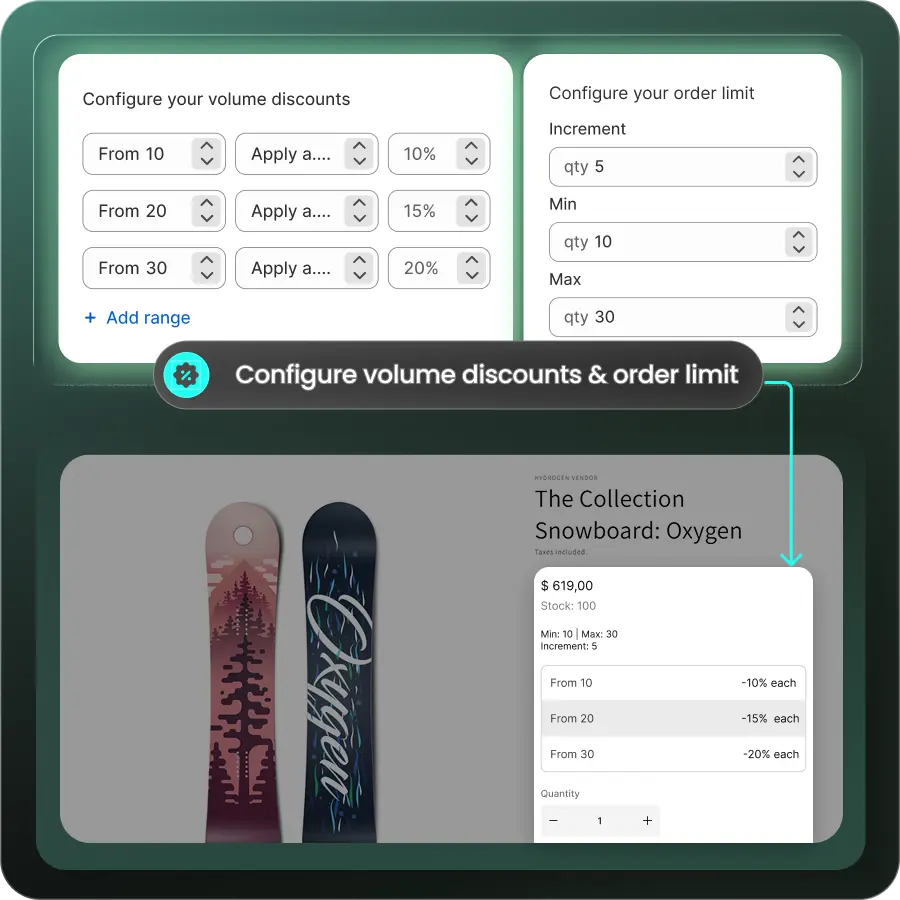
Advanced B2B pricing engine
Industrial buyers expect their negotiated rates to appear automatically at login. Your platform handles the complexity so your team doesn’t manually adjust every quote.
- Role-based customer group pricing: Different rates for distributors, resellers, and end users
- Contract price lists: Pre-negotiated pricing for specific accounts
- Volume and tiered discounts: Automatic price breaks at quantity thresholds
- B2B-only pricing hidden from public: Retail shoppers see different prices than wholesale buyers
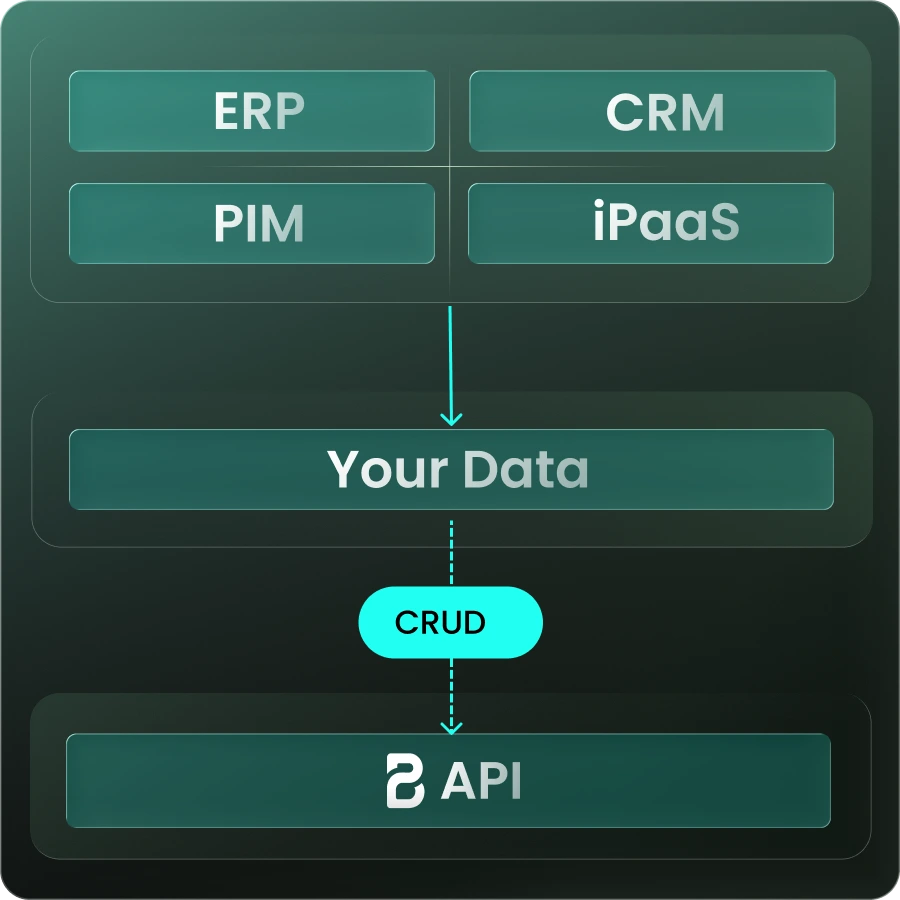
Deep ERP and CRM integration
Industrial operations depend on real-time inventory visibility and synchronized customer data. Common integrations include NetSuite, Zoho, Odoo, and SAP, with bidirectional sync of orders, customers, and inventory.
Outcome: Orders flow directly into fulfillment without manual re-entry, and inventory levels stay accurate across channels.
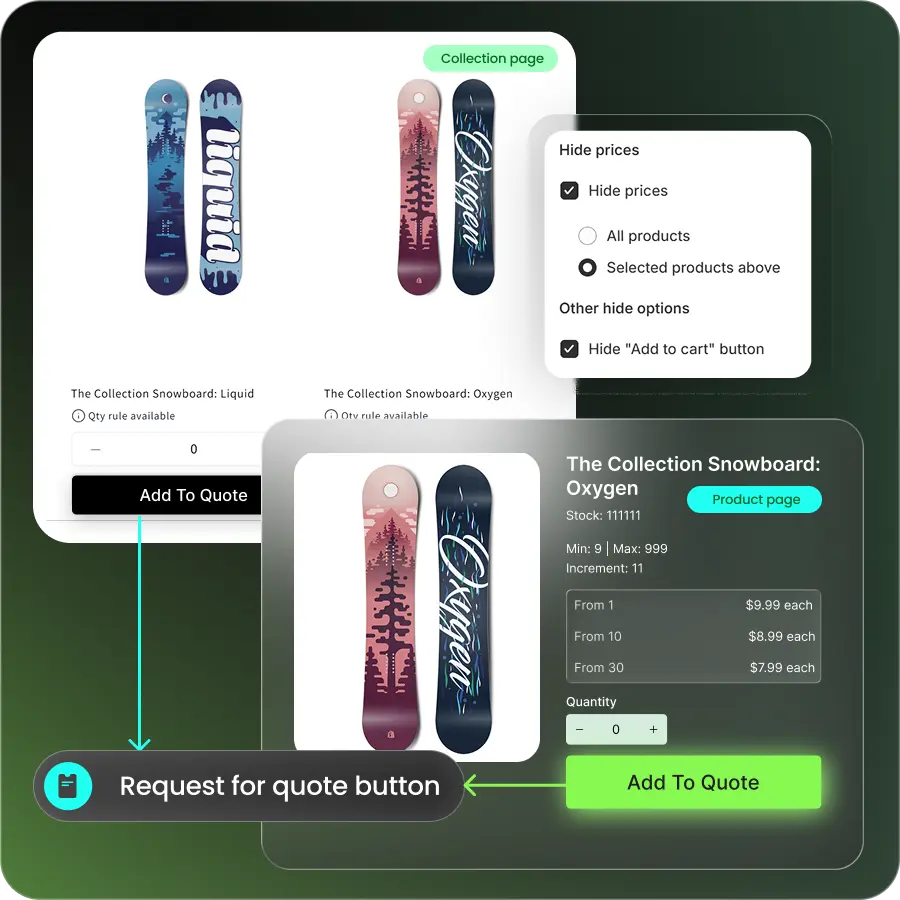
Quote-to-order and RFQ workflows
Large industrial orders often require custom quotes before purchase. An RFQ workflow lets buyers submit requirements, your team responds with pricing, and approved quotes convert into orders seamlessly within the same platform.
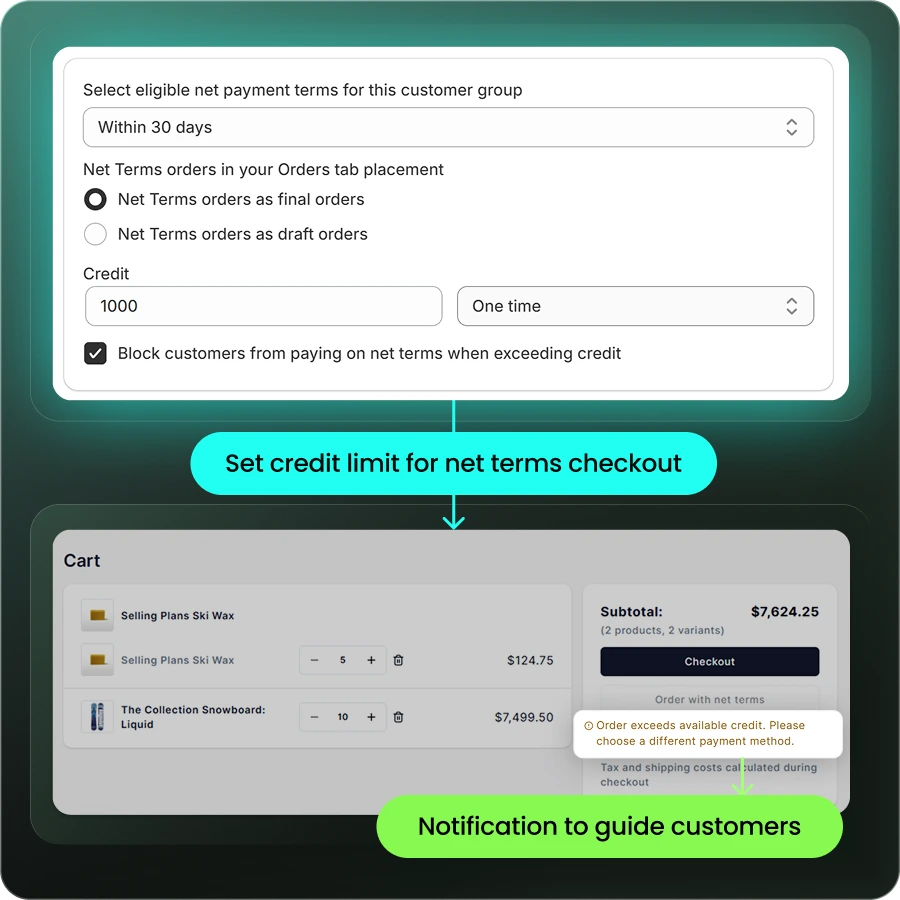
Net payment terms and credit limits
Industrial buyers expect invoicing with net 30, net 60, or custom terms rather than immediate payment at checkout. Credit limit management controls risk on open accounts while giving established customers the flexibility they expect.
Quick order pages and bulk ordering
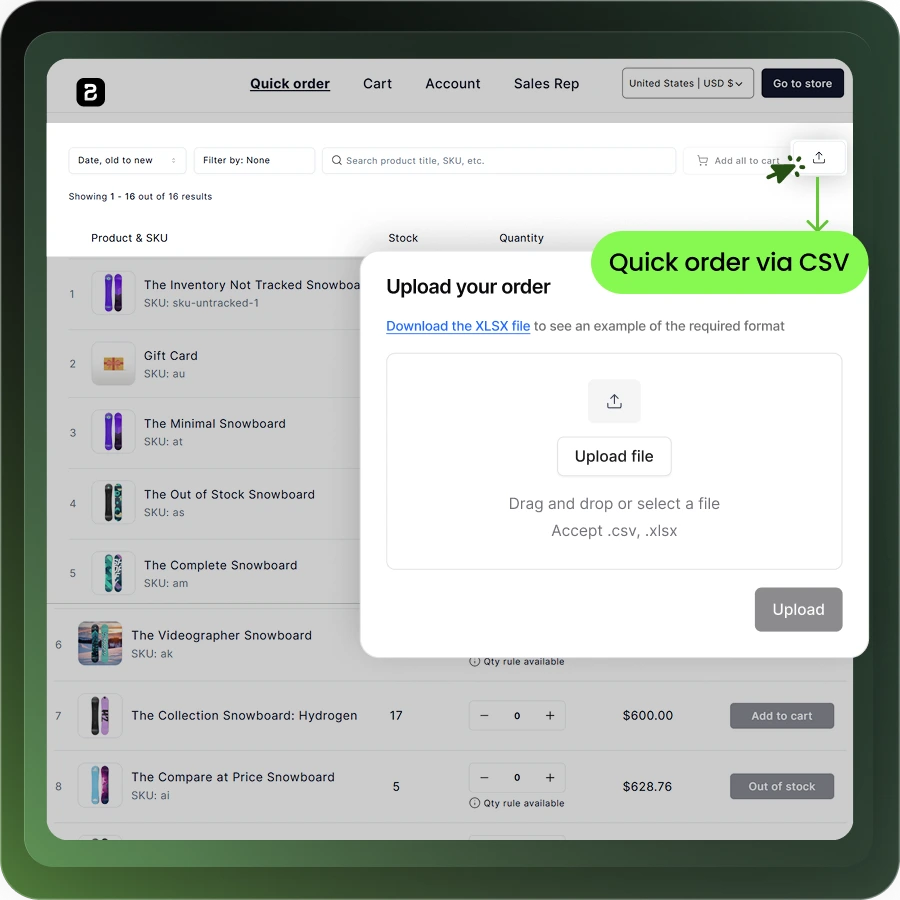
Quick order forms let buyers enter SKUs and quantities directly or upload CSV files. When you’re reordering hundreds of line items, browsing the catalog isn’t practical. Buyers want to paste a list and check out.
Multi-currency and tax-exempt logic
Industrial sellers often serve international buyers and tax-exempt resellers. Your platform handles currency conversion automatically and manages tax exemption certificates without manual intervention on each order.
Company accounts and role-based permissions
Industrial buyers often have multiple users per account: purchasers, approvers, and admins who share order history, spending limits, and approval workflows. A single login per company doesn’t reflect how procurement teams actually operate.

How to choose the right industrial ecommerce solution
1. Map your pricing, quoting, and payment workflows
Document your current pricing structures, quote approval processes, and payment terms before evaluating platforms. The solution you choose has to support your specific rules, not force you into a generic template that doesn’t match how you actually sell.
2. Audit your ERP, CRM, and inventory systems
List the systems the platform will integrate with. Confirm whether the solution offers native connectors or requires custom development, and factor that into your timeline and budget.
3. Decide between unified or separate B2B and B2C storefronts
Unified stores reduce operational overhead but require login-gated pricing. Separate stores offer more control but double your catalog management work. The right choice depends on how much overlap exists between your buyer segments.
4. Evaluate implementation timeline and total cost
Consider setup fees, monthly costs, integration costs, and time to launch. Ask vendors about typical implementation timelines for businesses with your level of complexity.
5. Confirm long-term technical support and customization
Industrial operations evolve. Ensure the vendor offers ongoing support, not just initial setup, and can customize workflows as your business grows.
Industrial ecommerce best practices
Frictionless B2B buyer experience
Wholesale buyers expect fast checkout with saved payment methods, net terms, and reorder shortcuts. Every extra click between login and order confirmation is an opportunity for the buyer to abandon the process or call your competitor instead.
Integrated ERP and inventory data
Real-time sync keeps stock levels accurate and delivery estimates reliable. Disconnected systems lead to overselling, backorder frustration, and manual cleanup that erodes the efficiency gains you’re trying to achieve.
Granular pricing and customer segmentation
Set up customer groups with appropriate pricing tiers and use rules to automate discounts. Manual quote adjustments don’t scale when you’re serving hundreds of accounts with different negotiated rates.
Data-driven account management
Order history and buying patterns reveal upsell opportunities, at-risk accounts, and reorder timing. Connect your ecommerce data to your CRM so your sales team sees the full picture without logging into multiple systems.
Secure access for verified buyers
Gate B2B pricing behind login and require registration approval before granting access to wholesale catalogs. Protecting your margins while ensuring only qualified buyers see your wholesale rates is standard practice in industrial ecommerce.
Common industrial ecommerce use cases
Manufacturers selling direct to distributors
Manufacturers bypass traditional rep-only sales to offer distributors self-service ordering with contract pricing and volume discounts. The sales team focuses on strategic accounts while routine reorders happen automatically.
Distributors serving resellers and end users
Distributors manage multiple buyer tiers with different pricing and payment terms on one platform. Login-based pricing ensures each customer sees only their rates.
MRO and industrial parts suppliers
High-SKU catalogs with frequent reorders benefit from quick order pages and reorder-from-history functionality. When buyers purchase the same items monthly, they want to replicate past orders in seconds.
Hybrid B2B and B2C industrial brands
Brands selling both wholesale to businesses and retail to consumers run a unified storefront with login-gated pricing. Public visitors see retail prices while verified wholesale customers see their negotiated rates.
The future of industrial ecommerce
AI for quoting and account management
AI can automate quote generation, suggest reorder timing based on purchase patterns, and flag at-risk accounts before they churn. The technology is moving from experimental to practical for industrial sellers with sufficient order history.
Mobile ordering for field buyers
Industrial buyers increasingly place orders from job sites or warehouses via mobile devices. Platforms that don’t support mobile-optimized quick order and checkout lose sales to competitors who do.
Headless and API-first commerce
Headless commerce separates the front-end experience from the back-end platform, allowing industrial sellers to connect ecommerce to custom portals, ERPs, and sales tools without platform lock-in.
ERP-native pricing and inventory sync
The trend is toward managing price lists and inventory directly in ERP with real-time sync to ecommerce. Eliminating manual updates ensures your online catalog always reflects current data.
Running industrial ecommerce on Shopify with B2Bridge
Shopify provides scalable infrastructure that handles traffic, security, and checkout reliability. B2Bridge adds the industrial-grade B2B layer: advanced pricing engine, ERP/CRM integration, RFQ workflows, net terms, and company accounts—all without requiring Shopify Plus or a separate wholesale site.
The platform works with your team from day one to customize the setup for your pricing models, systems, and workflows. You’re not forced into a rigid template that doesn’t match how you actually operate.
Outcome: Enterprise B2B commerce embedded directly in Shopify, with fewer platforms to manage and a technical partner who scales with you as your catalog, customers, and processes grow.

FAQs about industrial ecommerce
Do you need Shopify Plus to run industrial B2B ecommerce on Shopify?
No. B2Bridge enables enterprise-grade B2B features—advanced pricing, ERP integration, net terms—on standard Shopify plans without requiring Shopify Plus.
How long does it typically take to launch an industrial ecommerce store?
Timeline varies based on catalog size, integration complexity, and pricing rules. Many industrial sellers launch within a few weeks when working with an experienced implementation partner.
How do industrial ecommerce platforms hide B2B pricing from public shoppers?
Login-gated pricing displays wholesale rates only after a verified B2B customer logs in. Public visitors see retail prices or no prices at all, depending on your configuration.
What is the difference between an industrial ecommerce platform and a wholesale pricing app?
A wholesale pricing app adds basic discounts to an existing store. An industrial ecommerce platform includes ERP integration, RFQ workflows, net terms, company accounts, and a complete B2B buying experience designed for complex operations.
Can industrial ecommerce support low-volume, high-value orders?
Yes. Platforms with RFQ and quote-to-order workflows handle large, complex orders that require custom pricing, approval, and negotiation before checkout.

As a Product Marketing Executive at B2Bridge, I focus on the Enterprise B2B Ecommerce domain. I leverage my understanding of product and user psychology to deliver customer-centric content that addresses business challenges and fuels growth.