To reduce B2B order processing time, automate data entry and workflows, integrate your ERP/WMS/CRM for real-time visibility, improve warehouse layout and inventory accuracy, streamline approval steps, and provide customer self-service portals for quick ordering and tracking – all supported by continuous KPI monitoring to spot and fix bottlenecks.
Manual B2B order processing costs companies between 20% and 125% more per order through a toxic combination of human errors, labor inefficiencies, and fulfillment delays. B2Bridge slashes B2B order processing times through intelligent workflows tailored specifically for Shopify wholesale sellers. This comprehensive guide reveals the proven strategies, real cost breakdowns, and step-by-step implementation roadmap that deliver immediate return on investment.

The Hidden Costs of Manual B2B Order Processing
Most wholesale businesses in B2B Ecommerce dramatically underestimate what each order truly costs to process. The visible expenses represent just the tip of the iceberg. When you account for catalog production, customer service overhead, manual data entry, and error correction, the real numbers become startling.
Manual order entry alone consumes 20 to 30 minutes per order when sales reps transfer information from emails, phone calls, or PDFs into your systems.
At an average labor cost of $25 per hour including benefits, that’s $8 to $12 in direct wages before considering the opportunity cost of what else your team could accomplish. Add customer service time spent answering pricing questions, checking inventory availability, and clarifying order details, and labor costs climb to $15 to $25 per order.
The truly expensive problem is errors. Industry research shows that manual B2B order processing carries a 4% error rate on average. Wrong quantities, incorrect pricing, shipping to outdated addresses, or duplicate entries each trigger a cascade of costs.
Correcting a single mistake requires customer service intervention, inventory adjustments, potential rush shipping, and often credits or discounts to maintain relationships. Conservative estimates put error correction costs at $50 to $125 per incident, which translates to $2 to $5 in expected costs per order based on the error rate.
B2B transactions carry inherent complexity that B2C retailers never face. Multi-stakeholder approval chains mean orders sit in limbo while purchasing managers route requests through their organizations.
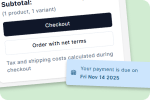
Negotiated pricing requires sales reps to manually apply customer-specific discounts and verify minimums. Net 30, Net 60, or custom payment terms demand tracking and follow-up that consumer transactions handle instantly at checkout. Each added complexity multiplies the time and potential for costly mistakes.
Cost Per Order Breakdown
| Cost Component | Manual Processing | Automated Processing | Annual Savings (1,000 orders/month) |
| Labor (entry & management) | $15-25 | $2-4 | $156,000-252,000 |
| Error correction (4% rate) | $2-5 | $0.20-0.50 | $21,600-54,000 |
| Customer service overhead | $5-8 | $1-2 | $48,000-72,000 |
| Catalog production | $3-5 | $0.50-1 | $30,000-48,000 |
| Total per order | $25-43 | $3.70-7.50 | $255,600-426,000 |
These projections for 2026 reflect rising labor costs and growing buyer expectations for instant order confirmations. Businesses processing moderate volumes face quarter-million dollar opportunities simply by eliminating manual workflows. The math becomes even more compelling at scale, where operational savings fund strategic growth initiatives rather than administrative overhead.
Transform your B2B store with B2Bridge.
Discover how B2Bridge can transform your wholesale business.
Schedule a demo today to see our payment management tools in action.
8 Proven Strategies to Cut B2B Order Processing Time
Reducing B2B order processing time requires systematic improvements across your entire workflow. These eight strategies represent best practices from high-performing wholesale operations that have conquered the efficiency challenge.
Automate end-to-end processing for instant warehouse notifications
Orders should flow directly from submission to your fulfillment team without human intervention. Automation eliminates the delay between when a buyer clicks submit and when your warehouse receives picking instructions. This single change cuts processing time by 60% to 70% while freeing your team to focus on relationship building rather than data entry.
Implement real-time inventory tracking to prevent stockouts and backorders
Nothing destroys B2B relationships faster than confirming orders you can’t fulfill. Live inventory visibility across all locations and channels prevents buyers from ordering unavailable products while giving your team accurate data for promising delivery dates. Real-time tracking reduces backorders by 85% and eliminates the costly cycle of order modification after submission.
Integrate ERP, CRM, and Shopify systems to eliminate data silos
When your order management, accounting, and ecommerce platforms don’t communicate, your team manually bridges the gaps. Seamless integration means order data flows automatically to your ERP for fulfillment, customer data syncs to your CRM for relationship tracking, and financial information updates your accounting system in real time. Companies achieving full integration report 40% reductions in processing time.
Deploy self-service buyer portals to reduce sales rep involvement by 70%.
Empower buyers to place reorders, check order history, download invoices, and track shipments without contacting your team. Self-service functionality dramatically reduces the customer service burden for routine transactions while improving buyer satisfaction through instant access to information. Your sales team shifts from order takers to strategic advisors focused on growing accounts.
Standardize workflows for complex multi-level approvals
Define clear rules for when orders require additional authorization based on order value, credit limits, or product restrictions. Automated approval routing notifies the right stakeholders instantly and escalates stalled requests, reducing approval time from days to hours. Standardization also ensures consistent application of your business policies across all orders.
Optimize warehouse management with automated picking and packing
Order processing doesn’t end when your system accepts the order. Optimized warehouse workflows with barcode scanning, pick-to-light systems, and automated packing stations reduce fulfillment errors and speed shipping. Integration between your order management and warehouse management systems creates seamless handoffs that eliminate bottlenecks.
Monitor KPIs including accuracy rates, cycle times, and satisfaction scores
You can’t improve what you don’t measure. Track order accuracy rates, time from submission to shipment, error rates by type, and buyer satisfaction metrics. Regular monitoring reveals bottlenecks and quantifies improvement from process changes. Leading wholesalers review these metrics weekly and tie operational bonuses to accuracy and speed targets.
Leverage AI-driven error prevention and continuous staff training
Modern order management systems use machine learning to flag unusual orders for review before processing. Train algorithms on your historical data to catch pricing errors, duplicate orders, or suspicious quantities. Pair technology with ongoing staff training on your systems and common error patterns. The combination of smart software and educated teams drives error rates below 0.5%.
How B2Bridge Delivers Faster B2B Order Processing
B2Bridge transforms B2B order processing for Shopify merchants by automating the workflows that traditionally consume hours of manual work. Unlike generic solutions requiring extensive customization, B2Bridge provides wholesale-specific functionality that works immediately after installation.
Instant ERP integration forms the foundation of B2Bridge’s Public API feature. Orders placed through your wholesale portal flow directly into your fulfillment systems without manual data transfer. Your warehouse receives picking instructions the moment buyers complete checkout, and inventory updates synchronize in real time across all channels.
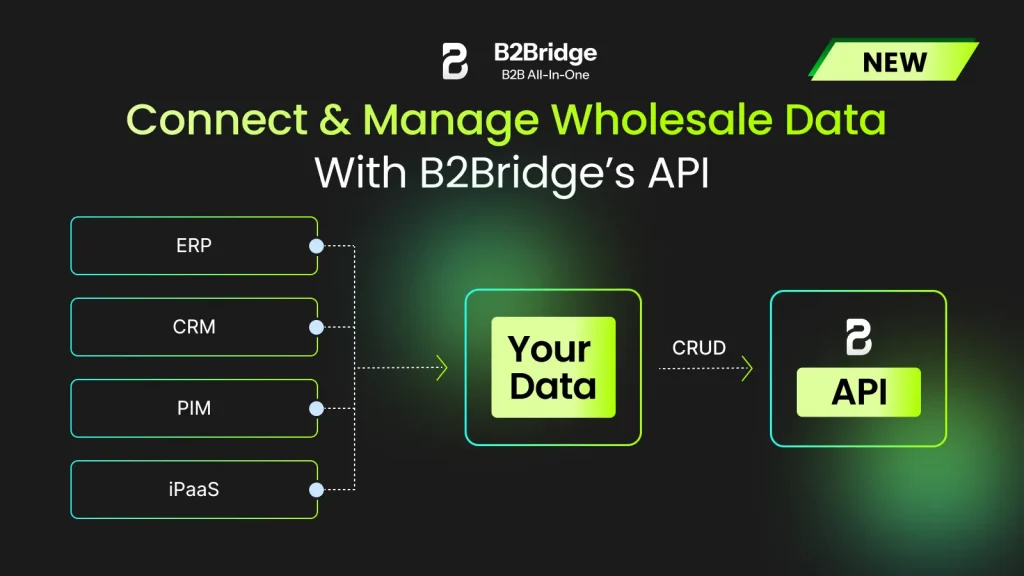
This seamless connection eliminates the 20 to 30 minute manual entry window entirely while reducing transcription errors to virtually zero. For businesses processing hundreds or thousands of monthly B2B orders, this single feature recovers thousands of labor hours annually.
Custom pricing automation solves one of the most time-consuming aspects of wholesale order processing. B2Bridge applies customer-specific pricing tiers, volume discounts, and negotiated rates automatically at checkout. Multi-currency support handles international buyers without manual conversion calculations or pricing updates.
Buyers see their exact negotiated prices when they log in, eliminating the endless cycle of quote requests and pricing confirmations that bog down sales teams. Instead of chasing approvals and calculating discounts for each order, your reps spend time on high-value activities like relationship development and strategic selling.
The self-serve buyer experience revolutionizes how your customers interact with your wholesale operation. B2Bridge provides each buyer with a personalized portal showing their negotiated prices, order history, saved carts, and real-time inventory availability. Buyers can place reorders with a few clicks, track shipments, download invoices, and manage their account without contacting your team.
This convenience delivers the consumer-grade experience B2B buyers increasingly expect while reducing your customer service burden by up to 70%. The approval workflows built into B2Bridge also handle complex organizational purchasing requirements where multiple stakeholders need visibility or sign-off authority before orders finalize.
B2B Order Processing Challenges B2Bridge Solves
Every wholesale business faces recurring obstacles that manual processes can’t adequately address. B2Bridge provides purpose-built solutions for the most common B2B order processing challenges.
Complex approval workflows:
Many B2B buyers operate within organizations requiring manager sign-off for purchases above certain thresholds. B2Bridge automates multi-stakeholder approval chains, routing orders to the appropriate decision-makers based on your configured rules. Automatic notifications and escalations prevent orders from languishing in approval limbo, while full audit trails provide transparency into decision timing and authority.
Bulk inventory management:
Wholesale orders often involve large quantities across multiple SKUs, creating challenges for inventory allocation and stockout prevention. B2Bridge provides real-time visibility across all warehouse locations and sales channels, automatically allocating inventory based on your fulfillment priorities. The system prevents overselling while giving buyers accurate availability information at the moment they’re ready to order.
Negotiated pricing complexity:
Different customers pay different prices based on their volume, relationship, or negotiated agreements. Manually applying these custom rates for every order creates massive overhead and frequent errors. B2Bridge stores customer-specific pricing rules and applies them automatically, with safeguards preventing accidental exposure of wholesale prices to retail shoppers or wrong-tier pricing between wholesale accounts.
Invoice and payment term management:
Tracking Net 30, Net 60, and custom payment terms manually creates accounting headaches and cash flow challenges. B2Bridge automates invoice generation with correct terms, sends payment reminders, and integrates with your accounting system to track aging receivables. The automated workflows reduce days sales outstanding while eliminating the labor of manual collections follow-up.
7-Day Implementation Roadmap for B2Bridge
Transitioning to automated B2B order processing doesn’t require months of disruption. This proven roadmap gets Shopify merchants to live with B2Bridge in one week with minimal business interruption.
Days 1-2: Shopify and ERP system setup with data migration
Install the B2Bridge app from the Shopify App Store and connect your existing ERP or inventory management system through the Public API feature of B2Bridge. Export your customer list, pricing tiers, and product catalog.
B2Bridge’s guided setup wizard walks you through data import and validation, flagging any formatting issues for quick correction. Configure basic settings like tax rules, shipping options, and notification preferences.
Days 3-4: Customer portal configuration and pricing rule setup
Design your buyer portal interface to match your brand, including logo, colors, and welcome messaging. Set up customer groups and assign specific pricing tiers, payment terms, and minimum order requirements.
Configure approval workflows based on your business rules, defining thresholds that trigger manager review. Create saved cart functionality and quick reorder options that streamline repeat purchases for your buyers.
Days 5-6: Multi-currency testing and bulk order simulation
If you serve international buyers, configure currency conversion rules and test checkout flows in each currency. Run simulation orders across different customer tiers, product combinations, and order sizes to verify pricing accuracy and workflow execution.
Test edge cases like partial inventory availability, approval escalations, and payment term calculations. Involve key team members in testing to ensure everyone understands the new workflows.

Day 7: Launch with performance dashboard and customer communication
Go live with B2Bridge for all new orders while monitoring the integrated performance dashboard. Send announcement emails to your B2B buyers explaining the new self-service portal and its benefits for their purchasing process. Provide quick-start guides and offer white-glove onboarding support for your largest accounts. Monitor the first orders closely, though B2Bridge’s testing phase typically catches issues before they affect real transactions.
This accelerated timeline works because B2Bridge handles the complex technical integration automatically. Unlike custom development projects requiring weeks or months, the pre-configured Shopify integration and wholesale-specific features eliminate the need for extensive programming or system architecture changes.
B2Bridge: Transform Your B2B Order Processing Now
Making the leap to automated B2B order processing delivers benefits that extend far beyond time savings. B2Bridge provides a complete transformation of how your wholesale channel operates.
Simplify wholesale management: Run your B2B operations as easily as your B2C channel with B2Bridge’s all-in-one wholesale tools designed specifically for Shopify merchants. No more juggling multiple apps, spreadsheets, or manual processes to manage your wholesale business alongside retail.
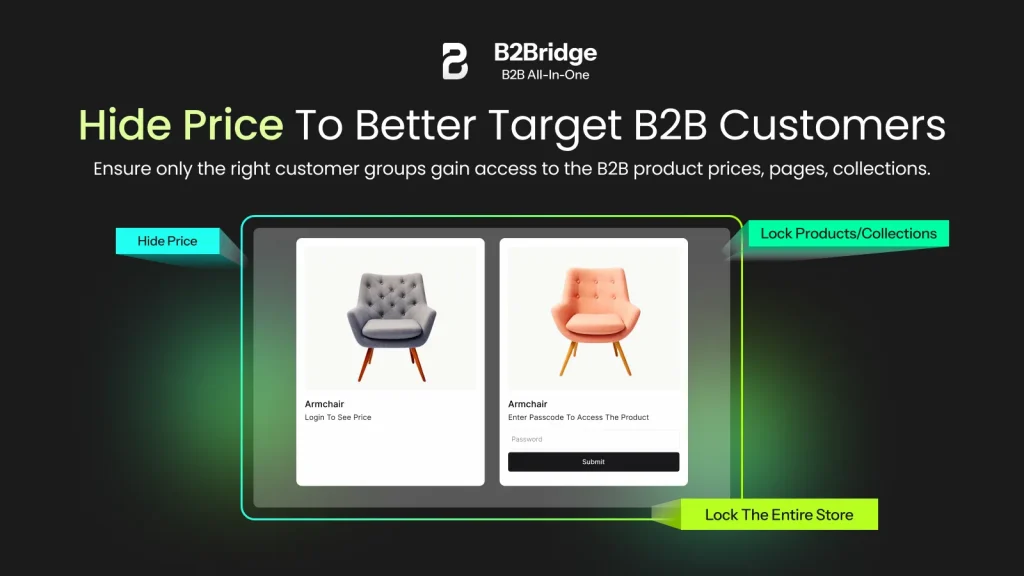
Protect your pricing: Hide wholesale prices from retail shoppers while showing the exact right negotiated price to each B2B customer automatically. B2Bridge’s customer-specific pricing engine eliminates awkward pricing exposure and ensures every buyer sees only what they should.
Save time on operations: Automate customer registration, price list management, and order handling completely, freeing your team to focus on strategic business growth rather than administrative tasks that drain resources.
Offer a seamless buyer experience: Give your B2B buyers the smooth, self-serve shopping journey they expect in 2025. Quick reorders, order history, real-time inventory, and account management in one convenient portal rival the best B2B platforms.
Close more wholesale deals: Turn quote requests into confirmed orders faster with built-in negotiation tools, custom pricing workflows, and automated approval chains that remove friction from the buying process.
Future-proof your store: B2Bridge adapts as your wholesale business evolves, adding new features and integrations regularly. Grow from basic wholesale to complex multi-tier pricing, international expansion, or specialized industry requirements without outgrowing your platform.
FAQs: Mastering B2B Order Processing with B2Bridge
Labor costs for manual order entry and customer service overhead represent the largest expense category, typically accounting for 60% to 70% of total processing costs. However, error correction often carries the highest per-incident cost at $50 to $125 when you factor in customer service time, shipping adjustments, credits, and relationship damage. The combination of frequent labor costs and occasional but expensive errors makes manual processing unsustainable at scale.
B2Bridge automatically converts prices to your customers’ preferred currencies based on real-time exchange rates or your configured fixed rates. International buyers see prices in their local currency throughout the shopping experience, and orders flow into your system with proper conversion tracking for accounting purposes. You can set currency-specific pricing rules or let the system handle conversions automatically, giving you flexibility based on your international strategy.
Installing B2Bridge from the Shopify App Store provides the fastest path to full B2B order automation for wholesale merchants. The pre-built Shopify integration and wholesale-specific features eliminate months of custom development, getting you operational in seven days or less. Alternative approaches like building custom solutions or implementing enterprise order management systems require significantly longer timelines and higher costs while delivering similar core functionality.
Self-service portals handle 70% to 80% of repeat order volume automatically, freeing your sales team from transactional order taking. Buyers appreciate the convenience of placing reorders instantly without waiting for rep availability, while your team focuses on strategic account management, upselling, and new customer acquisition. The most successful wholesale operations use portals for routine transactions and sales reps for relationship development and complex needs.
Track three primary metrics before and after implementation: average time per order, error rate percentage, and total labor hours devoted to order processing weekly. Calculate your cost per order by multiplying labor hours by hourly rates and adding error correction costs. Compare these figures monthly to quantify hard dollar savings, then add soft benefits like increased order capacity, improved buyer satisfaction scores, and sales team time redirected to revenue generation activities.
You can speed up order processing by automating data entry, integrating systems for real-time updates, reducing manual approvals, improving warehouse organization, and offering customer self-service ordering. Clear workflows and consistent KPI monitoring also help identify and eliminate delays quickly.
Reduce order cycle time by streamlining each step from order placement to fulfillment. Use automation, real-time inventory visibility, faster picking methods, and standardized approval rules. Improving communication between sales, warehouse, and logistics teams helps ensure orders move through the pipeline with minimal friction.
The B2B buying process is usually longer than B2C because it often involves bulk orders, multiple decision-makers, budgeting, and approval workflows. However, modern B2B ecommerce platforms with custom catalogs, online ordering, and automation can significantly shorten the process for returning or high-value buyers.
Cut order lead time by optimizing inventory management, minimizing stockouts, improving supplier coordination, and using efficient warehouse picking methods. Automated workflows, accurate forecasting, and real-time system integrations also help ensure orders move quickly from purchase to fulfillment without unnecessary delays.
Conclusion: Eliminate B2B Order Processing Bottlenecks Today
From end-to-end automation and real-time inventory tracking to self-service portals and ERP integration, each component addresses specific pain points that manual processes can’t solve adequately. The result is up to 80% faster B2B order processing, near-zero error rates, and wholesale operations that scale effortlessly alongside your business growth.
B2Bridge delivers these benefits specifically for Shopify merchants through purpose-built functionality that requires minimal setup time and no custom development.
Ready to reduce B2B order processing time by 80%?
Install B2Bridge from the Shopify App Store today and complete the 7-day implementation roadmap. Start with a free trial to experience automated wholesale order processing firsthand, with no technical expertise required. Your competition is already automating – don’t let manual processes hold your wholesale business back any longer.

Hi, I’m Ha My Phan – an ever-curious digital marketer crafting growth strategies for Shopify apps since 2018. I blend language, logic, and user insight to make things convert. Strategy is my second nature. Learning is my habit. And building things that actually work for people? That’s my favorite kind of win.