To improve the B2B customer experience, start with strong customer insights through personas and journey mapping. Streamline interactions using omnichannel support and self-service tools, personalize experiences with data and AI, and align sales, marketing, and support teams. Maintain proactive communication and build long-term partnerships by delivering consistent value, speed, and ease across every touchpoint.
This guide presents a proven 6-step framework for optimizing B2B customer journey excellence, specifically tailored for modern wholesale sellers and Ecommerce businesses operating on platforms like Shopify.

Why B2B Customer Experience Drives Business Success
In today’s competitive B2B Ecommerce, B2B customer experience has emerged as the defining factor that separates thriving businesses from those struggling to retain clients. Companies that deliver exceptional CX consistently see 30-50% improvements in critical performance indicators, from customer retention to cross-sell success rates. Yet achieving this excellence is no simple task – B2B journeys involve multiple stakeholders, extended decision cycles, and complex touchpoints that span months or even years.
So what exactly is B2B customer experience? It encompasses every interaction a business customer has with your company, from initial awareness through post-purchase advocacy. Optimizing the B2B customer journey means systematically identifying and eliminating friction points while consistently exceeding buyer expectations at each stage of engagement.

While consumer purchases often happen in minutes, B2B buying cycles typically span 3-12 months and involve 6-10 different stakeholders, each with their own priorities and pain points. The stakes are considerably higher too – B2B contracts often represent substantial ongoing revenue, making customer retention absolutely critical.
The business impact of getting customer experience right cannot be overstated. Organizations that prioritize CX excellence see 30-50% improvements in renewal rates and cross-selling opportunities. Conversely, poor customer experience creates a defection risk that’s four times higher than companies with strong CX practices. These aren’t marginal differences – they represent the gulf between sustainable growth and declining market share.
For Shopify B2B sellers specifically, the opportunity is particularly compelling. Businesses that implement seamless wholesale portals with self-service capabilities reduce cart abandonment by up to 25%. When you eliminate friction from the ordering process – whether through automated pricing, simplified reordering, or integrated account management – you directly impact your bottom line. The question isn’t whether to invest in B2B customer experience optimization, but how quickly you can implement meaningful improvements.
Transform your B2B store with B2Bridge.
Discover how B2Bridge can transform your wholesale business.
Schedule a demo today to see our payment management tools in action.
The 6 Proven Steps to B2B Customer Experience Excellence
Step 1: Commitment – Embed Customer-Centricity Organization-Wide
True customer experience transformation begins at the top. Without board-level commitment and executive sponsorship, CX initiatives inevitably become siloed projects that fail to achieve systemic change. Start by building a cross-functional customer experience team that includes representatives from sales, operations, finance, and product development. These diverse perspectives ensure that CX improvements consider all aspects of your business operations.
Recognition plays a crucial role in sustaining commitment. Consider implementing a “Wall of Fame” or similar program that celebrates employees who go above and beyond for customers. When your team sees that customer-centric behavior is valued and rewarded, it becomes embedded in your company culture rather than remaining an abstract goal. This cultural shift is what ultimately differentiates companies that talk about customer experience from those that truly deliver it.
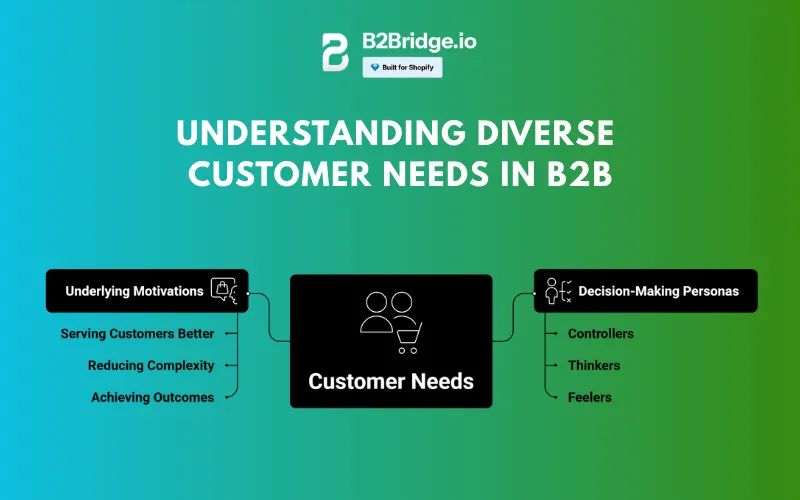
Step 2: Fulfillment – Deeply Understand Diverse Customer Needs
B2B buyers aren’t monolithic. Your purchasing managers think differently from their CEOs, and your technical evaluators have distinct priorities from their finance teams. Effective B2B customer experience requires segmenting your audience by decision-making personas – controllers who focus on risk and compliance, thinkers who analyze data and ROI, and feelers who prioritize relationships and trust.
Consider these diverse needs when mapping your customer journey:
- Controllers need transparent documentation, clear terms, and risk mitigation
- Thinkers require detailed specifications, comparison data, and performance metrics
- Feelers value responsiveness, personal relationships, and references from similar businesses
Many B2B companies focus solely on immediate business needs while overlooking deeper motivations. Your wholesale buyer isn’t just purchasing products – they’re trying to serve their own customers better, reduce operational complexity, or achieve specific business outcomes. When you address these underlying needs through your product positioning and service delivery, you create differentiation that transcends price competition.
Step 3: Seamlessness – Eliminate Friction Across Touchpoints
Every additional step in your B2B customer journey represents an opportunity for prospects to abandon the process. Customer Effort Score (CES) has proven to be one of the strongest predictors of loyalty, even more reliable than satisfaction scores. The principle is simple: make it effortless for customers to do business with you.
For wholesale sellers, this means transforming the traditional RFQ-to-order process. Instead of forcing buyers through email chains and phone calls, implement self-service portals where approved customers can browse inventory, view their custom pricing, and place orders instantly. B2Bridge’s wholesale tools exemplify this approach by allowing B2B sellers to run their wholesale operations as smoothly as their retail channels, with automated price lists, customer-specific catalogs, and streamlined approval workflows.
Seamlessness also extends to information access. Can your customers check order status without calling? Do they receive automatic updates when shipments leave your warehouse? Can they easily access their purchase history and invoices? Each improvement in accessibility reduces friction and frees your team to focus on higher-value interactions.
Step 4: Responsiveness – Deliver Speed at Every Stage
In an era of instant gratification, B2B buyers increasingly expect consumer-grade responsiveness. The companies winning in customer experience are setting ambitious speed targets across their operations:
- Credit approvals completed within 7 minutes instead of days
- Real-time inventory alerts when stock levels change
- Instant quote generation for standard product configurations
- Same-day responses to customer inquiries through integrated chatbots
- Automated order confirmations and shipping notifications
Speed shouldn’t come at the expense of accuracy, but technology enables both. Modern B2B platforms can automate routine processes while escalating complex situations to human decision-makers. The key is identifying which interactions truly require personal attention and which can be handled through intelligent automation.
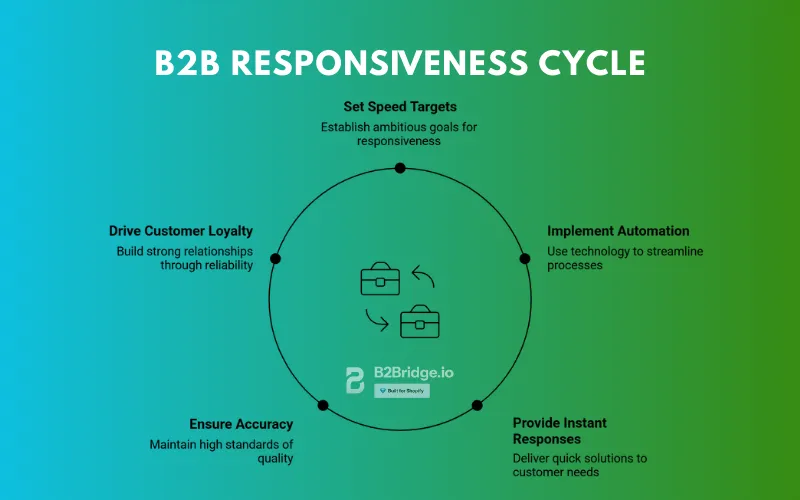
For Shopify wholesale sellers, responsiveness might mean implementing instant price quote generation based on order volume, or setting up automated notifications when a regular customer is due for reorder. These small improvements compound into a reputation for reliability that drives customer loyalty.
Step 5: Proactivity – Anticipate Pain Before It Hits
The most sophisticated B2B customer experiences don’t just respond to problems – they prevent them entirely. HP’s Instant Ink program demonstrates this principle brilliantly: by monitoring ink levels and automatically shipping replacements before customers run out, HP transformed a frustrating reactive process into a seamless proactive service. The result? Customers save up to 70% on ink costs while never experiencing the pain of running out at critical moments.
Apply this thinking to your B2B operations. If you notice a customer typically reorders every 90 days, reach out at day 80 with a gentle reminder and a one-click reorder option. If a product they regularly purchase is being discontinued, proactively suggest alternatives before they place their next order. When you see shipping delays that might affect their operations, alert them immediately with options rather than waiting for them to inquire.
Proactivity also means suggesting next steps that customers might not know they need. After a first purchase, guide them toward complementary products. When they’ve successfully implemented your solution, introduce them to advanced features that drive more value. This consultative approach positions you as a partner in their success rather than simply a supplier.
Step 6: Evolution – Continuously Reinvent the Journey
Customer expectations constantly evolve, and your B2B customer experience must evolve with them. Companies that treat CX as a one-time project rather than an ongoing discipline quickly fall behind competitors who continuously iterate and improve.
Adopt agile design thinking methodologies for your customer experience initiatives:
- Test new approaches with small customer segments before full rollout
- Gather feedback continuously through multiple channels
- Update your journey maps quarterly based on new data and market changes
- Invest in omnichannel integration so customers can seamlessly move between web, mobile, phone, and in-person interactions
ING Bank’s omnichannel transformation illustrates the power of continuous evolution. By creating seamless experiences across all touchpoints, they achieved 23% profit growth while simultaneously improving customer satisfaction scores. The key wasn’t a single dramatic change but rather a commitment to ongoing optimization based on customer behavior and feedback.
For wholesale businesses, evolution might mean adding new payment options as they become standard, implementing AI-powered product recommendations, or expanding your self-service capabilities based on the most common support requests. B2Bridge’s platform is designed for this kind of growth, adapting as your wholesale business scales without requiring multiple disconnected apps.
Ready to Transform Your B2B Customer Experience on Shopify?
For Shopify B2B sellers specifically, the opportunity is substantial. Modern wholesale buyers expect digital experiences that rival consumer purchasing, yet most B2B operations still rely on manual processes and disconnected systems. By implementing the right tools and following customer-centric principles, you can differentiate your business, increase customer lifetime value, and scale your wholesale operations efficiently.
Your customers are ready for better experiences. The only question is whether you’ll deliver them – or whether your competitors will instead.
B2Bridge makes it easy for Shopify sellers to deliver the seamless wholesale experiences your B2B customers expect. Automate your operations, protect your pricing, and scale with confidence.
Start Your Free Trial Today and discover how simple B2B can be when you have the right tools.
Mapping and Optimizing the Full B2B Customer Journey
Effective optimization requires understanding every stage of your customer journey from first awareness to ongoing advocacy. Each stage presents distinct opportunities and challenges:
Awareness Stage: Potential buyers discover your business through multiple channels – search engines, industry events, referrals, or targeted advertising. Optimize this stage with educational content that addresses their pain points, clear value propositions, and easy paths to learn more.
Consideration Stage: Prospects evaluate whether your solution fits their needs. Provide detailed product information, case studies from similar businesses, transparent pricing structures, and easy ways to request quotes or samples. For Shopify B2B sellers, this means showcasing your wholesale capabilities and terms clearly.
Decision Stage: Multiple stakeholders must align on the purchase. Streamline this with comprehensive documentation, flexible payment terms, trial options, and responsive sales support. Remove any barrier that could delay or derail the decision.
Purchase Stage: The actual transaction should be effortless. Implement self-service portals where approved customers can place orders using their negotiated pricing, reorder from purchase history, and manage their account details without assistance.
Onboarding Stage: Ensure customers successfully implement your solution. Provide clear instructions, proactive check-ins, and accessible support to maximize time-to-value and reduce buyer’s remorse.
Retention Stage: Transform one-time buyers into repeat customers through consistent quality, easy reordering, proactive communication, and loyalty incentives. For wholesale buyers, this might include volume discounts, exclusive products, or priority support.
Advocacy Stage: Delight customers so thoroughly that they recommend you to peers. Encourage and facilitate referrals, showcase their success stories, and maintain relationships beyond transactions.
For global B2B sellers, personalization through AI and dynamic multi-currency pricing has become essential. When international buyers see prices in their local currency and receive recommendations based on their specific needs, conversion rates increase significantly. This level of personalization, once reserved for enterprise operations, is now accessible through modern Ecommerce platforms.
2026 B2B Customer Experience Trends for Wholesale and Ecommerce Sellers
The B2B customer experience landscape continues evolving rapidly. Several key trends are reshaping how wholesale businesses operate:
AI-Powered Personalization is moving beyond basic product recommendations to dynamic pricing, predictive reordering, and personalized content journeys. Machine learning algorithms can now identify buying patterns and optimize the experience for each customer segment automatically.
Omnichannel Integration has become table stakes rather than a differentiator. Customers expect consistent experiences whether they’re browsing your website, speaking with sales representatives, or placing orders through mobile apps. Disconnected systems that require customers to repeat information or reconcile conflicting data create friction that drives buyers to competitors.
Self-Service Portals continue gaining importance as B2B buyers, especially younger procurement professionals, prefer digital interactions. Comprehensive portals that enable customers to manage accounts, place orders, track shipments, and access documentation independently reduce operational costs while improving satisfaction.
Wholesale Evolution is being driven by platforms that bring B2C simplicity to B2B complexity. Tiered pricing based on volume, customer-specific catalogs, negotiation tools for quotes, and approval workflows are becoming standard expectations. B2Bridge addresses this evolution by allowing Shopify sellers to hide wholesale prices from retail shoppers, automate registration and price lists, and turn quote requests into orders seamlessly.
The native Shopify B2B functionality provides a foundation, but enhanced apps extend capabilities in crucial areas like multi-currency support, advanced pricing rules, and custom approval workflows. For businesses serious about wholesale growth, these enhancements can dramatically improve conversion rates and customer lifetime value.
Actionable B2B Customer Journey Optimization Toolkit
Ready to assess and improve your customer experience? Use this comprehensive audit checklist:
Customer Understanding:
- Have you documented buyer personas for all key decision-makers?
- Do you track which pain points matter most at each journey stage?
- Can you segment customers by needs beyond just company size?
Journey Mapping:
- Have you mapped all touchpoints from awareness to advocacy?
- Do you know where customers experience the most friction?
- Are there gaps where customers fall through the cracks?
Technology and Process:
- Can customers self-serve for routine tasks like reordering?
- Do you offer real-time visibility into order status and inventory?
- Are your systems integrated to provide consistent information across channels?
Metrics and Measurement:
- Do you track NPS (Net Promoter Score) and CES (Customer Effort Score)?
- Can you measure retention rates by customer segment and journey stage?
- Do you benchmark your performance against industry standards?
Key CX Metrics Dashboard:
- Net Promoter Score (NPS): Target 50+ for B2B excellence (industry average: 30-40)
- Customer Effort Score (CES): Target below 2.0 on a 7-point scale
- First Response Time: Target under 2 hours for inquiries
- Order Accuracy Rate: Target 98%+ to minimize returns and complaints
- Customer Retention Rate: Target 85%+ for mature B2B relationships
- Customer Lifetime Value: Track trend – should increase over time with effective CX
Regular monitoring of these metrics reveals where your customer experience excels and where improvement opportunities exist. The most successful companies review these dashboards weekly and tie them to specific improvement initiatives.
Real-World Case Studies of B2B CX Transformation
HP Instant Ink transformed a reactive consumables business into a proactive service model. By automatically monitoring ink levels and shipping replacements before customers run out, HP achieved multiple benefits: customers save up to 70% on ink costs, HP secures predictable recurring revenue, and environmental waste decreases through efficient cartridge recycling. The program demonstrates how anticipating customer needs creates value for both parties.
Shopify B2B Wholesale Success stories illustrate the power of seamless portals and customer-specific pricing. Wholesale businesses implementing comprehensive B2B solutions report 3x increases in customer lifetime value by reducing order friction and enabling easy reordering. Multi-currency support proves particularly impactful for international wholesale operations, removing a significant barrier to global expansion.
ING Bank achieved 23% profit growth through their omnichannel evolution. By ensuring customers could seamlessly move between digital and human touchpoints without repeating information or losing context, ING differentiated itself in a commoditized industry. The transformation required significant technology investment but delivered measurable returns through improved retention and cross-selling.
These case studies share common themes: they identified specific friction points in their customer journey, implemented technology to address those issues, and measured results rigorously. Success didn’t require revolutionary innovations – just systematic application of customer-centric principles.
B2Bridge: Seamless B2B Customer Experiences for Shopify Sellers
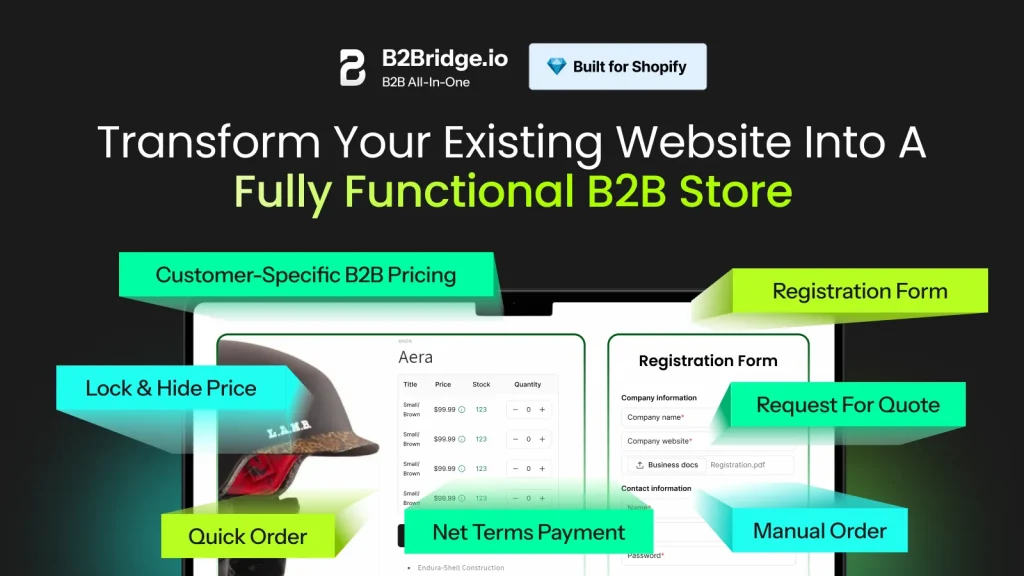
Building exceptional B2B customer experiences requires the right tools. B2Bridge provides Shopify sellers with comprehensive wholesale management capabilities designed for ease of use and scalability:
Simplify wholesale management: Run your B2B channel as easily as B2C with all-in-one tools that eliminate the complexity typically associated with wholesale operations. No more juggling multiple systems or manual workarounds.
Protect your pricing: Hide wholesale prices from retail shoppers automatically and show the right price to the right customer. This pricing intelligence ensures your retail and wholesale channels coexist without conflict.
Scale with confidence: Grow your B2B operations without drowning in spreadsheets or manual processes. B2Bridge automates the operational details so you can focus on strategic growth.
Save time on operations: Automate customer registration, price list management, and order handling. What once required hours of manual work now happens automatically in the background.
Offer a seamless buyer experience: Give your B2B customers a smooth, self-serve shopping journey that matches or exceeds their retail purchasing experiences. Modern wholesale buyers expect digital convenience.
Close more wholesale deals: Turn quote requests into completed orders with built-in negotiation tools. The faster you can move from inquiry to purchase, the higher your conversion rates.
Future-proof your store: B2Bridge adapts as your wholesale business grows – no need for multiple disconnected apps or platform migrations. Your technology should scale with your ambitions.
FAQs: Optimizing B2B Customer Experience and Journeys
B2B experience refers to the overall journey and interactions a business customer has with a company – from research and onboarding to purchasing, support, and long-term relationship management. It emphasizes efficiency, personalization, transparency, and streamlined processes that help businesses buy confidently and operate smoothly.
B2C customer experience is the perception and satisfaction a consumer has when interacting with a brand across channels like websites, ads, support, and delivery. It focuses on emotional engagement, convenience, speed, and simplicity to encourage repeat purchases and strong brand loyalty.
CRM is used in both B2B and B2C, but its focus differs. B2B CRM supports complex relationships, long sales cycles, multiple stakeholders, and account management. B2C CRM prioritizes personalization at scale, fast interactions, customer loyalty, and managing high-volume consumer data.
B2B customer experience involves longer decision cycles (3-12 months vs. minutes), multiple stakeholders (6-10 decision-makers), higher transaction values, ongoing relationships rather than one-time purchases, and more complex needs spanning multiple departments. B2B buyers also expect both digital convenience and personal relationships, requiring a hybrid approach that B2C rarely needs.
Multi-currency support eliminates a significant friction point for international buyers. When customers see prices in their local currency, they can evaluate costs accurately without manual conversion, get faster approval from finance teams who prefer local currency budgeting, and experience fewer abandoned carts due to currency confusion. This seemingly simple feature can increase international conversion rates by 20-30%.
Companies that invest in customer experience see 30-50% improvements in retention and cross-selling, 25% reductions in cart abandonment with seamless portals, 15-25% increases in customer lifetime value, significant decreases in customer service costs through self-service, and faster sales cycles due to reduced friction. Most businesses see positive ROI within 6-12 months of implementing comprehensive CX improvements.
Conclusion
Optimizing your B2B customer experience isn’t optional in 2026 – it’s the foundation of sustainable competitive advantage. The 6-step framework presented here – Commitment, Fulfillment, Seamlessness, Responsiveness, Proactivity, and Evolution – provides a proven roadmap for transformation. Start by securing organizational commitment to customer-centricity, then deeply understand your diverse buyer personas. Eliminate friction systematically, respond with speed, anticipate needs before they become problems, and continuously evolve your approach based on data and feedback.

Hi, I’m Ha My Phan – an ever-curious digital marketer crafting growth strategies for Shopify apps since 2018. I blend language, logic, and user insight to make things convert. Strategy is my second nature. Learning is my habit. And building things that actually work for people? That’s my favorite kind of win.