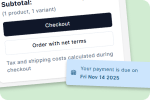
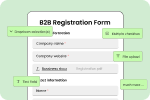
Leading B2B ecommerce websites such as Grainger, Alibaba, and Amazon Business stand out with features like bulk ordering, custom pricing, and powerful search tools for industrial and business supplies.
This guide breaks down 15 of the best B2B Ecommerce website examples, what makes each one work, and the actionable lessons you can apply to your own store today.

Overview of B2B Ecommerce website
B2B Ecommerce websites now drive over $25 trillion in global transactions annually – and that number keeps climbing. With the market growing at a 19% CAGR toward 2026, businesses that invest in the right digital buying experience are pulling far ahead of those still relying on sales reps and paper orders.
But what separates a good B2B Ecommerce website from a great one? It’s rarely just the product catalog. It’s the account-specific pricing, the seamless reordering, the net payment terms, and the intelligent features that make bulk purchasing feel effortless. The best sites in the world have spent years – and millions – figuring this out.
What Makes a B2B Ecommerce Website Different?
Unlike B2C stores built around impulse and emotion, a B2B Ecommerce website is a self-serve procurement platform. Business buyers need efficiency, accuracy, and flexibility – not flashy banners.
The core traits that define high-performing B2B sites include account-specific and tiered pricing, role-based access controls, dynamic product catalogs with detailed specs, bulk ordering and CSV upload tools, net payment terms (Net 30/60/90), request-for-quote (RFQ) workflows, ERP and accounting integrations, and multi-user account management with approval hierarchies.
Master these features and you create a buying experience that enterprise procurement teams actually prefer over calling a sales rep. The 15 B2B Ecommerce website examples below show exactly how the best in the business get it done.
Top 15 B2B Ecommerce Website Examples
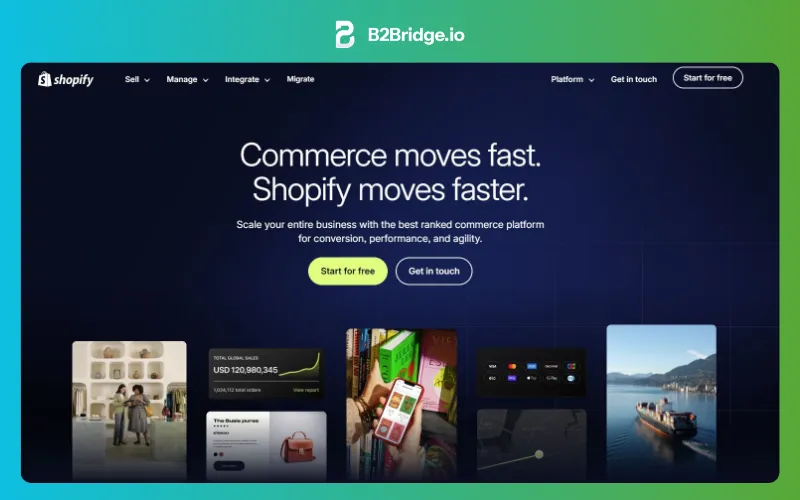
1. Shopify Plus B2B
Shopify Plus has invested heavily in native B2B functionality, making it a serious contender for wholesale operations. With apps like B2Bridge extending capabilities – adding features like net payment terms, price hiding, and customer-specific catalogs – Shopify Plus B2B stores can now compete with purpose-built platforms at a fraction of the cost.
Standout features: Customer-specific pricing, draft orders, B2B storefronts, net terms via apps, and seamless blending of B2B and DTC on one platform.
2. Amazon Business
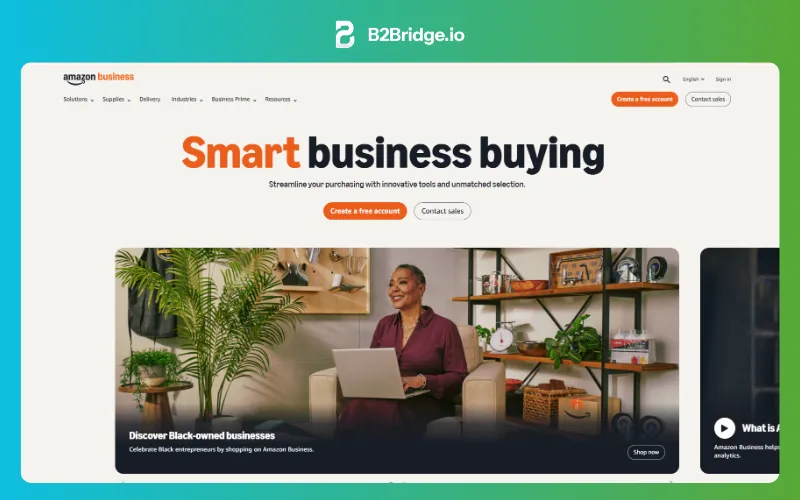
Amazon Business took the familiarity of Amazon’s consumer experience and layered enterprise-grade tools on top – and it worked spectacularly.
Net payment terms, multi-user accounts, spend analytics, and tax-exempt purchasing have made it a go-to for procurement teams at companies of every size. Its biggest lesson: reduce friction by starting with what buyers already trust.
Standout features: Net 30 terms, quantity discounts, approval workflows, business Prime pricing, and consolidated invoicing.
3. Alibaba.com
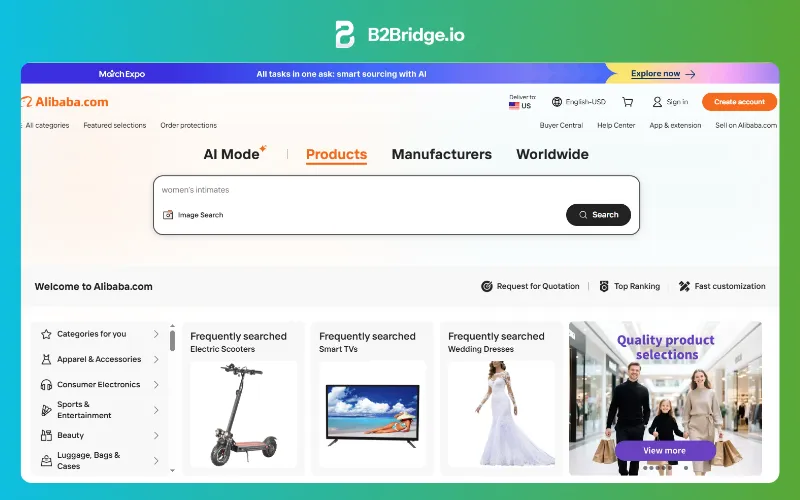
Alibaba dominates global wholesale with a model built around negotiation and scale. Its multi-language support, Trade Assurance program, and RFQ marketplace let buyers source from manufacturers worldwide with confidence.
If your B2B Ecommerce website targets international buyers, Alibaba’s localization strategy is required study.
Standout features: Global supplier network, built-in RFQ system, Trade Assurance buyer protection, multi-currency checkout, and verified supplier badges.
4. Uline
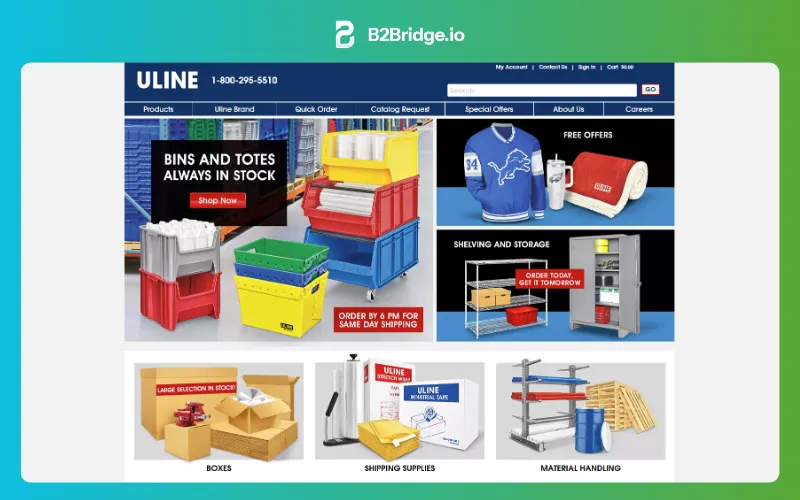
Uline’s B2B Ecommerce website excels in one area above almost everyone else: speed. Their tiered pricing visuals make quantity breaks immediately obvious, nudging buyers toward larger orders without any sales pressure. Their mobile reorder experience is also exceptional – repeat customers can restock in under a minute.
Standout features: Visual tiered pricing tables, one-click reorder, same-day shipping options, mobile-optimized catalog, and print-ready invoicing.
5. McMaster-Carr
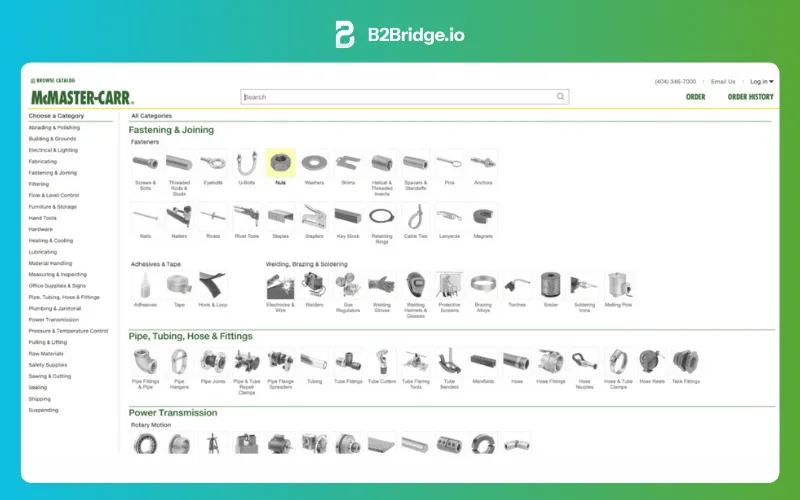
McMaster-Carr is a masterclass in specification-driven search. Engineers and procurement specialists love it because they can search by a technical dimension, material grade, or tolerance spec and get exact results instantly.
Their catalog has over 600,000 products, all with detailed technical documentation. The takeaway: for complex product categories, spec-level search is a competitive moat.
Standout features: Engineering-grade product specs, technical drawing downloads, same-day shipping on most items, CAD file availability, and near-perfect search relevance.
6. Quill.com
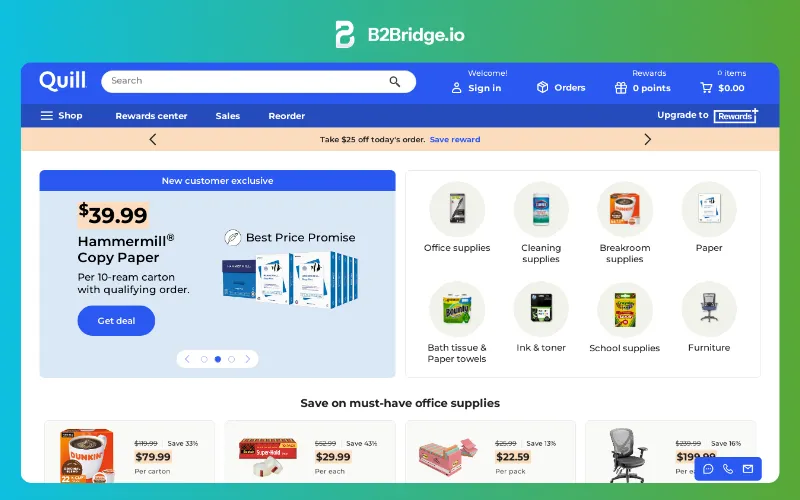
Quill focuses on office and business supplies with a loyalty-driven ecosystem. Their filtering system guides buyers through large catalogs efficiently, and their rewards program keeps business customers coming back.
The B2B registration flow is particularly well-designed – tiered approval gives them control while still welcoming new buyers smoothly.
Standout features: Business rewards program, guided category filters, subscription reordering, account spending reports, and dedicated customer success support.
7. Fastenal
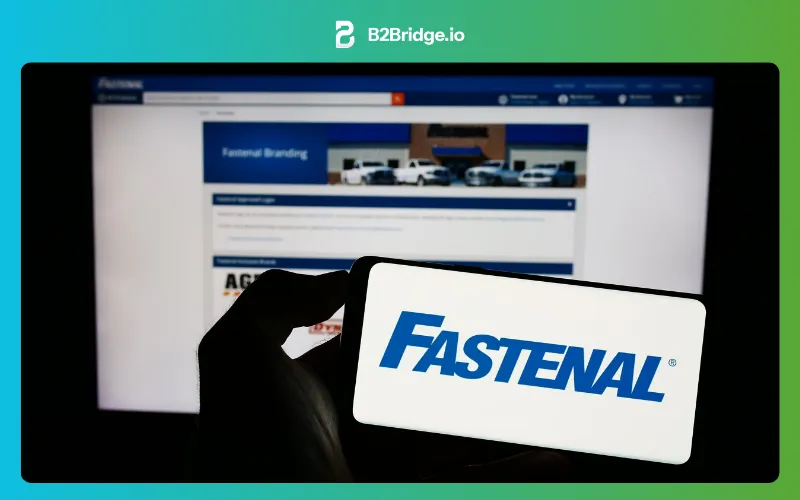
What makes Fastenal unique among B2B Ecommerce websites is its hybrid model – online ordering synced with local branch inventory. This is particularly powerful for SMBs that need items quickly and can’t wait for shipping.
Their role-based visibility also means different customer types see the pricing and products relevant to them.
Standout features: Local inventory sync, click-and-collect, vending machine integration, role-based catalog access, and dedicated account rep tools.
8. Global Industrial
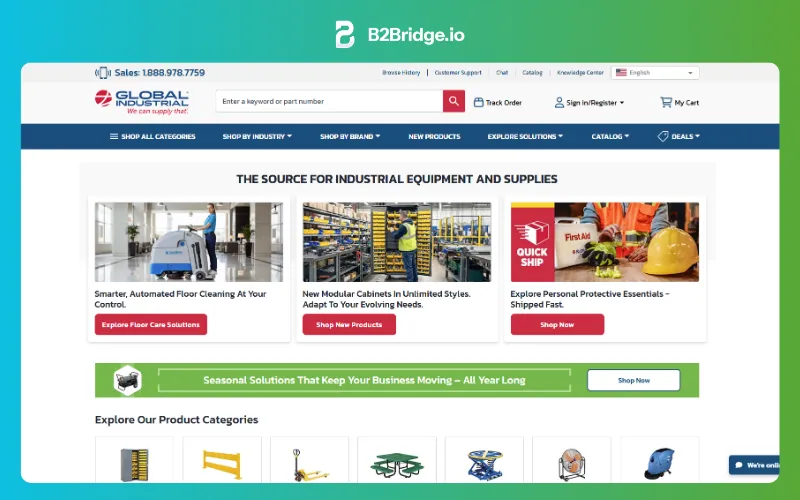
Global Industrial hits the sweet spot between wholesale pricing and equipment variety. Their tiered pricing structure encourages volume purchasing, and their bulk ordering tools – including CSV upload – make repeat procurement fast and painless for facilities and operations teams.
Standout features: Wholesale pricing tiers, CSV bulk order upload, equipment-focused catalog, net terms availability, and freight quote integration.
9. BigCommerce B2B Edition
BigCommerce B2B Edition is the platform choice for mid-market and enterprise brands that want full control over their buyer experience without building from scratch. Its composable architecture means you can customize every touchpoint – pricing rules, portal layouts, checkout flows – without massive dev overhead.
Standout features: Custom price lists per account, shared shopping lists, company account hierarchies, native net terms, and headless commerce support.
10. Grainger
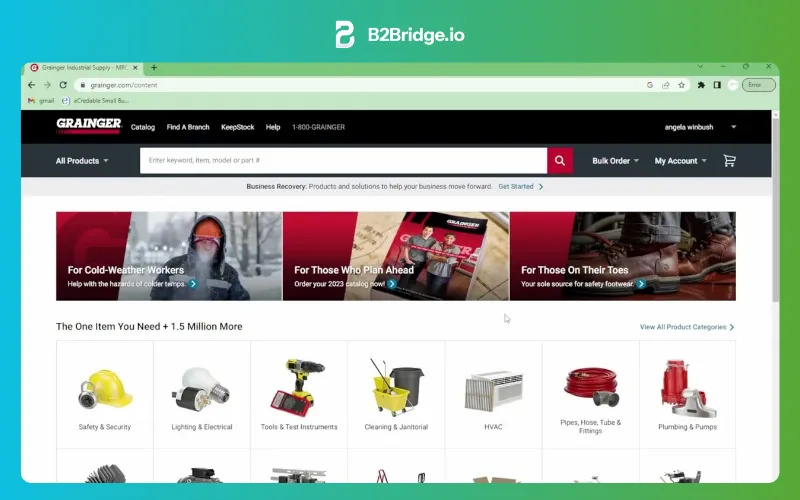
Grainger is the gold standard for industrial B2B Ecommerce. With millions of SKUs and real-time inventory visibility, it handles everything from MRO supplies to safety equipment at massive scale.
Their search functionality is legendary – buyers can find the exact spec they need in seconds, which directly drives conversions. The lesson here: invest in search. Grainger reportedly reduced cart abandonment by 30% through better search and filtering alone.
Standout features: Real-time stock visibility across locations, account-specific pricing, fast reorder from order history, robust product filtering by spec, and dedicated account management portals.
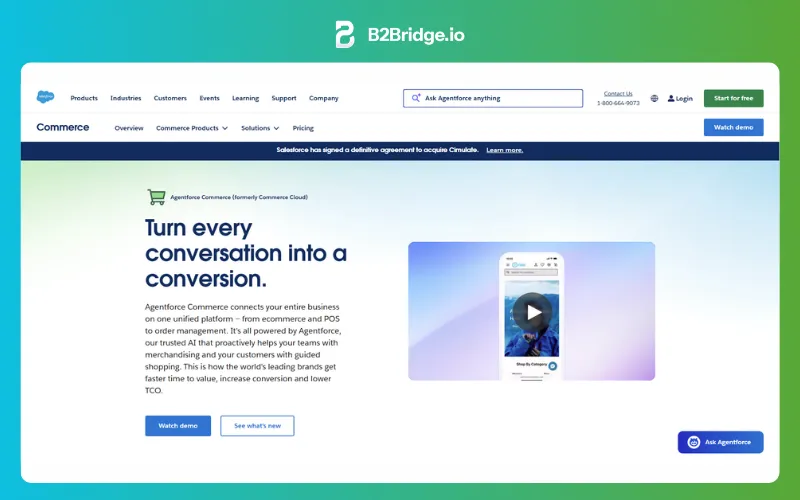
11. Salesforce Commerce Cloud
Salesforce Commerce Cloud brings AI-powered personalization to enterprise B2B portals. Its Einstein AI layer delivers product recommendations and search results tailored to each buyer’s purchase history – a feature that enterprise procurement teams increasingly expect. Deep CRM integration is its biggest differentiator.
Standout features: Einstein AI personalization, CRM-native buyer profiles, contract pricing management, omnichannel order management, and complex approval workflow support.
12. SAP Commerce Cloud
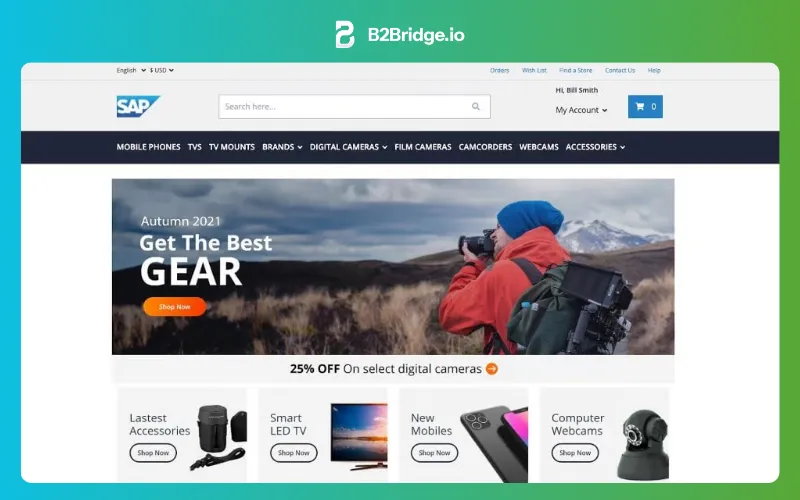
For enterprises already running SAP ERP, SAP Commerce Cloud is the natural choice. Its deep integration with backend systems means pricing, inventory, contracts, and customer data are always in sync – eliminating the data silos that plague many B2B Ecommerce websites.
Standout features: Native ERP integration, contract and catalog management, global compliance tools, subscription ordering, and real-time inventory from SAP backend.
13. OroCommerce
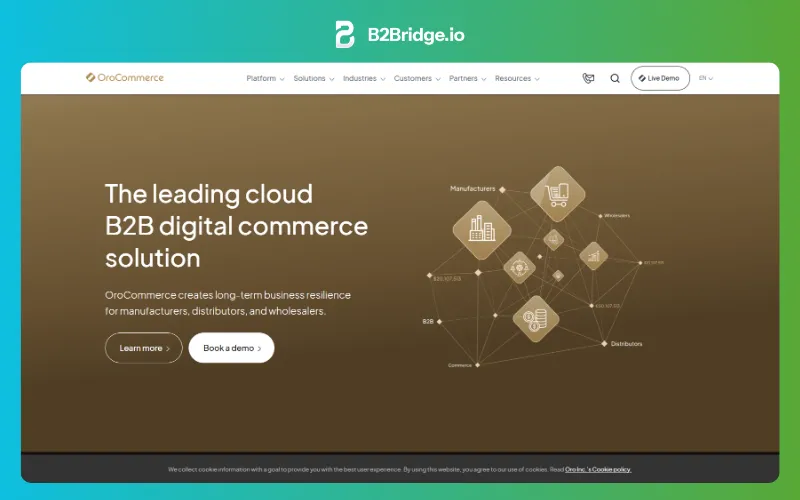
OroCommerce was purpose-built for B2B, which shows in its native quoting and negotiation workflows. Buyers can request quotes, reps can respond with custom pricing, and the whole process lives within the platform – no back-and-forth email chains required.
Standout features: Native RFQ and quote management, corporate account hierarchies, flexible pricing rules, workflow automation, and open-source customizability.
14. VTEX B2B
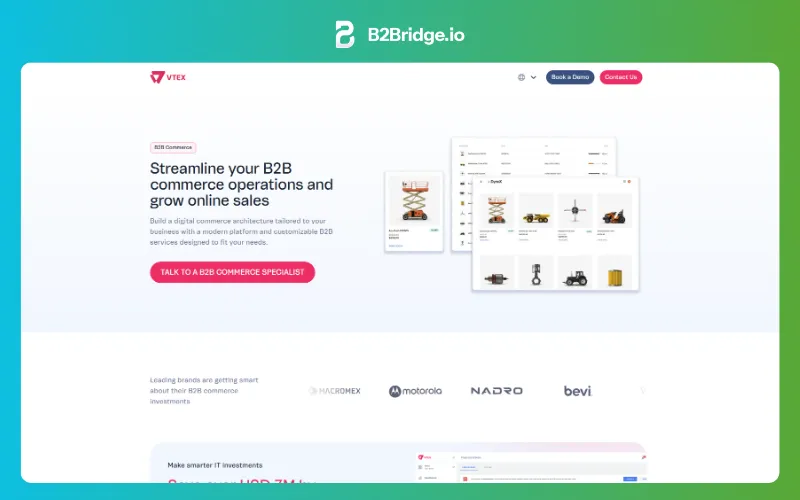
VTEX excels at B2B brands that also need marketplace functionality – think manufacturers selling through distributors as well as directly. Its omnichannel architecture handles complex distribution scenarios that most platforms struggle with.
Standout features: Marketplace and seller management, omnichannel inventory, headless commerce support, native promotions engine, and multi-organization account management.
15. Adobe Commerce B2B
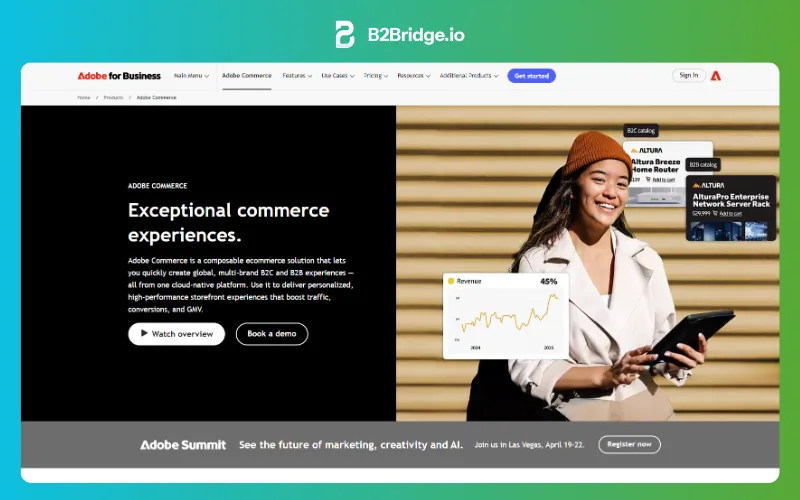
Adobe Commerce (formerly Magento) pairs powerful PIM capabilities with B2B-specific features to serve high-volume catalog operations. For brands with thousands of complex SKUs and sophisticated pricing rules, it remains one of the most flexible platforms available.
Standout features: Advanced PIM integration, shared catalogs, requisition lists, purchase order workflows, and extensive extension marketplace.
Common Features that Best B2B Ecommerce Websites have
Analyzing these 15 B2B Ecommerce website examples reveals a clear pattern. The features that appear on nearly every high-performing B2B Ecommerce website are not coincidental – they directly address how business buyers actually purchase.
Tiered and account-specific pricing is universal. Whether it’s Uline’s visual quantity break tables or BigCommerce’s custom price lists, dynamic pricing that rewards volume and loyalty reduces decision friction and increases average order value.
Self-serve buyer portals with order history, invoice access, and reorder capabilities appear on every enterprise-grade site. Grainger’s portal is a benchmark – buyers can manage their entire procurement relationship without ever contacting support.
Net payment terms (Net 30/60/90) feature on roughly 70% of the top sites according to market analyses. Amazon Business pioneered the seamless integration of net terms into a consumer-familiar checkout, and the rest of the market has followed.
RFQ workflows matter enormously for complex or high-value purchases. Sites like Alibaba and OroCommerce that have invested in native RFQ tools report converting complex inquiries up to 25% faster than email-based alternatives.
Role-based access and price hiding protect wholesale pricing from being visible to unauthorized buyers – a feature that nearly every B2B site on this list uses in some form. Fastenal’s implementation is particularly sophisticated, with different catalog views tied to customer type and location.
10 Actionable Lessons from the Top B2B Ecommerce Websites you can apply today
The patterns across these 15 B2B Ecommerce website examples translate into clear actions you can take on your own B2B Ecommerce website:
- Make pricing tiers visual and immediate – don’t bury quantity discounts in fine print. Uline’s table format works.
- Invest in search before almost anything else – Grainger’s results prove it’s one of the highest-ROI improvements you can make.
- Hide prices for guest or non-approved visitors – protect your wholesale margins and create an incentive to register.
- Offer net terms – even Net 30 removes a significant barrier for procurement-driven buyers.
- Build a self-serve portal – order history, invoice downloads, and one-click reorder reduce support costs and increase loyalty.
- Add RFQ functionality for high-value items – don’t let complex inquiries fall through the cracks into email.
- Implement role-based access – different buyers should see different catalogs, prices, and features.
- Optimize for mobile reorder – not discovery, but repeat purchasing on mobile is growing fast.
- Integrate with ERP or accounting tools early – the sites that struggle most are those that bolt on integrations later.
- Use approval workflows for multi-user accounts – enterprise buyers need this; it’s often a procurement requirement.
If you’re running on Shopify and want to add B2B features like net terms, price hiding, customer-specific catalogs, and bulk ordering tools without a platform migration, B2Bridge makes it straightforward – designed to let you run wholesale as easily as your DTC store, from one place.
How B2Bridge Can Make Your B2B Ecommerce Website Successful
Every top B2B ecommerce website on this list shares a common foundation: smart pricing controls, seamless reordering, flexible payment terms, and a self-serve buyer experience. B2Bridge brings all of that to growing wholesale businesses – without the enterprise budget or months of custom development.
Here’s what B2Bridge puts in your corner:
Customer-specific pricing and catalog controls let you set account-level pricing, quantity-based discounts, and hide wholesale prices from unapproved visitors – protecting your margins while rewarding loyal buyers.
Native net payment terms integrate directly into checkout, so buyers can purchase on Net 30/60/90 without your team manually managing invoices on the side.
Public API (ERP and accounting integrations) – including QuickBooks and NetSuite – keep pricing, inventory, and order data in sync across your entire operation, eliminating the data silos that slow most B2B sites down.
Dedicated onboarding and support means you’re not handed a platform and left to figure it out – B2Bridge works with you to get your store live and performing.
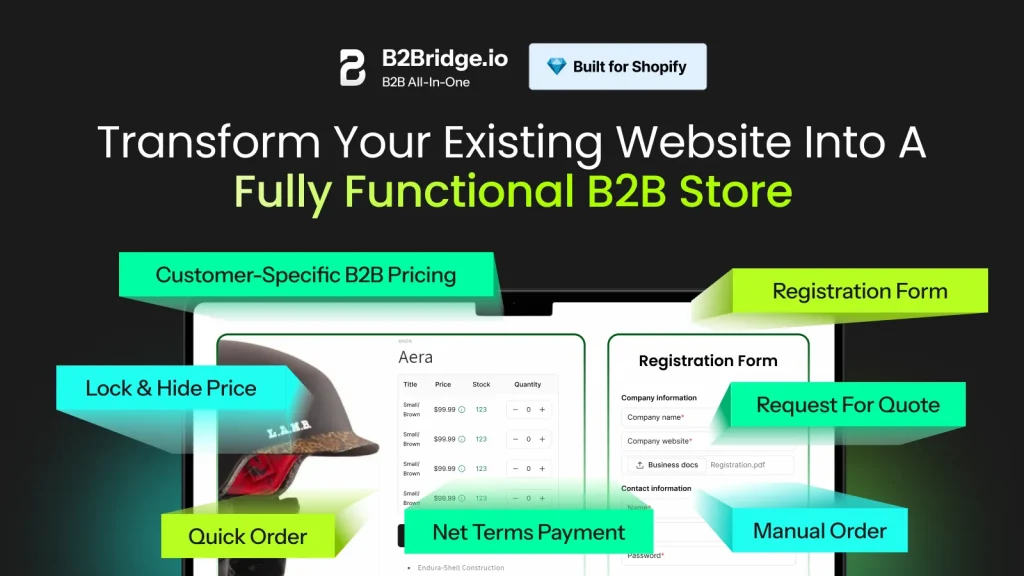
The result: wholesale businesses using B2Bridge have reported 20%+ revenue gains from their B2B ecommerce website while cutting manual order processing hours significantly. If you want to compete with the best in this list, B2Bridge is where to start.
2026 B2B Ecommerce Trends These Sites Are Already Executing
The leaders on this list aren’t just following trends – they’re setting them. Here’s what’s defining the best B2B Ecommerce websites heading into 2026:
AI-powered search and personalization (Salesforce, McMaster-Carr) is delivering measurable conversion lifts – some estimates put it at 25% or higher for sites that have implemented it well. Net terms are becoming table stakes, not a differentiator. Mobile-first reordering is accelerating as procurement managers increasingly work from phones.
Composable and headless architecture is enabling faster customization without full platform rebuilds. And hybrid B2B/DTC models – selling wholesale and direct from one platform – are growing rapidly, particularly on Shopify Plus.
Conclusion
The best B2B Ecommerce websites share a clear philosophy: make it easy for business buyers to do their jobs. That means the right pricing, the right access controls, the right payment flexibility, and a self-serve experience that actually serves. From Grainger’s search-driven conversions to OroCommerce’s native quoting to Shopify Plus’s flexibility, each example on this list has something worth learning from.
Start with the lessons above. Study the examples. And build the B2B Ecommerce website your buyers actually want to use.

Hi, I’m Hanh – a product marketing professional passionate about driving growth, simplifying complex solutions, and creating impactful strategies for Shopify that connect products with customers.